

Calamagrostis brachytricha
- In stock, ready to ship
Calamagrostis brachytricha: Late, Fluffy and Blushing Pink
Every other grass blooms early and burns out. This one sleeps in, then shows up with feathery pink plumes fading to silver just as the party winds down. FASHIONABLY LATE AND WORTH THE WAIT.
Plant Characteristics:
- Botanical Name: Calamagrostis brachytricha
- Common Name: Korean Feather Reed Grass
- Height: 90–125 cm (3–4 ft) in flower; foliage about 60 cm (2 ft)
- Spread: 60 cm (2 ft)
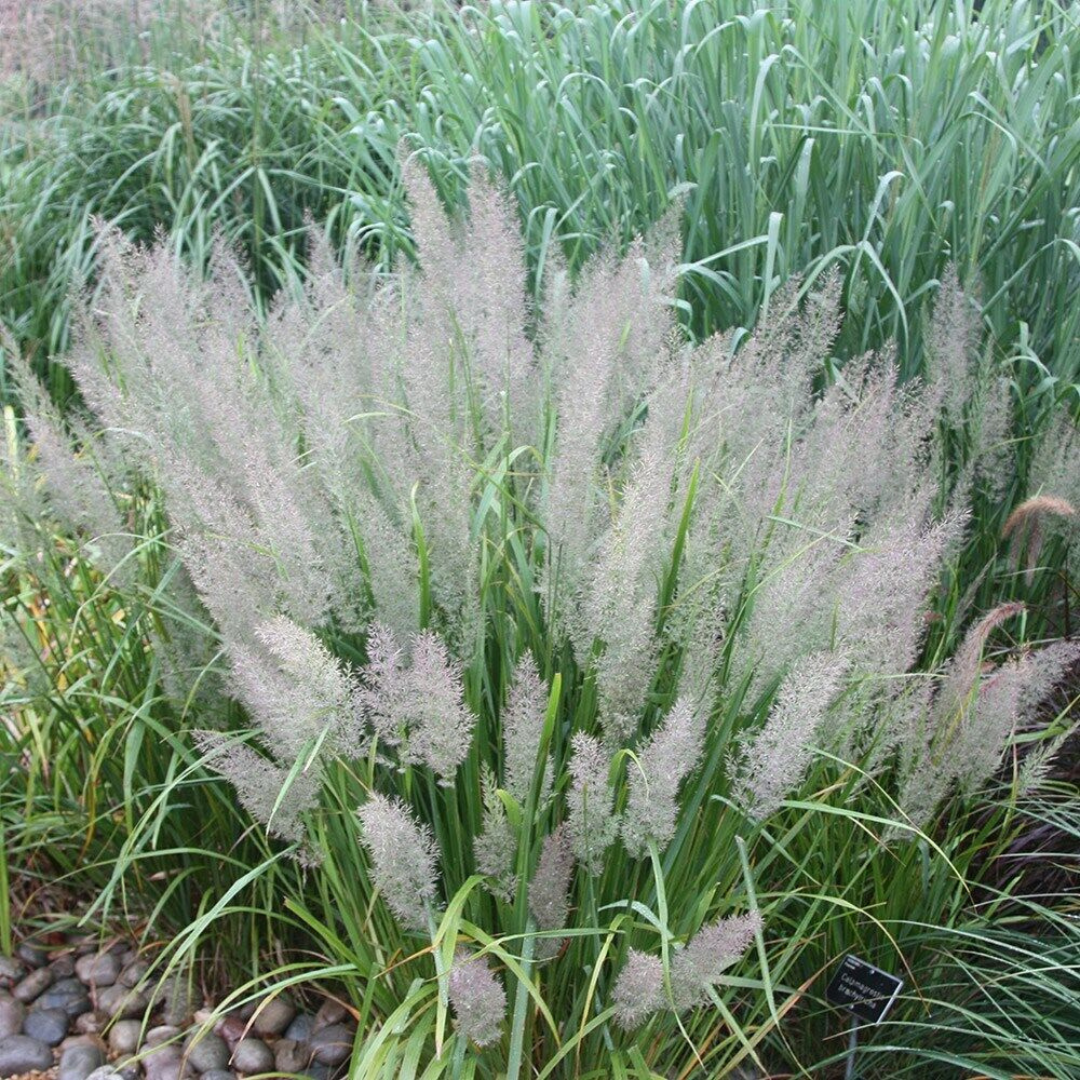
- Flowers: Soft, feathery plumes tinged pink to purple, fading to silver and then cream
- Bloom Time: Late summer to fall (September to October)
- Foliage: Glossy green, arching, turning yellow to golden bronze in fall
- Features: Tolerates clay and black walnut, RHS Award of Garden Merit
Where to Plant: Use it in groups through a border, in meadow-style plantings, or along a woodland edge where it gets a few hours of sun, to carry the garden from late summer into winter. It also tolerates clay and juglone, which is handy in many older Ontario yards.
Companion Plants: Phlox Luminary® 'Backlight' brings white flowers from July to September, glowing beside the soft, fluffy plumes. Sanguisorba 'Tanna' adds burgundy buttons from July to September. In front, Aster 'Wood's Light Blue' blooms blue from August to October, just as the grass is at its best. It is a lovely late season scene for sun to part sun.
Plant Care: Plant it in full sun to part sun. In full sun, keep the soil reasonably moist; in part shade it handles drier conditions better. It adapts to most soils, including clay. Water well through the first season. It can take a year or two to bloom freely, so give it time. Leave the plumes standing for winter. Cut the clump down close to the ground in late winter or early spring. It may self-seed lightly in moist spots. Divide in spring if the clump gets crowded.
History: Korean feather reed grass is native to central and eastern Asia, including Korea, China and Japan, and has also been sold as Achnatherum brachytricha and Stipa brachytricha. It holds the Royal Horticultural Society's Award of Garden Merit.
Final Thoughts: It tolerates clay and black walnut, which most plants treat like a hostile neighbour. ALWAYS SAVE THE BEST FOR LAST.



