



Bouteloua gracilis
Add to Wishlist Full Sun
 Drought Tolerant
 Deer Resistant
 Native
 Low Maintenance
- In stock, ready to ship
Bouteloua gracilis: Eyelash Seed Heads, Bone-Dry Ground
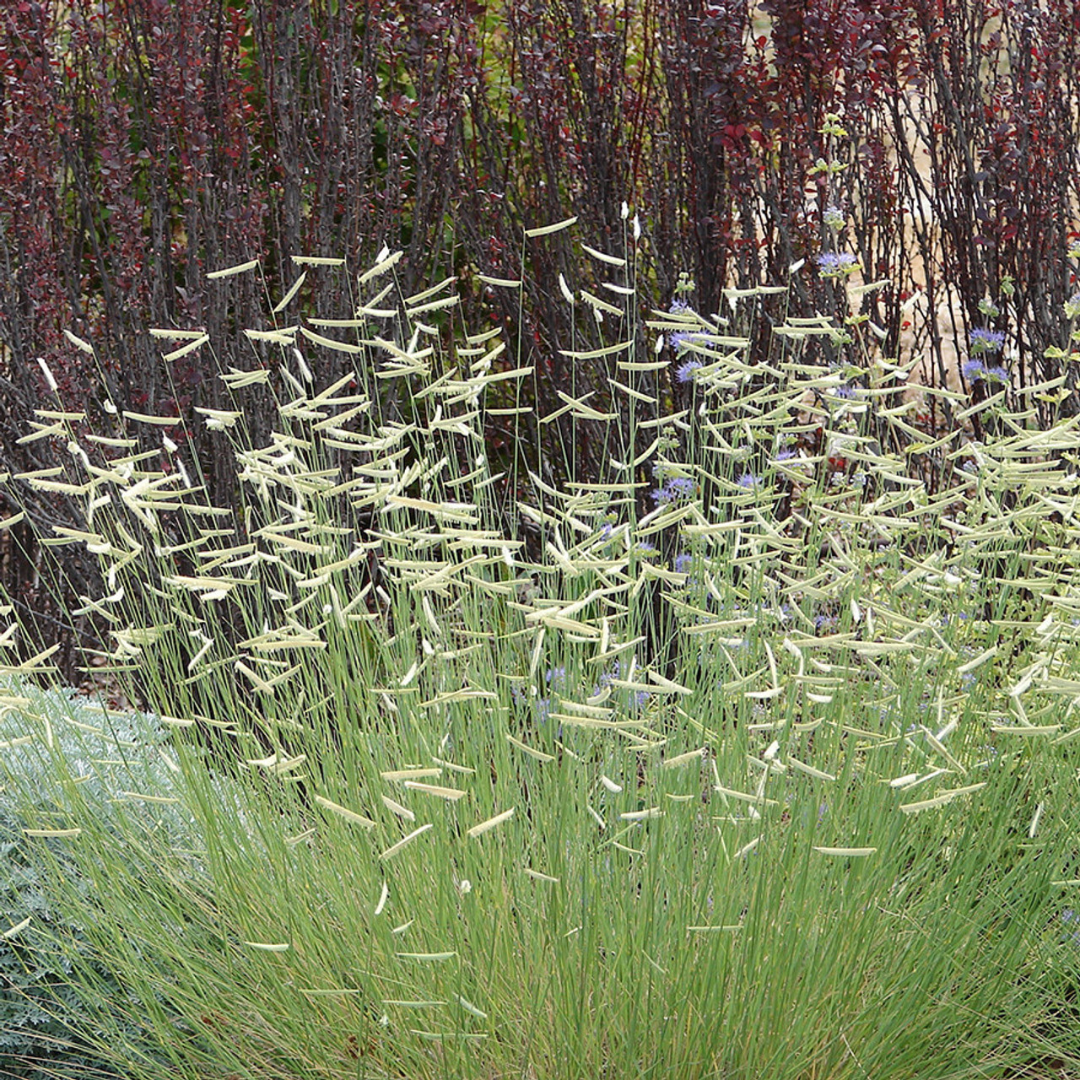
Blue Grama holds its seed heads out sideways like little eyelashes, and once you see it you can't unsee it. Native, low and tufted, it bats those lashes at the sun on the driest ground you own. FLIRT LEVEL: PRAIRIE.
Plant Characteristics:
- Botanical Name: Bouteloua gracilis
- Common Name: Blue Grama, Mosquito Grass, Eyelash Grass
- Height: 30–60 cm (1–2 ft) in flower
- Spread: 30–45 cm (12–18 in)
- Flowers: Comb-like seed heads held horizontally from the stem tips, purplish when fresh and aging to golden tan
- Bloom Time: Summer (July to August), with seed heads lasting into fall
- Foliage: Fine, narrow grey-green to blue-green blades in a low tuft, turning tan in fall
- Features: Good for erosion control
Where to Plant: Blue grama is great at the front of a sunny border, between stones in a rock garden, along a gravel path or in a dry meadow. It can also stand in for lawn in a low-traffic spot. It's a good fit for sandy, hot ground and the dry strip near the road that bakes all summer.
Companion Plants: Echinacea Prairie Splendor™ Compact Rose brings pink coneflowers from June to September at 35 to 40 cm, right among the fine blue grass. Liatris pycnostachya rises behind with purple spikes from July to September. Along the front, Oenothera macrocarpa opens big yellow cups in June and July. It is a true prairie mix for full sun and dry, lean soil.
Plant Care: Plant in full sun in well-drained soil. Sandy, gravelly and lean soils are ideal; heavy wet soil is the one thing it really dislikes. Water through the first season while it roots in, then only during long droughts. Skip the fertilizer. Leave the seed heads up for winter interest. Cut the clump back in early spring before new growth starts. It's a warm-season grass, so it greens up late in spring. Divide in spring if needed.
History: Blue grama is one of the defining grasses of the North American shortgrass prairie, with a native range from British Columbia across the Prairie provinces to Ontario and south through the Great Plains to Mexico. It's the state grass of Colorado and New Mexico.
Final Thoughts: Deer resistant, drought tolerant, and it holds a slope better than any retaining wall quote you got. LASHES ON. WATERING CAN OFF.



