

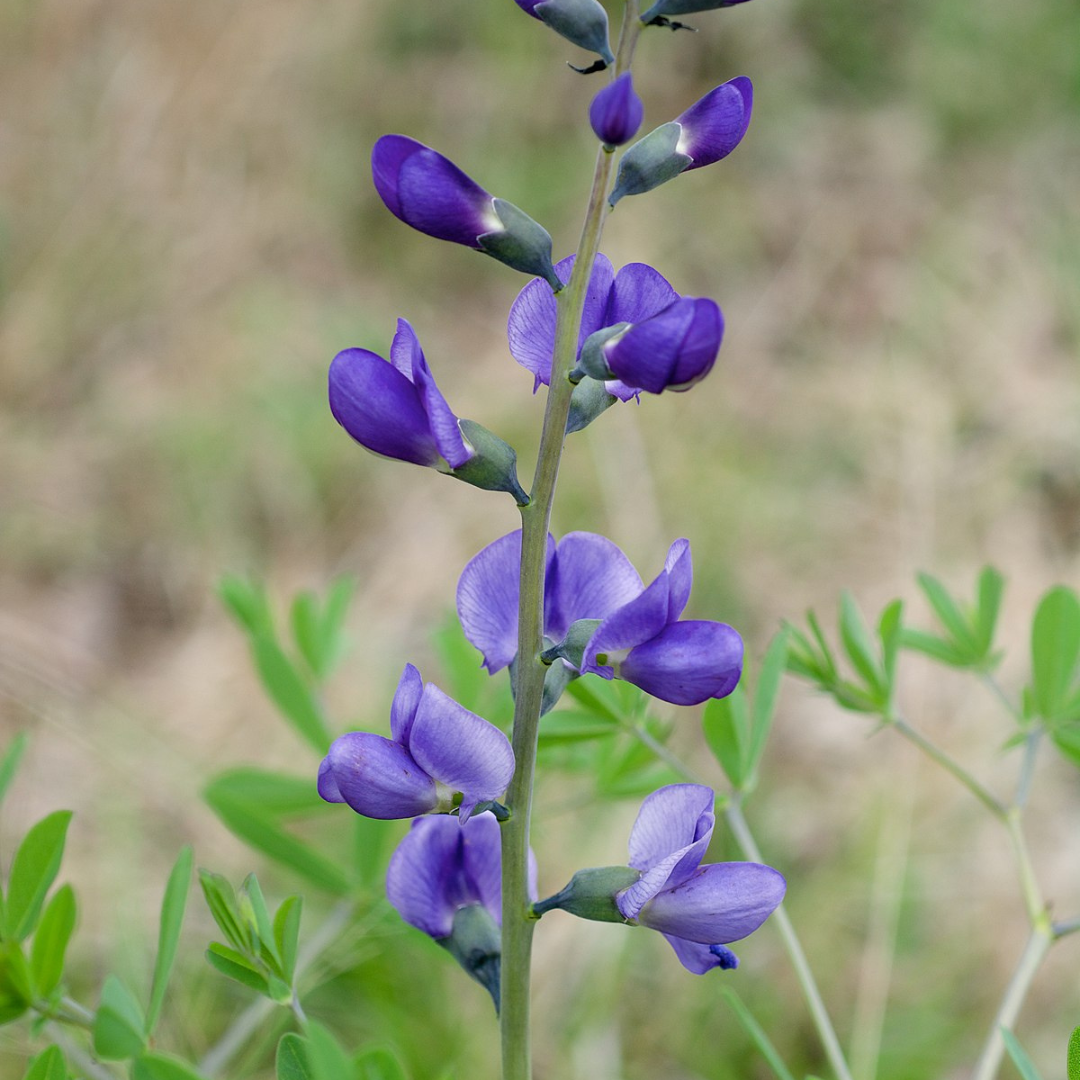
Baptisia australis
- In stock, ready for delivery
Baptisia australis: Indigo Blue Built Like a Shrub
The original blue baptisia, the one all the fancy colours are trying to live up to. Indigo spikes, then puffy black seed pods that look like a goth bean harvest. OLD SCHOOL AND STILL THE COOLEST ONE HERE.
Plant Characteristics:
- Botanical Name: Baptisia australis
- Common Name: Blue Wild Indigo, Blue False Indigo
- Height: 90–120 cm (3–4 ft)
- Spread: 90–120 cm (3–4 ft)
- Flowers: Indigo-blue, pea-like flowers on upright spikes up to 30 cm (12 in) long, followed by inflated black seed pods
- Bloom Time: Late spring to early summer (May to June)
- Foliage: Soft blue-green, three-part leaves forming a dense, bushy mound
- Features: Long-lived
Where to Plant: This is a big plant, so treat it like a shrub. It anchors the back of a border, holds its own in a meadow or prairie planting, and works as a single specimen. It's long-lived, so give it a permanent spot with room to fill out.
Companion Plants: Give blue false indigo a permanent spot in a sunny, dry bed with low plants in front and red poppies beside it. Thymus pseudolanuginosus carpets the front at 2 to 5 cm with woolly grey leaves. Oenothera macrocarpa opens big lemon-yellow cups at 15 to 30 cm in June and July. Papaver 'Beauty of Livermere' adds deep scarlet poppies at 60 to 90 cm in May and June, right alongside the indigo. Pennisetum 'Piglet' fills in at 40 to 50 cm with soft, fluffy plumes from August to October.
Plant Care: Plant in full sun, in average, well-drained soil. It tolerates clay and poor soil, and it doesn't need fertilizer. It will grow in part shade, but it tends to flop there and may need staking. Water regularly the first season, then only in long droughts. It develops a deep taproot and can take two or three years to bloom well. Avoid moving or dividing an established plant. Leave spent flowers for the seed pods. Cut stems back in late fall, or leave the dark pods standing for winter interest and cut back in early spring.
History: Blue wild indigo is native to prairies, open woods and stream banks across much of the eastern and central United States, and its genus name comes from the Greek bapto, "to dip", because the plant was used as a substitute for true indigo dye. It was the 2010 Perennial Plant of the Year and holds the Royal Horticultural Society's Award of Garden Merit.
Final Thoughts: Long-lived, deer resistant and stubborn in all the right ways. Plant it now and the grandkids can argue over it. WRITE IT INTO THE WILL.