

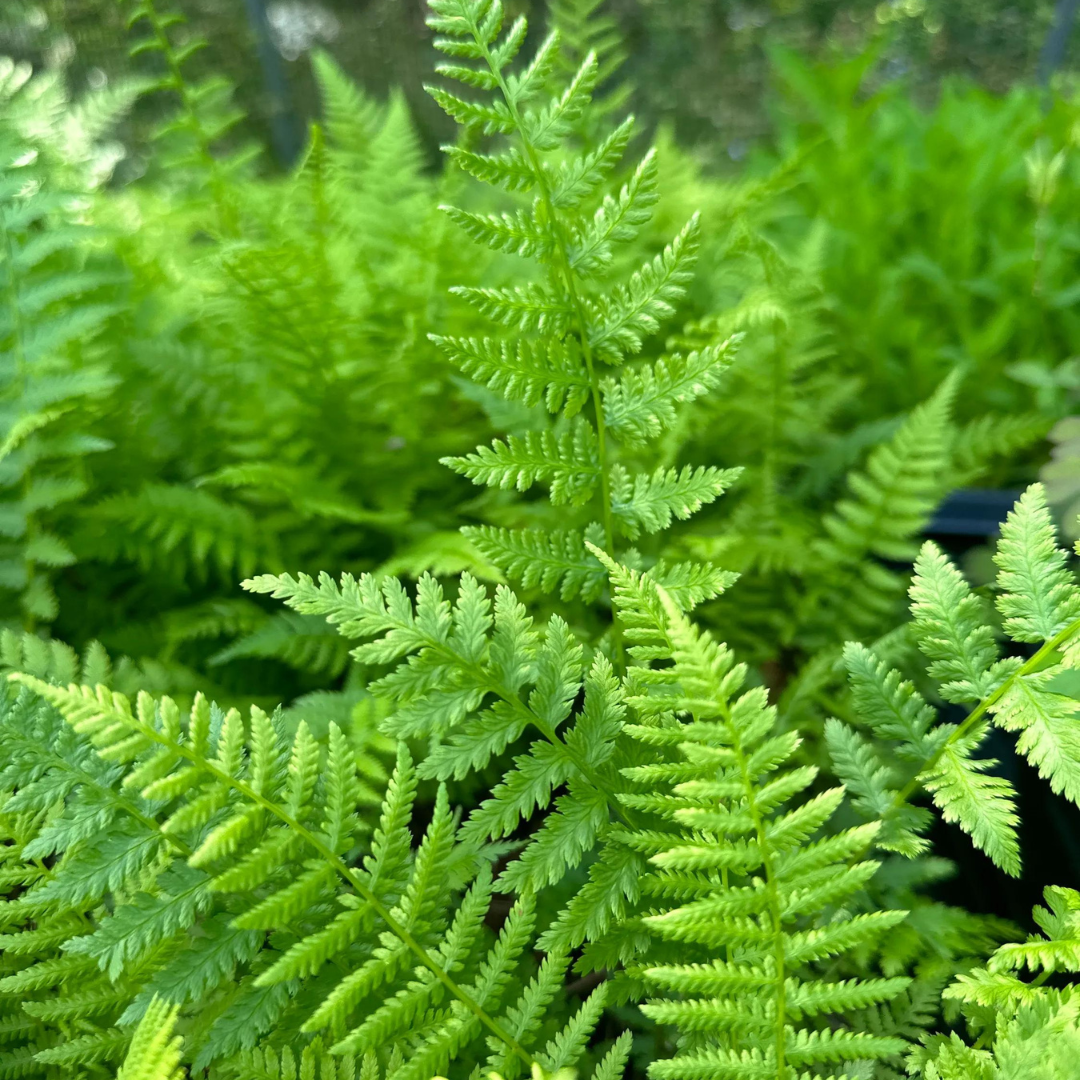
Athyrium filix-femina
Add to Wishlist- In stock, ready to ship
Athyrium filix-femina: Delicate Looks, Lumberjack Toughness
Lady Fern is native, lacy and completely unfussed. While you're fretting over the fancy plants, she's quietly filling the shade with bright green fronds like she's lived here longer than you. BECAUSE SHE HAS.
Plant Characteristics:
- Botanical Name: Athyrium filix-femina
- Common Name: Lady Fern
- Height: 60–90 cm (2–3 ft)
- Spread: 60–90 cm (2–3 ft)
- Flowers: None. Ferns reproduce by spores.
- Foliage: Lacy, finely divided, light to bright green fronds on green to reddish stems. Deciduous.
Where to Plant: Use it in woodland gardens, along shady foundations, beside ponds and streams, or as a soft filler in shade. It's a natural fit for naturalized areas, and its fine texture softens hard edges.
Companion Plants: Rodgersia 'Bronze Peacock' brings bold, bronzed leaves and pink flowers in June, a great foil for the lacy fronds. Pulmonaria 'Dark Vader' opens purple flowers in April and May at the front of the bed. Liriope 'Royal Purple' adds grassy leaves and purple spikes in August and September. All three like moist shade, the same as the fern.
Plant Care: Plant it in moist, humus-rich soil in part shade to shade. It's happiest where the ground stays damp, and it copes with wet soil. It tolerates more sun only if the soil never dries out. In dry, windy spots the fronds can brown by late summer, so water during droughts. Leave fallen leaves around it as a natural mulch. Cut the old fronds back in early spring before the new fiddleheads unfurl. It spreads slowly from short rhizomes; divide in spring if you want more plants.
History: Lady fern is one of the most widespread ferns in the world, found across North America, Europe and Asia, and it grows wild in forests, wet meadows and swamps throughout Ontario and Quebec. Its name filix-femina means "female fern", given because its fronds looked more graceful than the coarser male fern, Dryopteris filix-mas.
Final Thoughts: Low maintenance, deer resistant and already on a first-name basis with the local wildlife. THE LOCALS APPROVE.



