

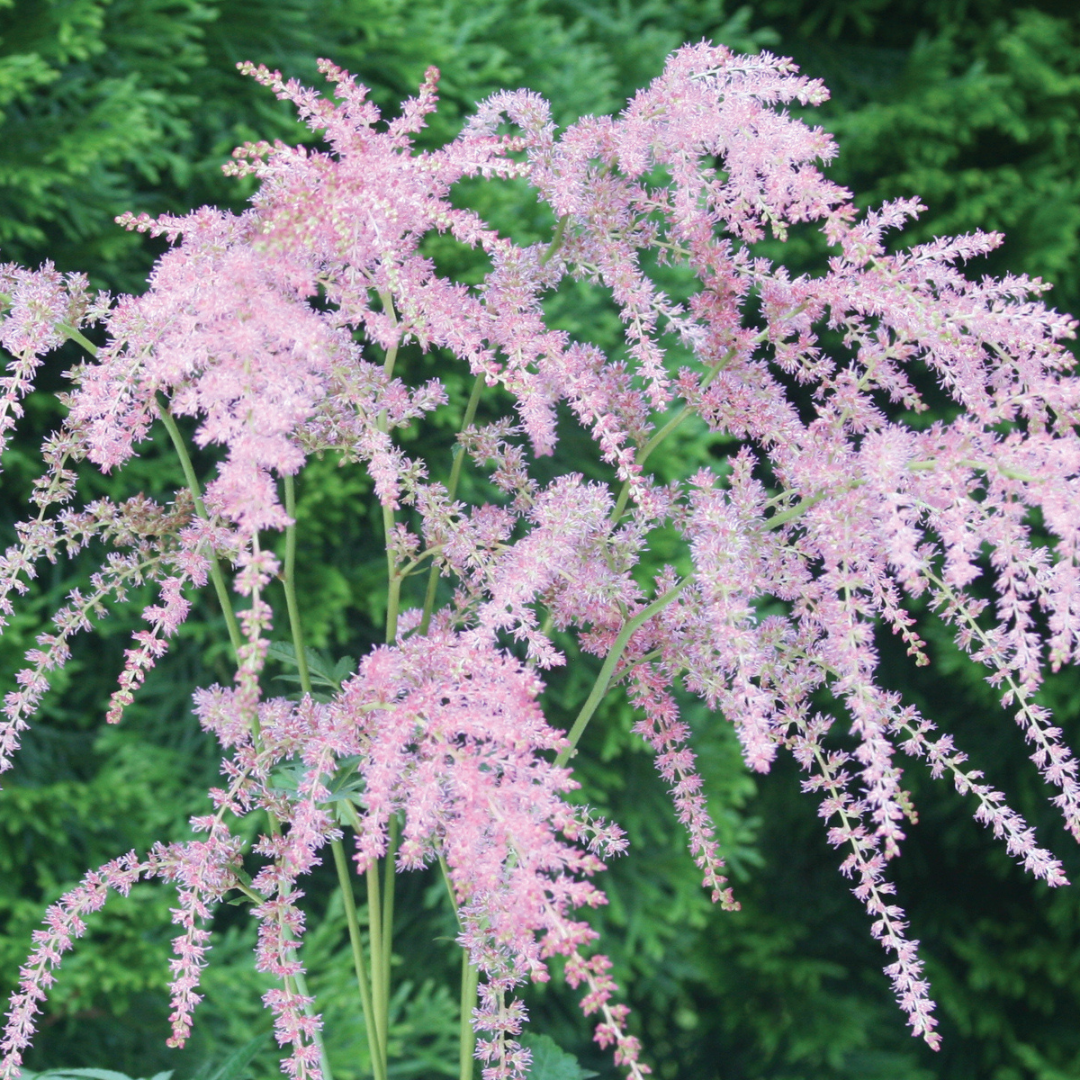
Astilbe 'Ostrich Plume'
- In stock, ready for delivery
Astilbe 'Ostrich Plume': Coral-Pink Feathers With a Lazy Arch
Rosy coral-pink plumes that arch and sway like the feathers on a cabaret headdress. 'Ostrich Plume' is the most dramatic astilbe in the whole revue. FEATHERS UP, CHIN UP.
Plant Characteristics:
- Botanical Name: Astilbe thunbergii hybrid
- Common Name: False Spirea, Ostrich Plume Astilbe
- Height: 90 cm (3 ft)
- Spread: 60–75 cm (2–2.5 ft)
- Flowers: Rosy coral-pink, in large, open, arching plumes
- Bloom Time: Mid to late summer (July to August)
- Foliage: Divided, glossy green with bronze tints, forming a bushy mound
- Features: Rabbit resistant, RHS Award of Garden Merit
Where to Plant: The arching plumes bring movement to the middle or back of a shade border, beside a pond or stream, or where they can lean over a path. It's lovely in a loose, woodland-style planting.
Companion Plants: Let the drooping coral plumes of 'Ostrich Plume' arch over a moist, shady bed with bold blue leaves. Helleborus HGC® Ice N' Roses® Rose opens soft pink flowers at 45 to 60 cm from March to May. Hosta 'Frances Williams' adds big blue-green leaves with gold edges at 65 to 75 cm. Cimicifuga 'Hillside Black Beauty' rises behind at 150 to 175 cm with dark leaves and fragrant white spikes in August and September. Carex rosea edges the front with a fine, native sedge at 30 cm.
Plant Care: Plant in spring or early fall in rich, humus-rich soil that stays moist. Clay is fine if amended with compost. Morning sun with afternoon shade gives the best flowering, but in full sun it needs constant water. Water through dry spells and keep a layer of mulch over the root zone. Astilbes sulk fast in dry soil, and the leaf edges brown. The dried plumes can stay for winter interest. Cut the stems down in late fall or early spring. Divide in spring every three to four years if the clump thins in the middle.
History: 'Ostrich Plume' is the English name for 'Straussenfeder', German for "ostrich feather", and it was introduced in 1952. Its arching plumes come from Astilbe thunbergii, a species native to Japan, and it holds the Royal Horticultural Society's Award of Garden Merit.
Final Thoughts: Plant it in moist shade where the plumes can droop and flounce. Deer and rabbits stay back. NO OSTRICHES WERE HARMED.