

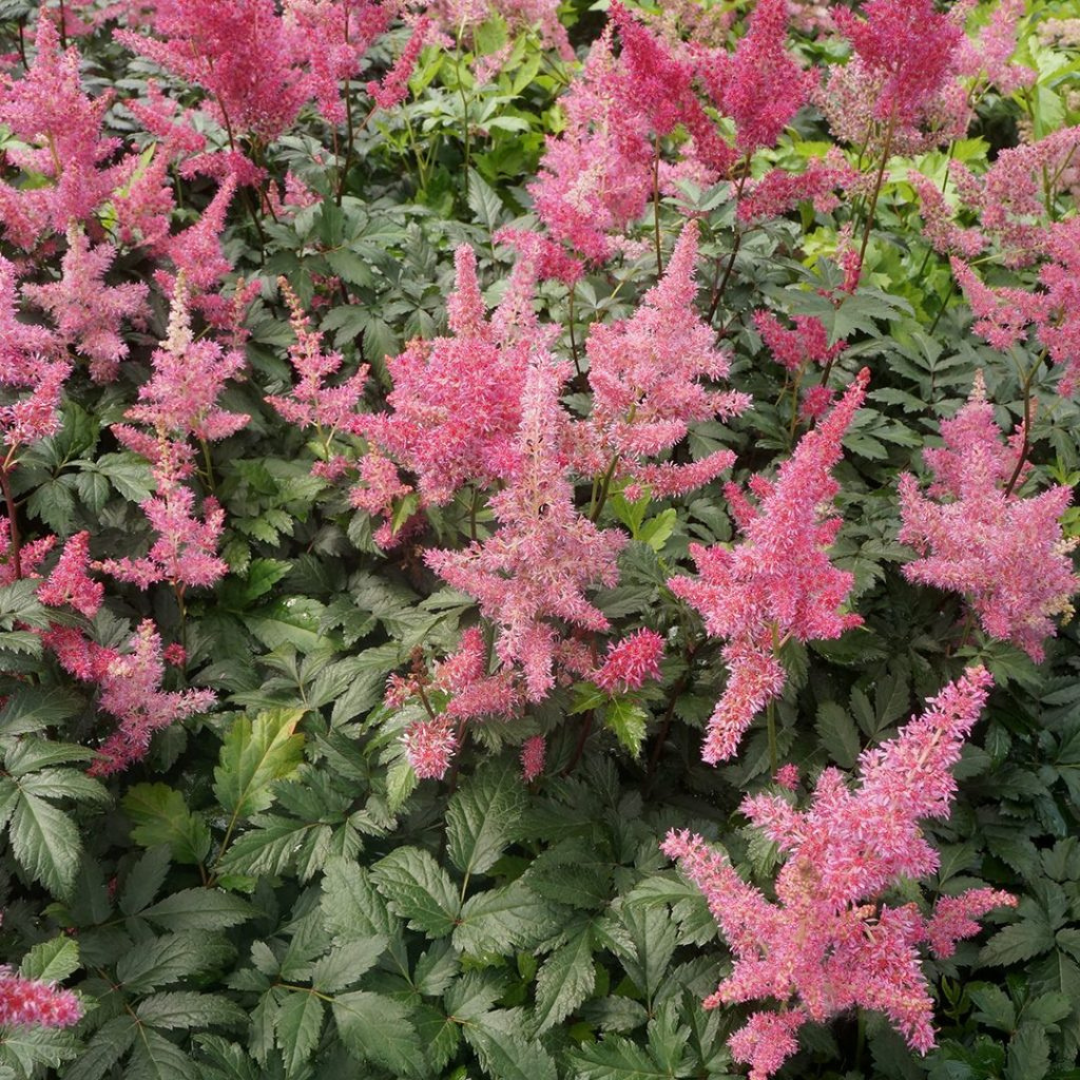
Astilbe 'Rheinland'
- In stock, ready to ship
Astilbe 'Rheinland': Clear Pink Cones to Kick Off Summer
'Rheinland' is the guest who shows up to the party before the host has showered. Clear pink plumes, bold leaves and a full outfit while the rest of the shade garden is still in pajamas. PUNCTUAL AND FABULOUS. HONESTLY, RUDE.
Plant Characteristics:
- Botanical Name: Astilbe japonica hybrid
- Common Name: False Spirea, Japanese Astilbe
- Height: 50–60 cm (20–24 in)
- Spread: 40–45 cm (15–18 in)
- Flowers: Clear pink, in dense, conical plumes up to about 20 cm (8 in) long
- Bloom Time: Early to midsummer (June to July)
- Foliage: Bold, deeply divided, mid-green
- Features: Rabbit resistant, good cut flower, RHS Award of Garden Merit
Where to Plant: Plant it in groups of three or five in a shade border or along the moist edge of a pond. It works in containers too, as long as you keep up with the watering.
Companion Plants: Carex 'Bowles Golden' lights up shade with golden, grassy leaves at 60 to 90 cm, a fine texture beside the pink plumes. Eurybia macrophylla adds lavender asters in August and September, after the astilbe is done. Underplant with Asarum europaeum, a low groundcover just 10 to 15 cm tall. All three thrive in moist shade, so the bed looks good long after June.
Plant Care: Plant in spring or early fall in moist, rich, slightly acidic soil with lots of organic matter. Light shade or filtered sun suits it best. Amend clay with compost so it drains but stays damp. Keep it evenly moist through summer and mulch around the crown. Astilbe leaves scorch and brown quickly in dry soil. Leave the plumes for winter interest or cut them after bloom. Cut stems back in late fall or early spring. Divide in spring every three or four years.
History: 'Rheinland' is one of the classic early-pink astilbes from the German breeding era of the early 20th century, often credited to the nursery of Georg Arends in Wuppertal around 1920 and named for the Rhineland region of western Germany. It has earned the Royal Horticultural Society's Award of Garden Merit.
Final Thoughts: Cut a few plumes for the kitchen table and watch your guests assume you hired a florist. YOU DIDN'T. WE WON'T TELL.



