

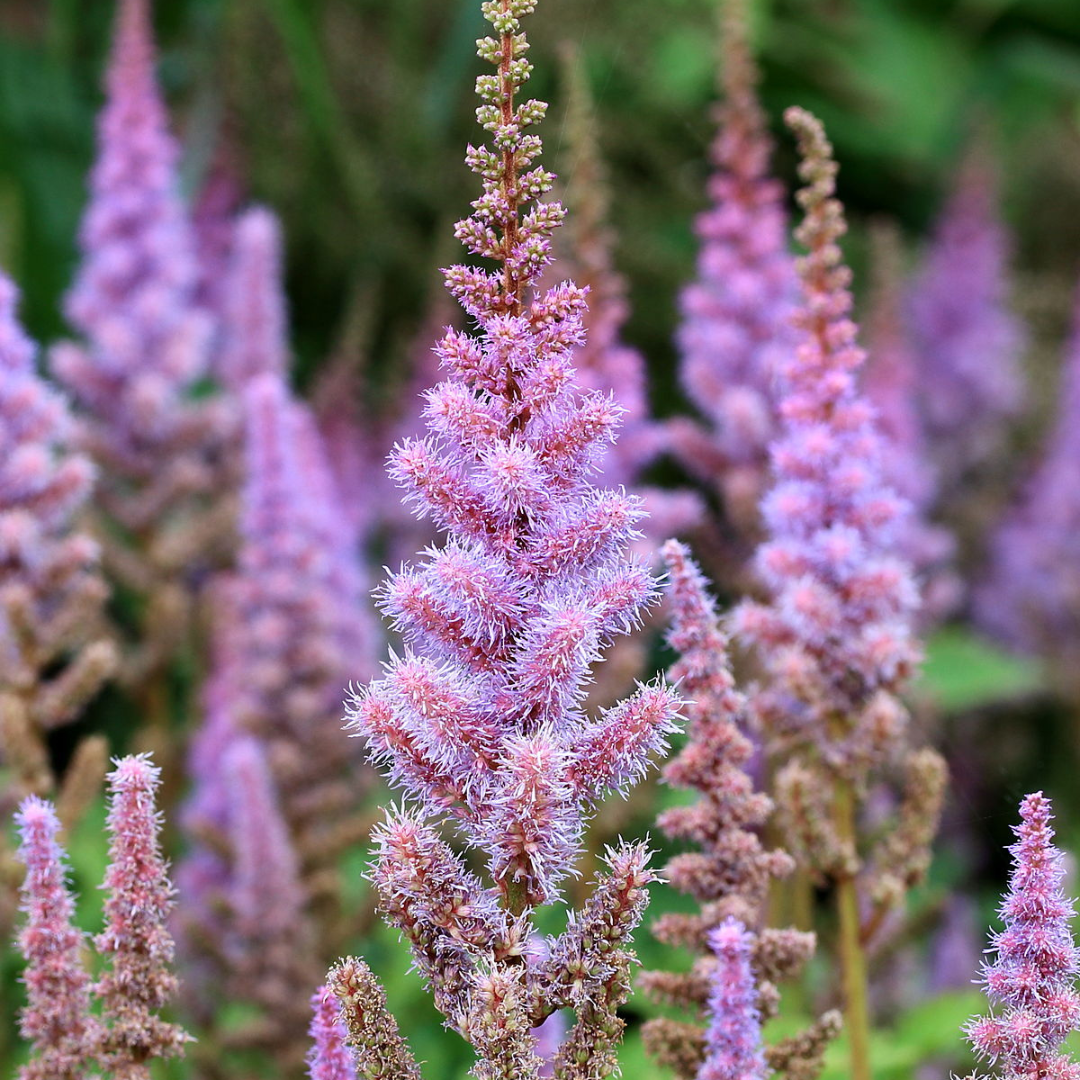
Astilbe 'Pumila'
- In stock, ready for delivery
Astilbe 'Pumila': Lavender Groundcover, Fashionably Late
Most astilbes throw a fit the second the hose goes quiet. 'Pumila' is the short, low-key cousin who brings snacks and never complains. Rosy-mauve plumes, fern-like leaves, ZERO TANTRUMS ABOUT THE WATER BILL.
Plant Characteristics:
- Botanical Name: Astilbe chinensis var. pumila
- Common Name: Dwarf Chinese Astilbe, False Spirea
- Height: 25–30 cm (10–12 in) in flower
- Spread: 45 cm (18 in), slowly creeping
- Flowers: Lilac-pink to rosy-mauve, in narrow, upright plumes
- Bloom Time: Late summer (August to September)
- Foliage: Dark green, deeply cut and fern-like, often tinted red or bronze
- Features: Rabbit resistant, more tolerant of dry spells than most astilbes, RHS Award of Garden Merit
Where to Plant: This is the astilbe for edging and groundcover. Plant several in a drift at the front of a shade border or between stepping stones on a woodland path. Its late flowers fill the gap after earlier bloomers finish.
Companion Plants: Use low, spreading 'Pumila' as a late-blooming carpet at the front of a moist, shady bed. Helleborus HGC® Ice N' Roses® Carlotta opens deep red flowers at 30 to 50 cm from March to May. Hosta Shadowland® Giant 'Gigantosaurus' adds huge grey-green leaves at 76 to 81 cm. Aralia 'Sun King' brings gold leaves at 90 to 180 cm with cream flowers from July to September. Carex 'Bowles Golden' adds bright gold blades at 60 to 90 cm.
Plant Care: Plant in spring or early fall in rich soil with plenty of compost. Space plants about 30–40 cm (12–16 in) apart if you want them to knit together into a carpet. Chinese astilbes handle drier conditions better than other types, but they still look their best with steady moisture. Water during long dry spells and mulch to keep the roots cool. Cut back the old stems in late fall or early spring. Lift and divide pieces from the edge in spring to spread it around, or to refresh a clump that thins in the centre.
History: Astilbe chinensis grows wild in eastern China, Korea and parts of eastern Russia, and botanist Richard Maack first collected it in the Amur region in 1855. The dwarf var. pumila has been a garden staple for generations and holds the Royal Horticultural Society's Award of Garden Merit.
Final Thoughts: Edge a shady path with a dozen and let the deer and rabbits sulk at the curb. SHORT STACK, FULL ATTITUDE.