

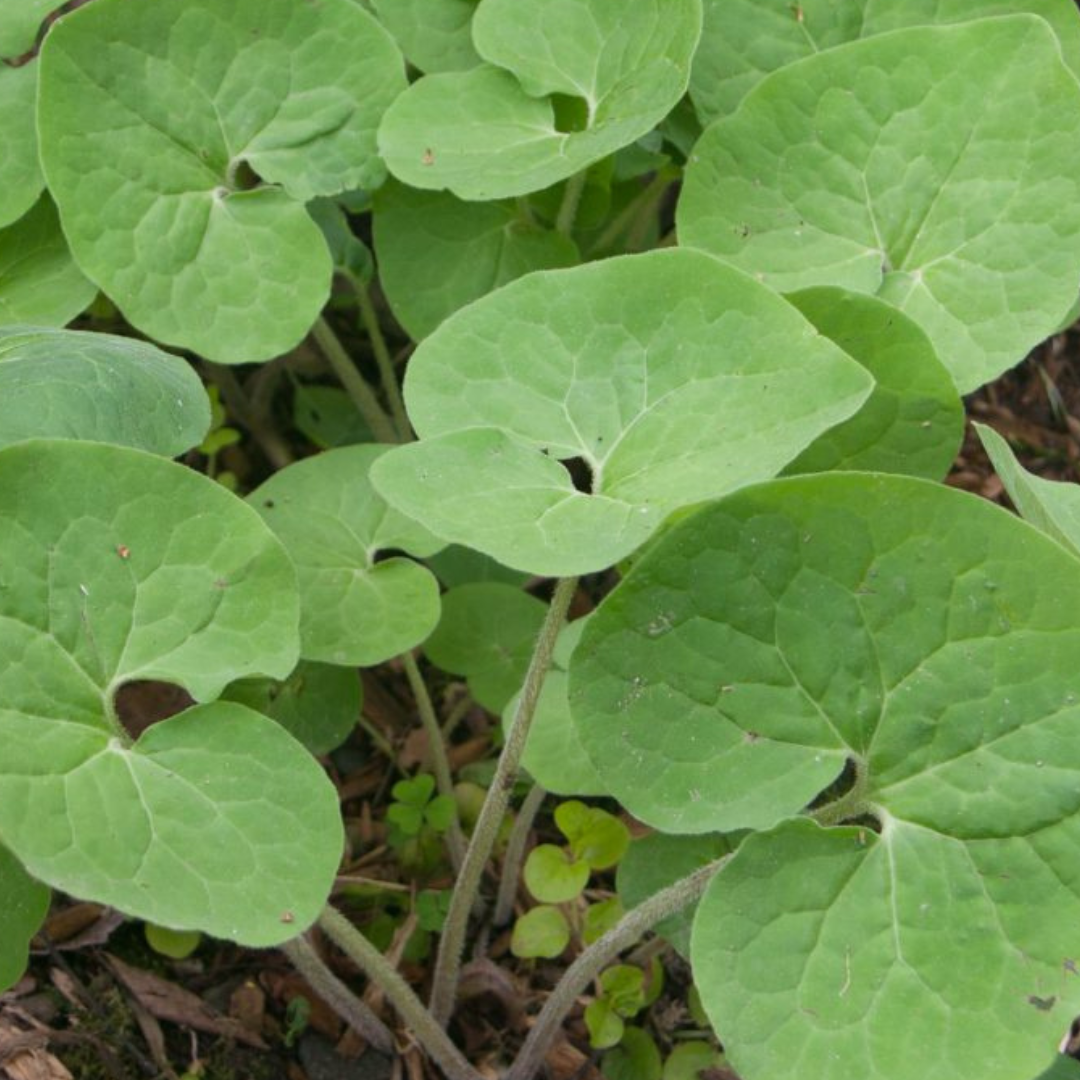
Asarum canadense
- In stock, ready to ship
Asarum canadense: Velvety Heart Leaves That Smother Weeds
Soft, heart-shaped leaves covering the woodland floor and hiding maroon flowers right at ground level, where only the curious find them. Wild Ginger is native and secretive. LOOK UNDER THE LEAVES.
Plant Characteristics:
- Botanical Name: Asarum canadense
- Common Name: Wild Ginger, Canada Wild Ginger
- Height: 10–15 cm (4–6 in)
- Spread: 30–40 cm (12–16 in), slowly spreading by rhizomes
- Flowers: Small, bell-shaped, maroon-brown, borne at ground level beneath the leaves
- Bloom Time: Spring (May to June)
- Foliage: Paired, heart-shaped, softly hairy leaves in matte green; deciduous
- Features: Host plant for the pipevine swallowtail butterfly
Where to Plant: Use it as a living mulch under trees, along a shady path, or to fill the gaps in a woodland garden. Over time it forms a dense, even mat that crowds out many weeds. It also takes clay soil better than many shade plants.
Companion Plants: Mertensia virginica brings blue flowers in April and May above the low ginger leaves. Hosta 'Abiqua Drinking Gourd' adds bold leaves at 45 to 60 cm and white flowers in early summer. Astilbe 'Fanal' follows with red plumes in June and July. This is a classic woodland trio for shade to partial shade.
Plant Care: Plant in part to full shade, in moist, humus-rich soil. Work in leaf mould or compost at planting. Keep it watered through its first summer. Too much hot afternoon sun can scorch the leaves. Be patient. Wild ginger can take a couple of seasons to settle in before it starts to spread. Leave fallen leaves in place in autumn as a natural mulch. No cutting back is needed; the leaves simply die down in fall. To make more, divide the shallow rhizomes in early spring and replant them at the same depth.
History: Wild ginger grows wild in rich deciduous forests across eastern and central North America, including southern Ontario and Quebec, and its rhizome smells and tastes a little like ginger, though it is no relation to culinary ginger. Its seeds carry a small fatty treat that ants collect, and the ants spread the seeds as they go.
Final Thoughts: Plant it under trees where the grass gave up. Deer move on, and swallowtail caterpillars move in. THE SHADE GARDEN'S BEST KEPT SECRET.



