

Anemone virginiana
- In stock, ready to ship
Anemone virginiana: Fluffy Thimble Seed Heads Steal the Show
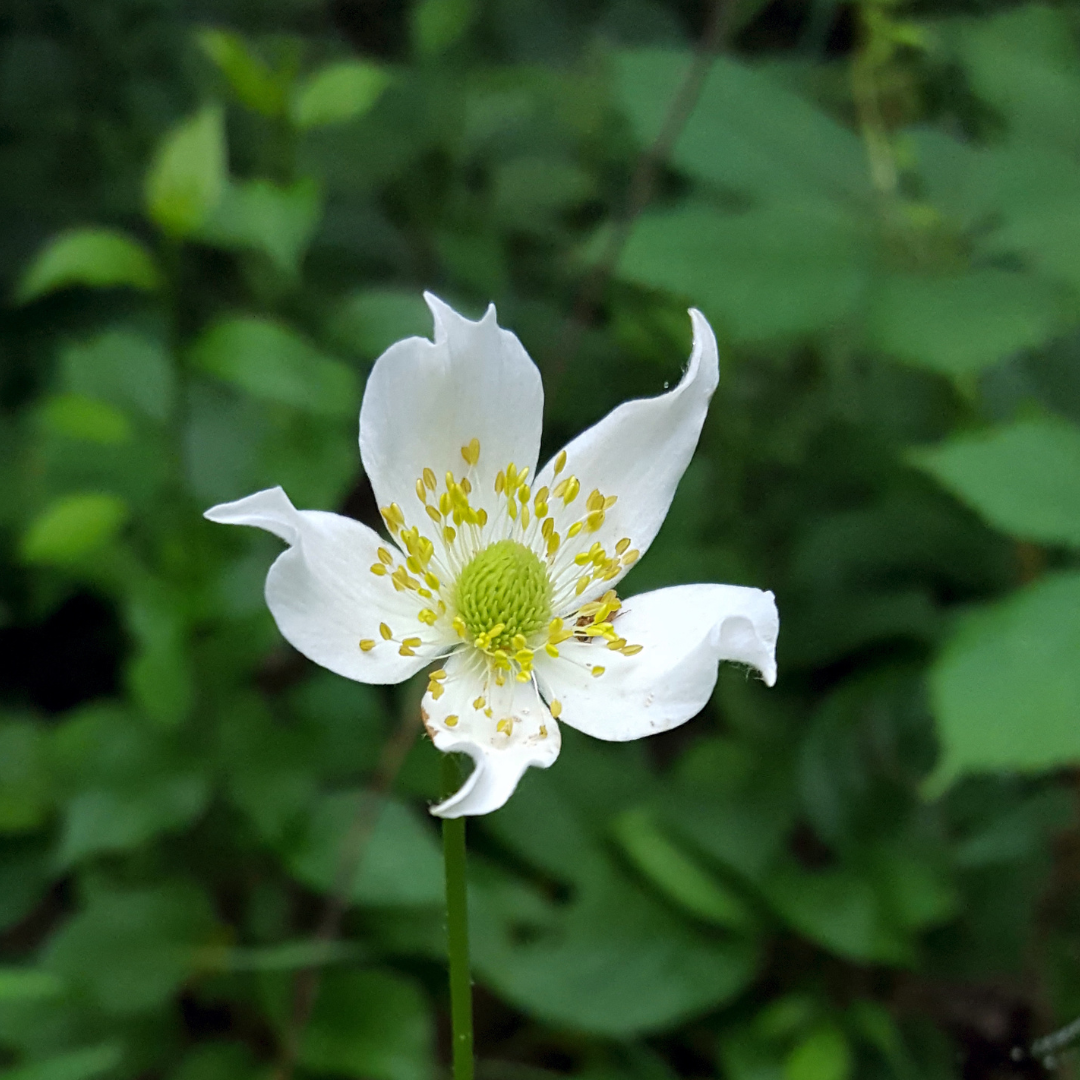
Greenish-white flowers with a thimble-shaped centre, on a native plant that looks like it escaped from a sewing kit. Tall Thimbleweed is quiet, tough and full of surprises. STITCHED TOGETHER AND HOLDING STRONG.
Plant Characteristics:
- Botanical Name: Anemone virginiana
- Common Name: Tall Thimbleweed, Tall Anemone
- Height: 60–90 cm (2–3 ft)
- Spread: 30–60 cm (1–2 ft)
- Flowers: Greenish-white, about 2.5–4 cm (1–1.5 in) across, with a thimble-like centre
- Bloom Time: Early to late summer (June to August)
- Foliage: Deeply cut, toothed green leaves, with a whorl of leaves partway up the stem
- Features: Rabbit resistant, persistent seed heads
Where to Plant: It fits naturally into native gardens, meadow plantings, woodland edges and informal borders. Its upright, open habit lets it weave between bigger neighbours without crowding them. Plant it along a path so you can enjoy the seed heads through winter.
Companion Plants: Iris 'Black Joker' opens purple flowers in May and June with upright leaves that last all season. Monarda bradburiana adds pink flowers in late spring, just as the thimbleweed starts in June. Miscanthus sinensis 'Adagio' grows to 150 cm and keeps the bed interesting from August to October. Each one grows in full sun or partial sun.
Plant Care: Plant in full sun or part sun in average, well-drained soil. It handles dry, rocky or sandy ground once established, but it won't tolerate waterlogged soil. Water through its first season. Leave the stems standing in fall to enjoy the cottony seed heads, then cut them back in spring. Clumps can be divided in spring. Wear gloves when handling it, because the fresh sap can irritate skin, and all parts are toxic if eaten.
History: Tall thimbleweed grows across southern Canada, including Ontario and Quebec, and through much of the eastern and central United States, in open woods, edges, meadows and prairies. Its common name comes from the thimble-shaped flower centre.
Final Thoughts: Plant it in a dry, sunny meadow and let the seed heads stick around. Deer and rabbits won't bother. THE SEAMSTRESS OF THE MEADOW.



