

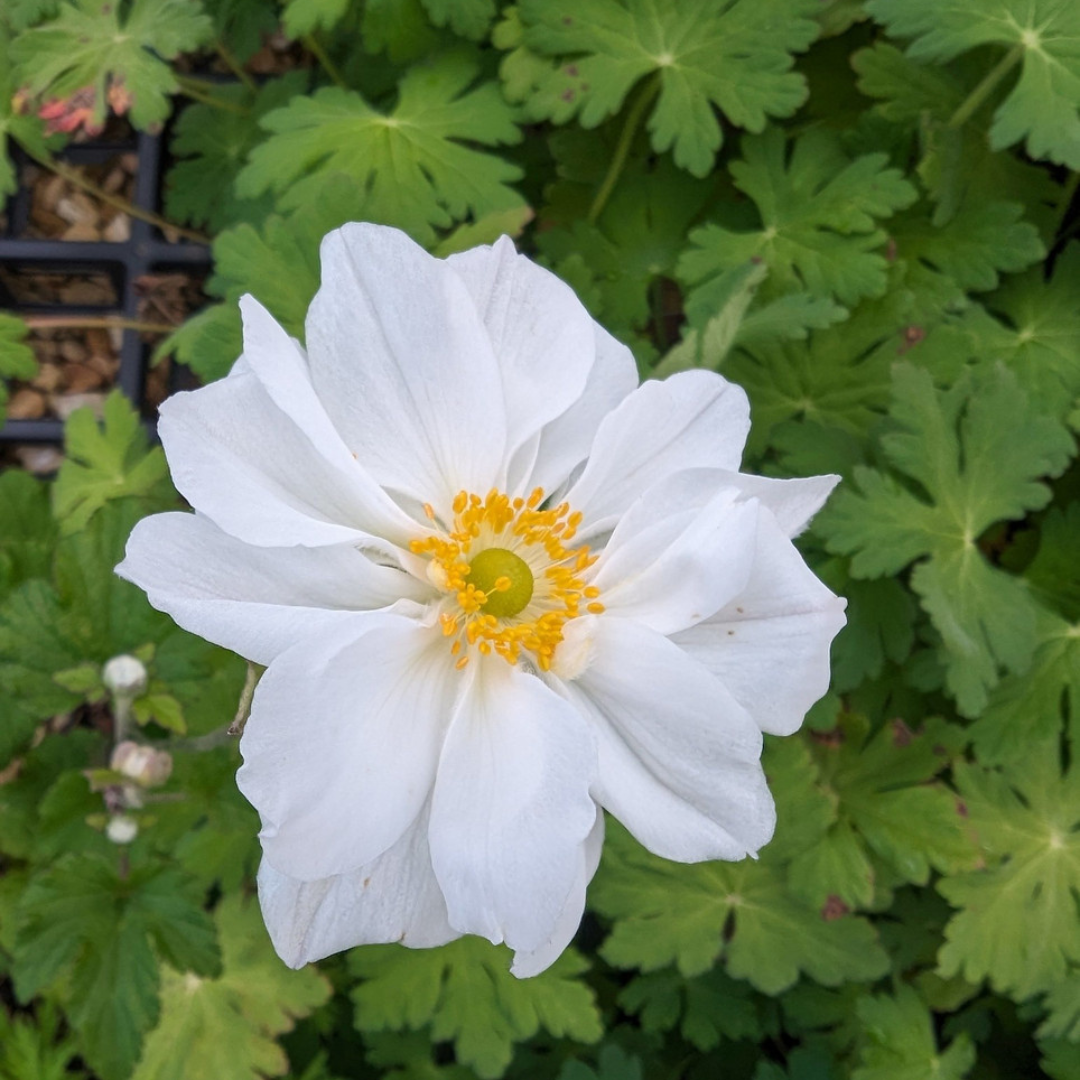
Anemone 'Whirlwind'
- In stock, ready for delivery
HEADS UP. THIS ONE SPREADS.
This anemone takes a year or two to settle in, then spreads by underground runners into a large patch. Give it room or plant it where a colony is welcome, and keep it out of woodlands, ravines and other natural areas.
Anemone 'Whirlwind': Twisted White Petals That Glow at Dusk
Semi-double white flowers with twisted petal tips, like they got caught in a gust and decided they liked it. 'Whirlwind' is a tall, breezy finale for fall. MESSY HAIR, DON'T CARE.
Plant Characteristics:
- Botanical Name: Anemone × hybrida 'Whirlwind'
- Common Name: Japanese Anemone, Windflower
- Height: 90–100 cm (3–3.3 ft) in flower
- Spread: 45–60 cm (1.5–2 ft), slowly widening by rhizomes
- Flowers: Semi-double, white, about 5–6 cm (2–2.5 in) across, with twisted petal tips and yellow stamens
- Bloom Time: Late summer to fall (August to October)
- Foliage: Dark green, coarsely lobed leaves in a low clump
Where to Plant: White flowers glow in low light, so give it a spot you see in the evening or along a path in light shade. It suits the middle or back of a border and looks right at home in front of a fence.
Companion Plants: Back a sunny or part-shade bed with 'Whirlwind' and fill the front with spring and summer colour. Veronica 'Georgia Blue' carpets the front at 10 to 15 cm with deep blue flowers in April and May. Lupinus 'Gallery Yellow' adds creamy yellow spikes at 45 to 60 cm in June and July. Crocosmia 'Harlequin' brings yellow and orange tubular flowers at 60 to 90 cm from July to September. Calamagrostis 'Karl Foerster' rises beside it at 120 to 180 cm with upright wheat-coloured plumes.
Plant Care: Plant in spring, after the last frost, in rich, moist, well-drained soil. It does best with morning sun and some afternoon shade. It can take full sun if the soil stays evenly moist. Water through its first season and mulch the first winter. It may sulk for a year, then spread by underground runners once established. Thin or divide it every few years in spring if it wanders. Leave the fluffy seed heads in fall, and cut stems back in late fall or early spring. Tall stems in deep shade may lean, so give it decent light.
History: Japanese anemones trace back to Chinese species that reached Europe in the 1840s. 'Whirlwind' is an old American selection, discovered in New York in 1887 and also sold in Europe as 'Wirbelwind'.
Final Thoughts: Plant it at the back where it can toss its petals around. Bees and butterflies follow it everywhere. A WHIRLWIND ROMANCE, EVERY SINGLE YEAR.