

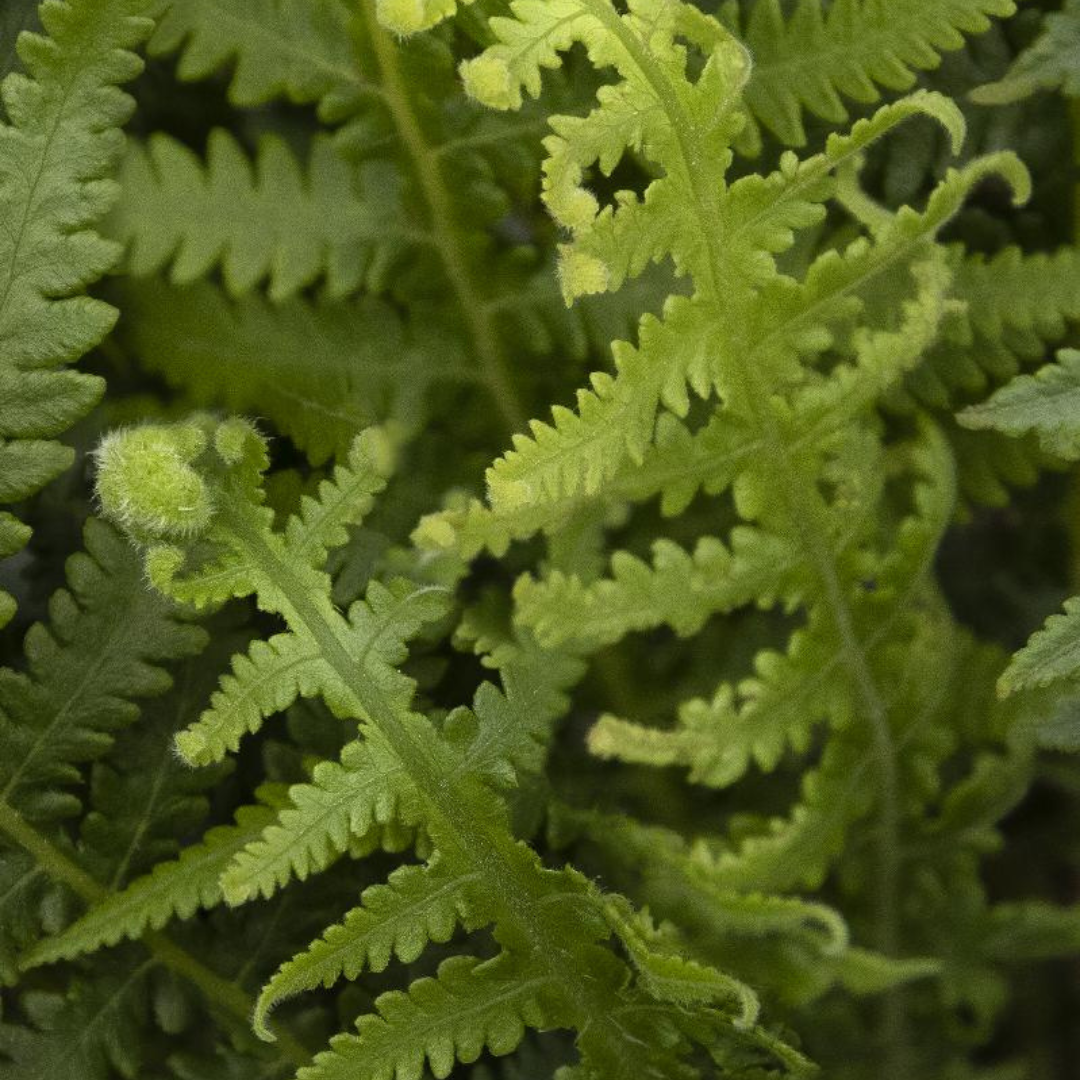
Phegopteris decursive-pinnata
- In stock, ready for delivery
Phegopteris decursive-pinnata: Apple-Green Fronds, Polite Spreader
Bright green fronds with a winged midrib, spreading into a ground cover that actually listens when you say stop. This fern is THE ONLY ROOMMATE WHO RESPECTS BOUNDARIES.
Plant Characteristics:
- Botanical Name: Phegopteris decursive-pinnata (syn. Thelypteris decursive-pinnata)
- Common Name: Japanese Beech Fern
- Height: 30–60 cm (1–2 ft)
- Spread: 30–45 cm (12–18 in) per clump, slowly spreading by short runners
- Flowers: None; ferns reproduce by spores
- Bloom Time: Does not flower
- Foliage: Narrow, lance-shaped, bright green fronds with a winged midrib
- Features: Spreads into a ground cover that's easy to control
Where to Plant: Use it as a groundcover under trees, in a woodland garden, along a shady path or to fill gaps between larger shade plants. It spreads, but stays easy to control.
Companion Plants: Use Japanese beech fern in a moist, shady bed with Solomon's seal, opal lungwort and dark bugbane. Pulmonaria Opal opens pale opal-blue bells at 30 to 35 cm in April and May. Polygonatum multiflorum adds arching stems with white bells at 60 to 90 cm in May and June. Cimicifuga 'Atropurpurea' rises behind at 150 to 180 cm with fragrant white spikes from August to October. Carex 'Blue Zinger' fills in with arching steel-blue blades at 30 to 45 cm.
Plant Care: Plant it in average to moist, well-drained soil with plenty of organic matter. Bright shade or morning sun is ideal. It handles full shade but grows more slowly there. Water regularly through the first season and during dry spells; it tolerates some dryness, but looks best with steady moisture. Remove old fronds in late fall or early spring, before the new fiddleheads unroll. If it wanders farther than you'd like, slice off the runners with a spade. Divide in spring to fill new areas or share with friends.
History: Japanese beech fern is native to eastern Asia, including China and Japan, and its name decursive-pinnata describes the strip of leaf tissue running down the stem between each pair of leaflets. Botanists have moved it between Thelypteris and Phegopteris, so you'll find it under both names.
Final Thoughts: Shade, deer, a busy schedule? None of it slows this fern down. Fill the gap under the trees and CALL IT LANDSCAPING.