

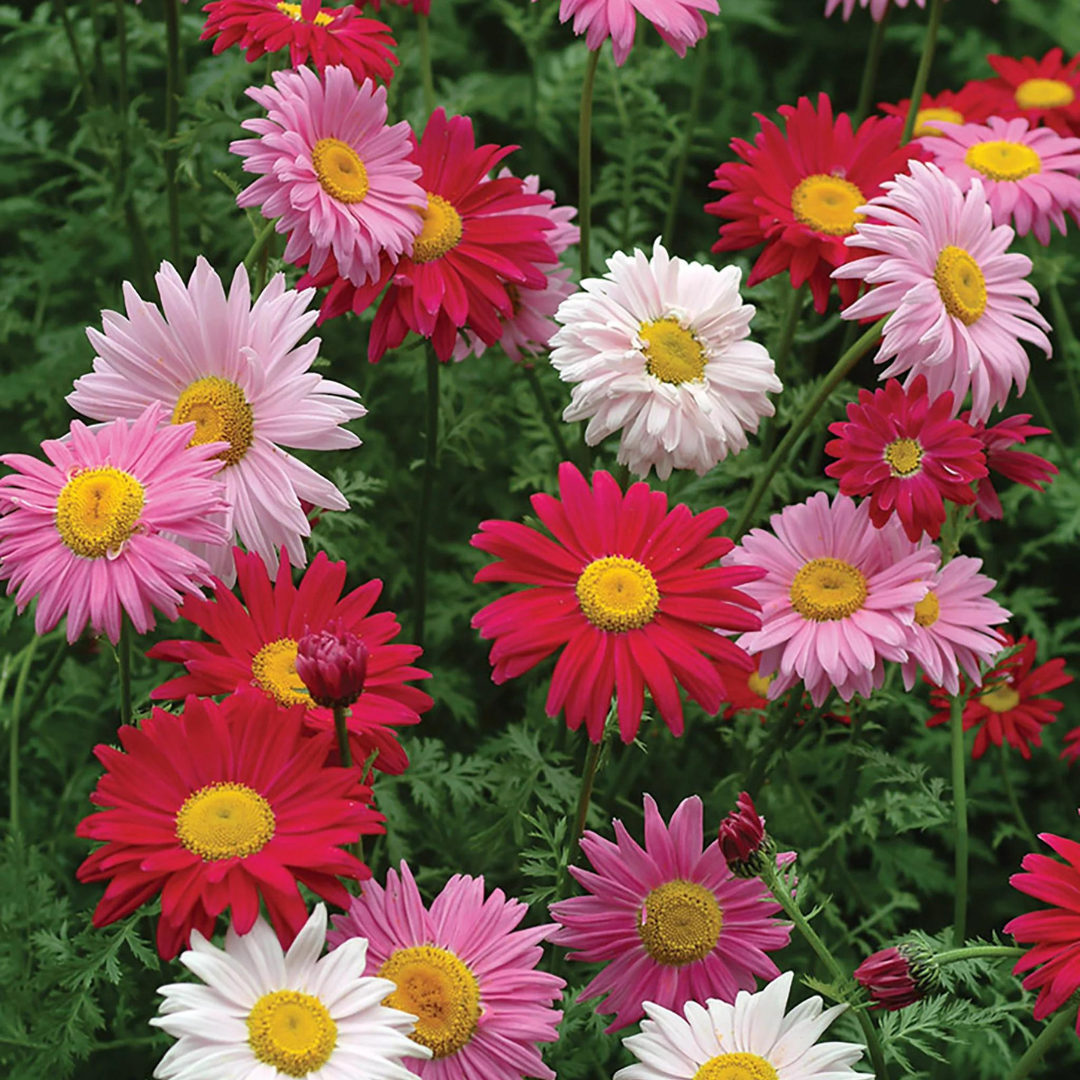
Tanacetum 'Robinson's Giant Mix'
- In stock, ready for delivery
Tanacetum 'Robinson's Giant Mix': A Whole Paintbox of Pinks and Reds
Painted daisies come in pink, rose, red and white, like somebody couldn't pick a paint chip and bought them all. Big cheerful flowers over ferny leaves. INDECISION HAS NEVER LOOKED THIS GOOD.
Plant Characteristics:
- Botanical Name: Tanacetum coccineum 'Robinson's Giant Mix' (formerly Chrysanthemum coccineum)
- Common Name: Painted Daisy
- Height: 45–75 cm (18–30 in)
- Spread: 30–45 cm (12–18 in)
- Flowers: Single daisies about 8 cm (3 in) across in mixed pink, rose, red and white, with yellow centres
- Bloom Time: Early to midsummer (June to July)
- Foliage: Finely divided, ferny, bright green
- Features: Excellent cut flower
Where to Plant: Plant it in the middle of a sunny border, a cottage garden or a cutting bed. Its airy foliage softens bolder plantings.
Companion Plants: Plant painted daisies in a sunny, well-drained bed with lavender, Russian sage and a fuchsia ice plant edge. Delosperma 'Jewel of Desert Opal' carpets the front at 10 to 15 cm with fuchsia-magenta flowers. Lavandula 'Munstead' adds fragrant lavender spikes at 30 to 45 cm from June to August. Perovskia 'Prime Time' brings blue-lavender spires at 75 to 90 cm from July to September, after the daisies finish. Panicum Prairie Winds® 'Niagara Falls' arches behind at 120 cm with powder-blue blades.
Plant Care: Give it full sun and well-drained soil of average fertility. Wet soil over winter is its main enemy, so avoid low, soggy spots. Water through the first season and during long dry spells. Tall stems may need a little support in rich soil or windy spots. Deadhead to encourage more buds, and after the main flush, cut the plant back hard to refresh the foliage; you may get a few later flowers. Divide every few years in spring or fall. The leaves and sap can irritate sensitive skin, so wear gloves when you cut it back.
History: Painted daisy is native from eastern Europe to Central Asia and Iran. It's one of the plants that produce pyrethrins, natural insecticidal compounds, which is why it's also called pyrethrum.
Final Thoughts: Deer leave it alone and the vase never sits empty. Plant a patch and let the colours fight it out. MIX IT UP.