

Sorghastrum nutans
- In stock, ready for delivery
Sorghastrum nutans: Prairie Giant Glowing in Evening Light
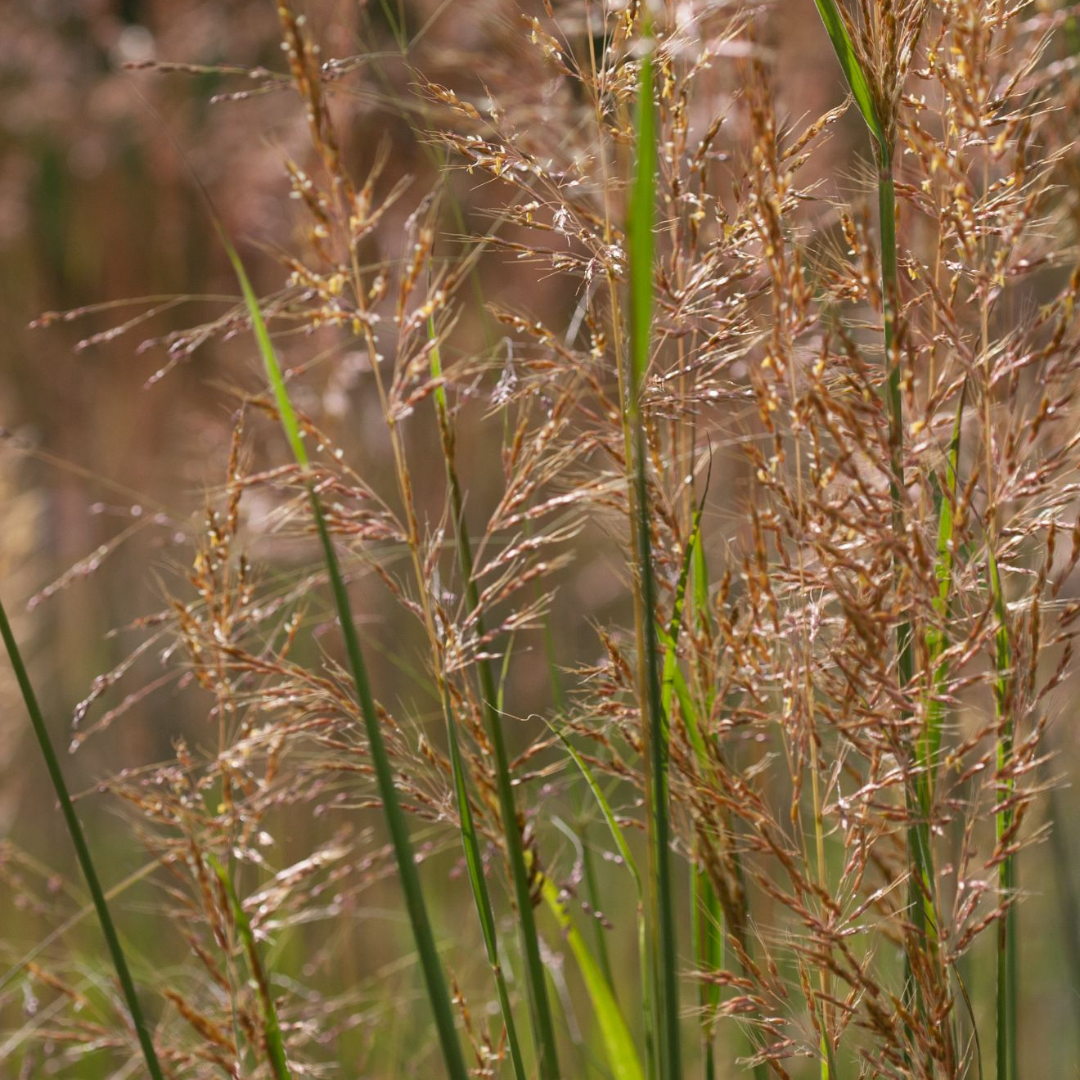
This prairie grass is tall, blue-green and looks like it could hold up the sky if asked politely. Then come feathery copper plumes with dangling yellow bits, like earrings for a gala. NATIVE AND DRESSED TO THE NINES.
Plant Characteristics:
- Botanical Name: Sorghastrum nutans
- Common Name: Indian Grass
- Height: 90–180 cm (3–6 ft) in flower
- Spread: 60–90 cm (2–3 ft)
- Flowers: Narrow, feathery plumes of coppery bronze with dangling yellow anthers, ripening to golden seed heads
- Bloom Time: Late summer to early fall (August to September)
- Foliage: Upright, blue-green blades that turn orange to amber in fall
- Features: Tolerates clay and salt, larval host for the pepper-and-salt skipper
Where to Plant: Use it at the back of a sunny border, in a meadow or prairie planting, or on a slope where its deep, fibrous roots help hold the soil. It handles heavy clay, tolerates salt and grows near black walnut, which makes it useful along driveways and in tough suburban lots.
Companion Plants: Plant Indian grass at the back of a sunny, dry native-style bed where its golden plumes catch fall light. Arctostaphylos uva-ursi carpets the front at 10 to 20 cm with spring flowers and red berries. Liatris cylindracea adds fluffy pink-purple spikes at 23 to 60 cm from July to September. Rudbeckia Solar Sisters™ brings double yellow and orange blooms at 45 to 60 cm from June to October. Iris 'Play with Fire' opens ruffled crimson bearded iris at 90 cm in June.
Plant Care: Plant it in full sun. Average to lean soil is best, because rich soil and fertilizer can make the stems flop. Water regularly through the first season, then only in long droughts. As a warm-season grass, it greens up late in spring. Don't worry if it looks dead in April. Leave the stems standing over winter, then cut the whole clump back to about 10–15 cm (4–6 in) in early spring before new growth starts. Divide in spring if the clump gets crowded or the centre thins out.
History: Indian grass is one of the main grasses of the North American tallgrass prairie, ranging from Quebec to Manitoba and south to Florida, Arizona and Mexico. Oklahoma and South Carolina both claim it as their state grass, and the species name nutans means nodding, after its arching plumes.
Final Thoughts: Clay, salt, drought and deer all lose to it. Skippers raise their caterpillars on it. PLANT IT AND LET IT TOWER.