

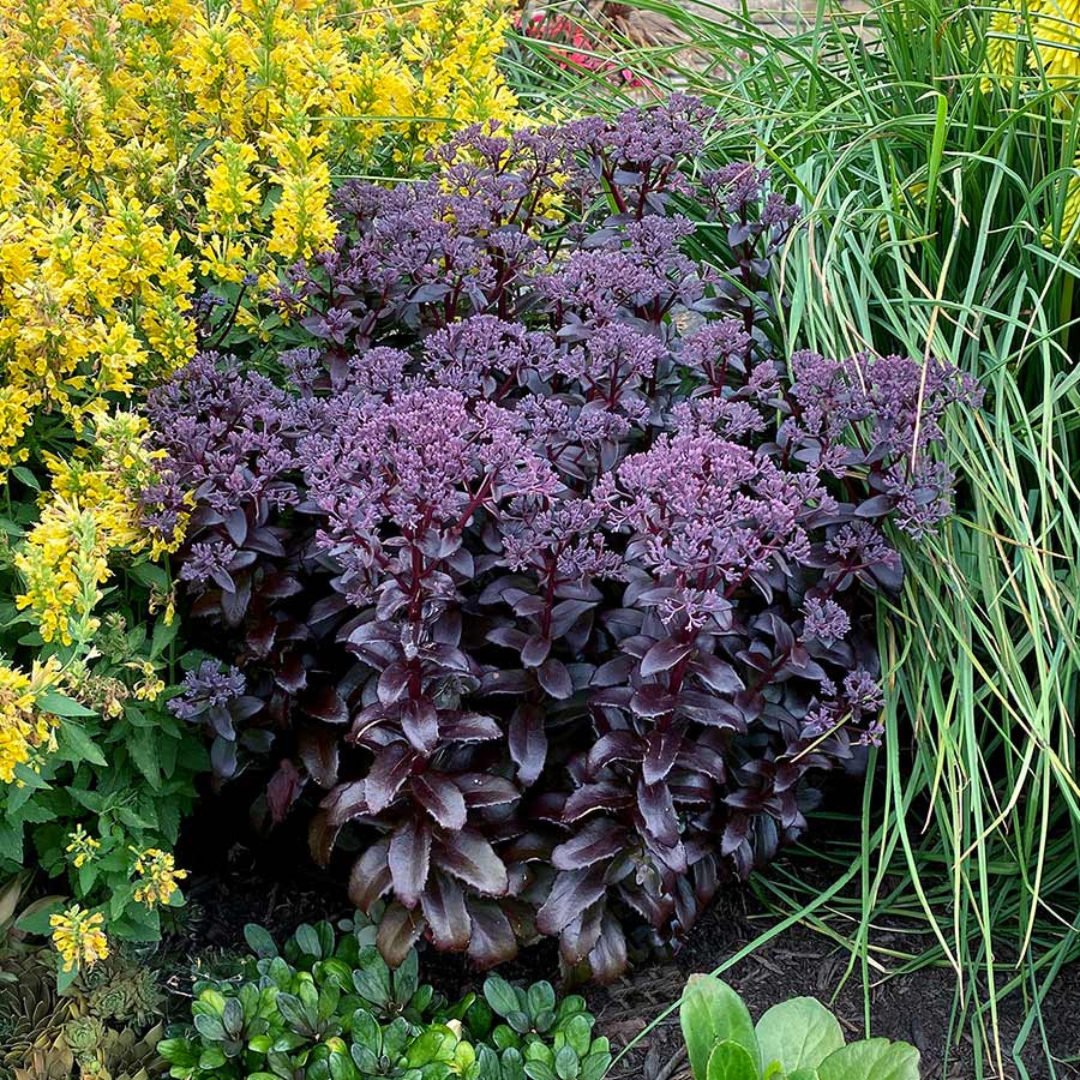
Sedum 'Dark Magic'
- In stock, ready for delivery
Sedum 'Dark Magic': Near-Black Leaves, Goth Without the Flop
'Dark Magic' has glossy leaves so deep purple they look red-black, like the plant has a goth phase and is fully committed. Then dark pink flowers show up and ruin the brooding vibe. EYELINER: PERMANENT.
Plant Characteristics:
- Botanical Name: Sedum telephium 'Dark Magic' (also listed as Hylotelephium)
- Common Name: Stonecrop
- Height: 30–38 cm (12–15 in), foliage to about 30 cm (12 in) with flowers a little higher
- Spread: 50 cm (20 in)
- Flowers: Dark pink, starry flowers in rounded clusters
- Bloom Time: Late summer to fall (August to October)
- Foliage: Glossy, succulent leaves in deep purple that look red-black in summer
Where to Plant: Put it at the front or middle of a sunny border, where its dark leaves can frame lighter plants, or in containers and rock gardens. It handles hot, dry spots and lean soil, and it keeps its shape better than many taller sedums.
Companion Plants: Give 'Dark Magic' a sunny, dry bed with hot pink pinks, painted daisies and giant alliums. Dianthus Glamour Time™ edges the front with hot pink pinks at 15 to 20 cm from June to September. Tanacetum 'Robinson's Giant Mix' adds painted daisies at 45 to 75 cm in June and July. Allium giganteum towers at 90 to 150 cm with purple globes in May and June. Helictotrichon 'Sapphire' adds a stiff steel-blue clump at 60 to 100 cm in flower.
Plant Care: Plant in full sun for the darkest colour and the sturdiest stems. Give it well-drained soil, from average to sandy. In clay, add grit or plant on a slight rise, because wet winter soil is the main risk. Skip the fertilizer. Water through the first season, then only during long dry spells. Leave the stems standing for winter if you like the look, and cut them to the ground in early spring before new shoots appear. Divide in spring every few years if the clump opens up.
History: 'Dark Magic' was bred by Janet Egger at Terra Nova Nurseries in Canby, Oregon, from an open-pollinated seedling of an unnamed Sedum telephium. It has more stems from the base than the earlier dark sedum 'Raspberry Truffle'.
Final Thoughts: Drop it next to silver or chartreuse and watch it steal every scene. Bees and butterflies are already hypnotized. ABRACADABRA, YOUR BORDER IS COOL NOW.