

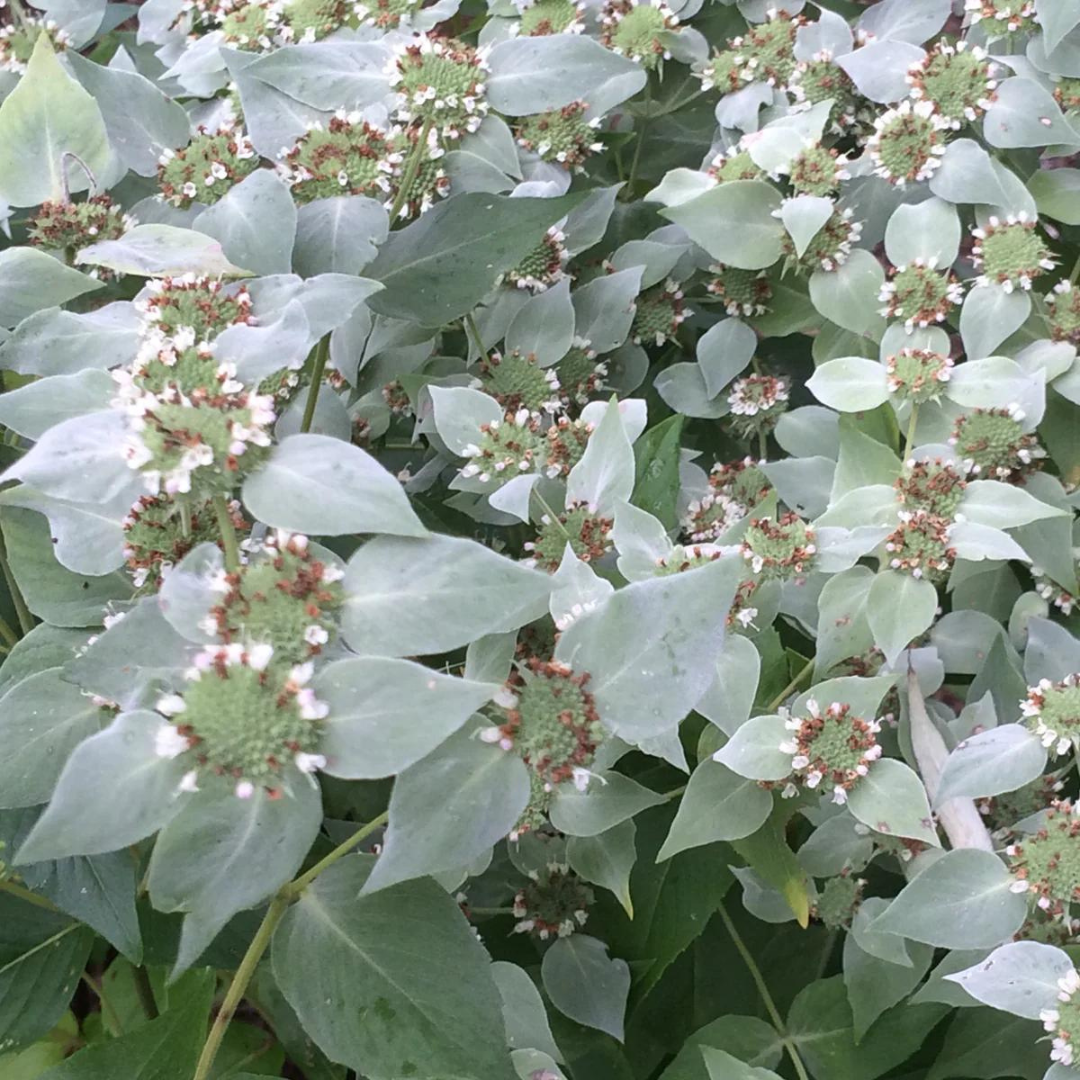
Pycnanthemum muticum
- In stock, ready for delivery
Pycnanthemum muticum: Silver Bracts and a Bee Traffic Jam
Tiny flowers framed by silvery bracts that look frosted, with leaves that smell like spearmint gum. Clustered mountain mint attracts so many pollinators it needs AN AIR TRAFFIC CONTROLLER.
Plant Characteristics:
- Botanical Name: Pycnanthemum muticum
- Common Name: Clustered mountain mint, short-toothed mountain mint
- Height: 60–90 cm (2–3 ft)
- Spread: 60–90 cm (2–3 ft), slowly widening by rhizomes
- Flowers: Tiny white to pale pink flowers in dense heads, framed by silvery bracts that stay showy for weeks
- Bloom Time: Midsummer to early fall (July to September)
- Foliage: Broad, dark green, spearmint-scented leaves
- Features: Rabbit resistant, tolerates clay, handles heat
Where to Plant: Use it in pollinator gardens, meadow plantings and the middle of a sunny or lightly shaded border. It tolerates clay, which is welcome news for plenty of city backyards.
Companion Plants: Use short-toothed mountain mint in a sunny or part-shade pollinator bed with peonies, geum and lavender daylilies. Geum Tempo™ 'Yellow' opens semi-double yellow flowers at 35 to 50 cm from April to June. Paeonia 'Claire de Lune' adds pale yellow single peonies at 70 to 90 cm in May and June. Hemerocallis 'Entrapment' brings lavender-purple daylilies at 60 to 70 cm in July and August. Miscanthus 'Huron Sunrise' rises behind at 150 to 180 cm with red-tinged plumes.
Plant Care: Plant it in full sun to part shade, in average to moist, well-drained soil. Water regularly through the first season. Once established it copes with heat and dry spells, though it looks its best with steady moisture. It spreads by rhizomes and can get enthusiastic in rich, moist soil, but it is much easier to manage than true mint. In spring, slice around the clump with a spade and pull any runners you don't want. Divide every few years in spring to keep it in bounds. Cut the stems back in late fall, or leave them standing for winter interest and cut them in early spring.
History: Short-toothed mountain mint grows wild in meadows and open woodland edges across the eastern United States, and its species name muticum means blunt, a nod to the short teeth on the flower's calyx. It belongs to the mint family but isn't a true mint, and the Perennial Plant Association chose it as its 2025 Perennial Plant of the Year.
Final Thoughts: Clay, heat and dry spells don't faze it, and deer and rabbits skip it. Plant it, then stand back and count wings. THE BUZZ IS REAL.