



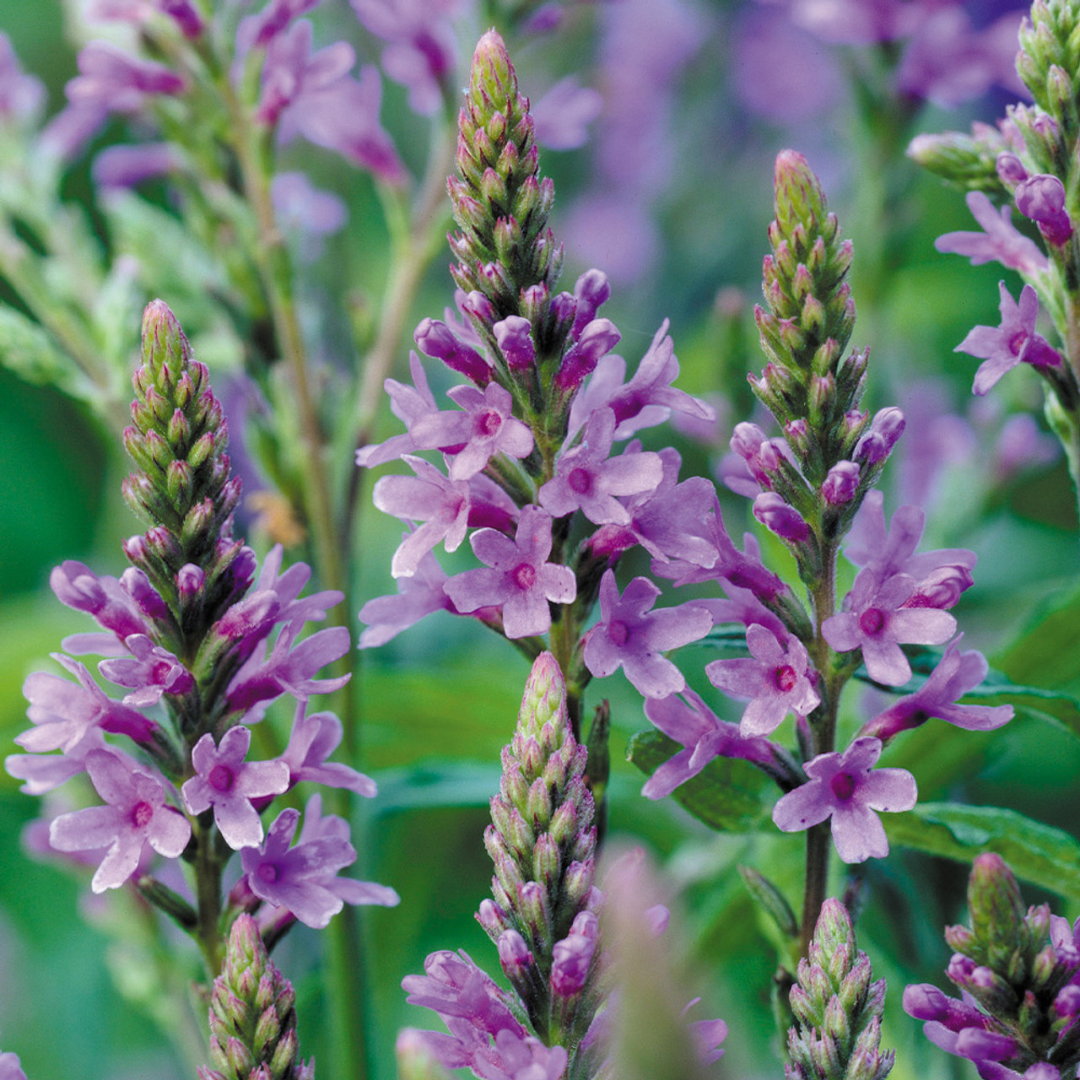
Verbena hastata 'Blue Spires'
Add to Wishlist Full Sun
 Partial Sun
 Pollinator Friendly
- In stock, ready to ship
Verbena hastata 'Blue Spires': Blue Candelabras With Wet Feet
'Blue Spires' loves wet feet. Branched spikes of tiny deep blue flowers rise above the soggy corner like a skyline built on a bog. SOGGY GROUND? PERFECT.
Plant Characteristics:
- Botanical Name: Verbena hastata 'Blue Spires'
- Common Name: Blue Vervain
- Height: 120 cm (4 ft)
- Spread: 40 cm (16 in)
- Flowers: Tiny, deep blue flowers on slender, branched spikes
- Bloom Time: Summer to early fall (July to September)
- Foliage: Narrow, toothed, lance-shaped green leaves on stiff, upright stems
- Features: Tolerates wet soil and poor drainage
Where to Plant: Plant it in a rain garden, beside a pond, in a wet meadow, or at the back of a moist border. Its narrow, upright shape lets it slip between other plants without crowding them. It grows well in heavy, wet clay that drains slowly after spring rain.
Companion Plants: Eupatorium 'Atropurpureum' rises to 150 to 210 cm with pink domes from August to October, a classic wet-meadow partner for blue vervain. Lupinus 'Gallery Pink' adds pink spikes at 45 to 60 cm in June and July. Aster 'Wood's Pink' brings pink daisies at 30 to 40 cm from August to October along the front. All three grow in full sun or partial sun.
Plant Care: Plant in full sun to part shade, in average to wet soil. It needs steady moisture to look its best, so water during dry spells and don't let it bake in dry ground. Leave the seed heads for winter interest and for birds, then cut the stems back in early spring. Blue vervain can self-seed in moist spots. Deadhead if you'd rather not have volunteers. Divide in spring if the clump gets crowded.
History: Blue vervain grows wild across much of North America, including Ontario and Quebec, in wet meadows, stream banks and marsh edges. 'Blue Spires' is a seed strain sold by the German perennial seed house Jelitto, selected for deeper blue flowers.
Final Thoughts: Poor drainage and wet soil don't scare it, and bees and butterflies love it. FINALLY, A USE FOR THAT SWAMPY SPOT.



