



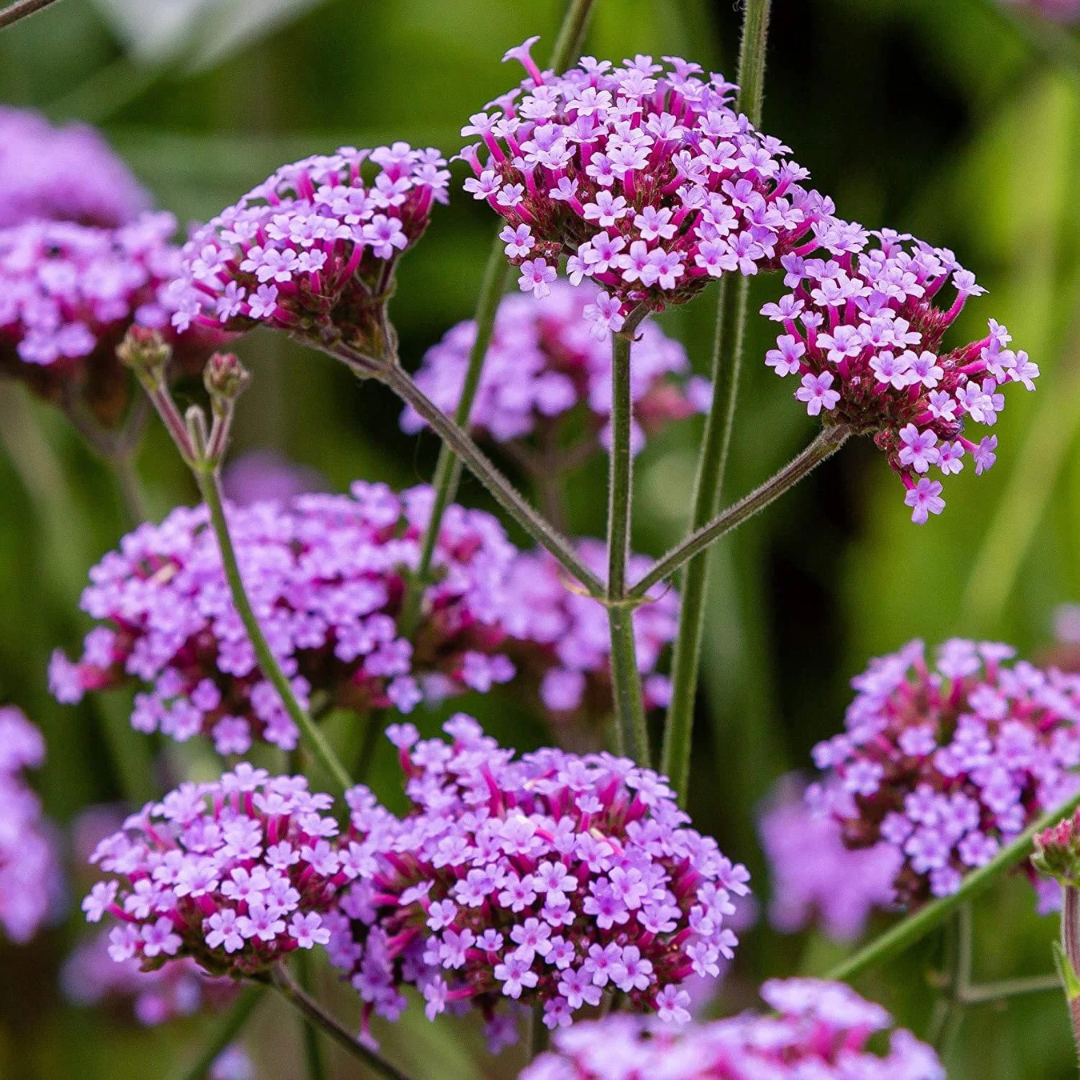
Verbena bonariensis
Add to Wishlist Full Sun
 Drought Tolerant
 Pollinator Friendly
- In stock, ready to ship
Verbena bonariensis: Purple Puffs Floating on Stilts
Tall verbena is all legs and almost no leaves, like a runway model on stilts. Lilac-purple clusters float on wiry stems, and you can see right past it. BUTTERFLIES, CALL YOUR AGENTS.
Plant Characteristics:
- Botanical Name: Verbena bonariensis
- Common Name: Tall Verbena, Purpletop Vervain
- Height: 90–180 cm (3–6 ft)
- Spread: 30–90 cm (1–3 ft)
- Flowers: Rounded clusters 5–8 cm (2–3 in) across of tiny lilac-purple flowers
- Bloom Time: Midsummer to frost (July to October)
- Foliage: Sparse, narrow, toothed leaves, mostly near the base of square, wiry stems
- Features: Self-seeds freely, holds the RHS Award of Garden Merit
Where to Plant: Dot it through a sunny border so the purple clusters hover above shorter plants. Its open form lets it grow at the front without blocking the view, and it does well in big containers. Since it's an annual in our climate, it's a handy gap filler in a new garden while perennials settle in.
Companion Plants: Cortaderia selloana 'Rosea' makes a dramatic backdrop at 240 to 300 cm, with pink plumes from August to October. Gaura 'Monarch Pink' adds airy pink flowers at 45 to 60 cm from June to September, matching the see-through style of this verbena. Coreopsis 'Baby Sun' brings yellow flowers at 30 to 45 cm from June to September for contrast. The purple clusters float above all three in full sun.
Plant Care: Plant after the last spring frost, in full sun and well-drained soil. It does best with average fertility and handles dry spells once established. Space plants about 60 cm (2 ft) apart. Leave a few flower heads to ripen if you want seedlings next spring. Seedlings often appear late, once the soil warms. Deadhead if you'd rather limit volunteers. Pull up the old plants after a hard frost or in early spring. Watch for powdery mildew in humid summers.
History: This vervain is native to South America, and its species name refers to Buenos Aires. It was first grown as an ornamental in England in 1726 by James and William Sherard, from seed taken from a dried specimen sent from Buenos Aires.
Final Thoughts: It self-seeds freely and copes with dry spells, so expect it to pop up wherever it pleases. LET IT ROAM. YOU'LL THANK IT.



