



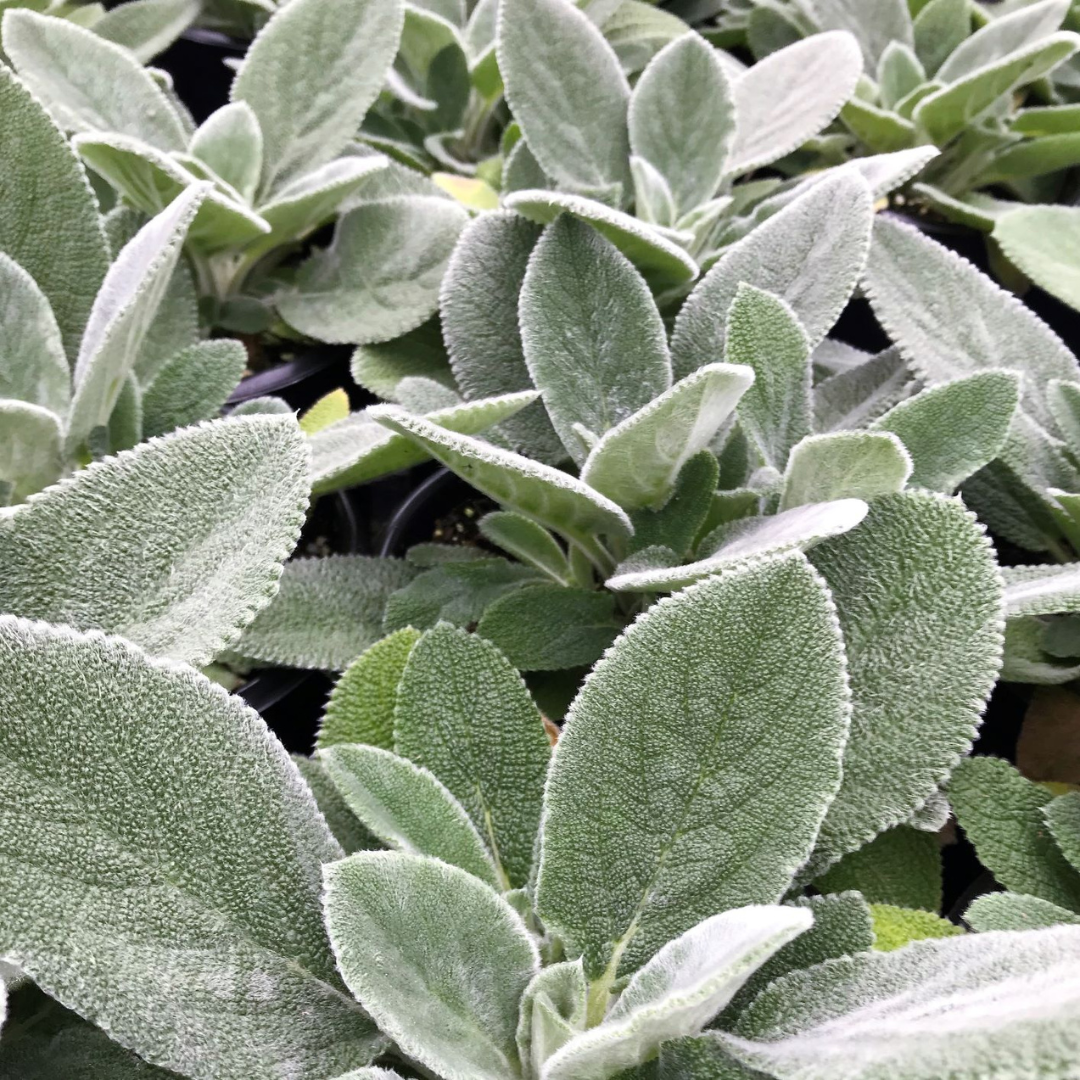
Stachys 'Helene von Stein'
Add to Wishlist Full Sun
 Partial Sun
 Drought Tolerant
 Deer Resistant
 Low Maintenance
- In stock, ready to ship
Stachys 'Helene von Stein': Supersized Silver Velvet That Handles Humidity
This lamb's ears grows leaves so big, thick and fuzzy you'll want to wear them as slippers. Silver-grey, velvety, and it rarely bothers with flowers because frankly, it doesn't need to. SOFTEST THING IN THE YARD.
Plant Characteristics:
- Botanical Name: Stachys byzantina 'Helene von Stein'
- Common Name: Lamb's Ears
- Height: 25–30 cm (10–12 in)
- Spread: 45–60 cm (18–24 in)
- Flowers: Rarely produced; an occasional spike of small pink flowers
- Bloom Time: Rarely flowers
- Foliage: Large, thick, felted silver-grey leaves in low rosettes
- Features: Holds up better in humid summers than standard lamb's ears
Where to Plant: Use it to edge a sunny path or border, as a groundcover on a dry bank, or in a sensory or children's garden where touching is encouraged. The silver leaves cool down hot colour schemes and flatter purples and blues.
Companion Plants: Echinacea angustifolia rises to 30 to 60 cm with pink coneflowers in June and July, a fine match for these big silver leaves. Allium 'Serendipity' adds purple globes at 38 to 51 cm in July and August. Dianthus Pretty Poppers® 'Double Bubble' brings pink flowers at 15 to 20 cm from June to September along the edge. Silver, pink and purple work well together in full sun or partial sun.
Plant Care: Plant it in well-drained, average to lean soil. Sandy or gravelly ground suits it best. Wet soil, especially over winter, is the main thing that harms it, so improve heavy clay with grit or compost or plant it on a slope or raised bed. Water through the first season, then only in long dry spells. Avoid piling mulch against the crown. In spring, pull off any tattered or mushy leaves left from winter. Divide in spring or early fall when the centre of the clump thins out.
History: Lamb's ears is native to Turkey, Armenia and Iran. 'Helene von Stein' is named for a German nursery owner, Countess Helene von Stein, and was valued for its larger, tougher leaves and its reluctance to flower.
Final Thoughts: It handles humid summers better than the usual lamb's ears, and deer give it a pass. Kids will pet it. SO WILL YOU. ADMIT IT.



