



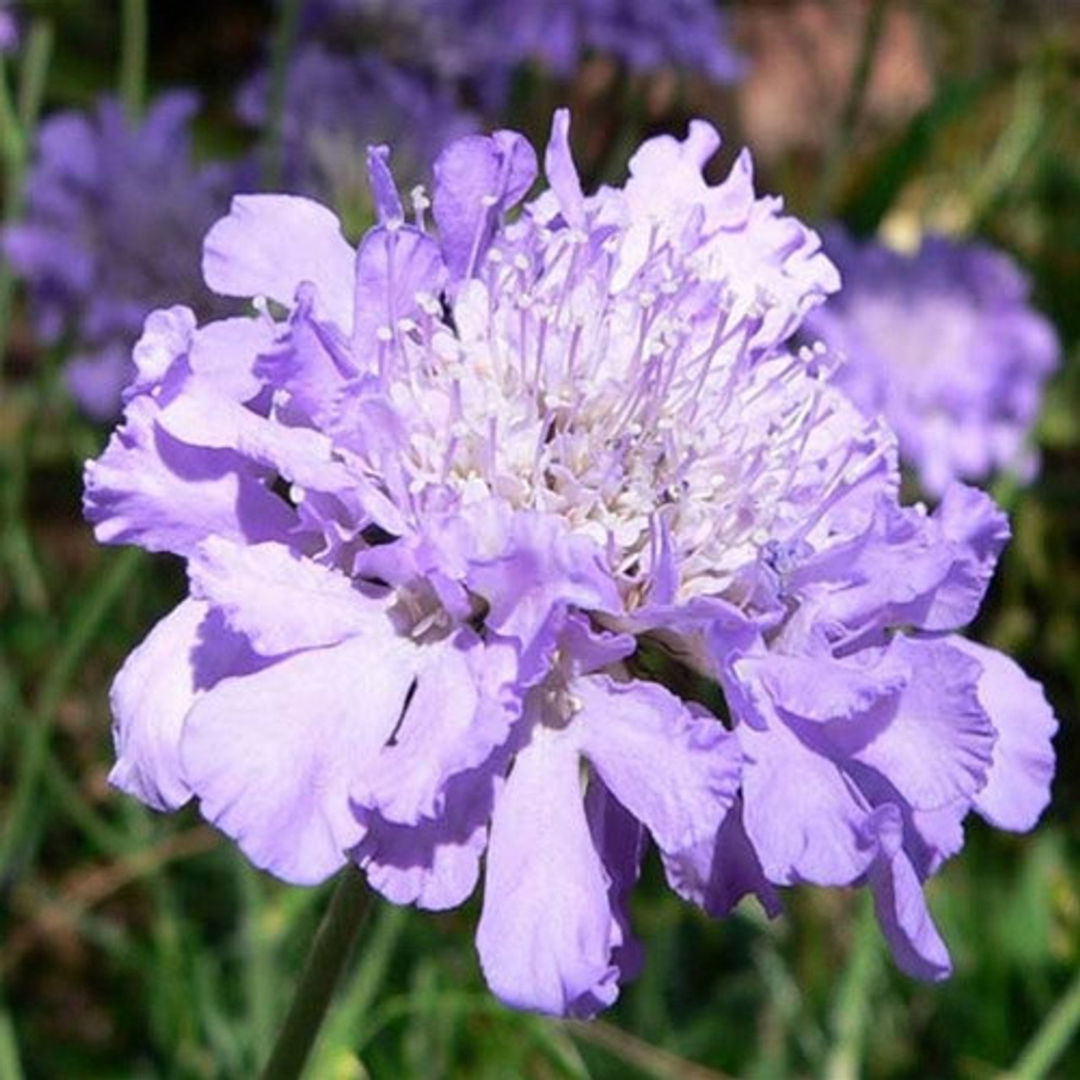
Scabiosa 'Butterfly Blue'
Add to Wishlist Full Sun
 Pollinator Friendly
 Low Maintenance
- In stock, ready to ship
Scabiosa 'Butterfly Blue': Lavender-Blue Pincushions All Season Long
'Butterfly Blue' has a pincushion for a face and the stamina of a toddler on birthday cake. Lavender-blue flowers keep coming until frost, and the butterflies have stopped pretending to leave. RELENTLESS. ADORABLE. RELENTLESSLY ADORABLE.
Plant Characteristics:
- Botanical Name: Scabiosa columbaria 'Butterfly Blue'
- Common Name: Pincushion Flower
- Height: 30–45 cm (12–18 in)
- Spread: 25–30 cm (10–12 in)
- Flowers: Lavender-blue, pincushion-shaped heads up to 5 cm (2 in) across
- Bloom Time: Late spring until frost (May to October)
- Foliage: Deep green basal leaves forming a tidy, low mound
- Features: Very long bloom season, good cut flower, Perennial Plant of the Year® 2000
Where to Plant: Use it at the front of a sunny border, as edging along a path, in a rock garden or in containers, in groups for a soft haze of blue. It suits a sunny, well-drained spot, and it earns a place in a cutting bed, since cutting it counts as deadheading.
Companion Plants: Echinacea paradoxa stands behind at 75 to 90 cm with yellow coneflowers from June to August, a cheerful contrast with the soft blue pincushions. Salvia 'Bumbleberry' sits at a similar height to this scabiosa and adds pink spikes in June and July. Let Oenothera macrocarpa sprawl along the front with big yellow cups at 15 to 30 cm in June and July. All three love full sun and well-drained soil, just like this long-blooming scabiosa.
Plant Care: Plant in full sun and well-drained soil. It likes average, loamy soil that leans neutral to slightly alkaline. Wet soil, especially in winter, is its main enemy, so in heavy clay, add grit or compost or plant it on a slight rise. A light summer mulch keeps the roots cool. Deadhead regularly to keep the flowers coming. Water during long dry spells, but don't keep it soggy. Tidy up the spent stems in late fall or early spring, leaving the low leaves in place. If the clump gets sparse in the centre after a few years, divide it in spring.
History: Irish grower David Tristram admired this plant in a garden in Ireland, took cuttings and grew it there and later in Sussex, England, before English nurseries helped bring it to a wider market. The Perennial Plant Association named it Perennial Plant of the Year® for 2000.
Final Thoughts: Plant it where you drink your morning coffee and enjoy the wildlife show. It's a great cut flower too. THE BUTTERFLIES SIGNED A LEASE.



