



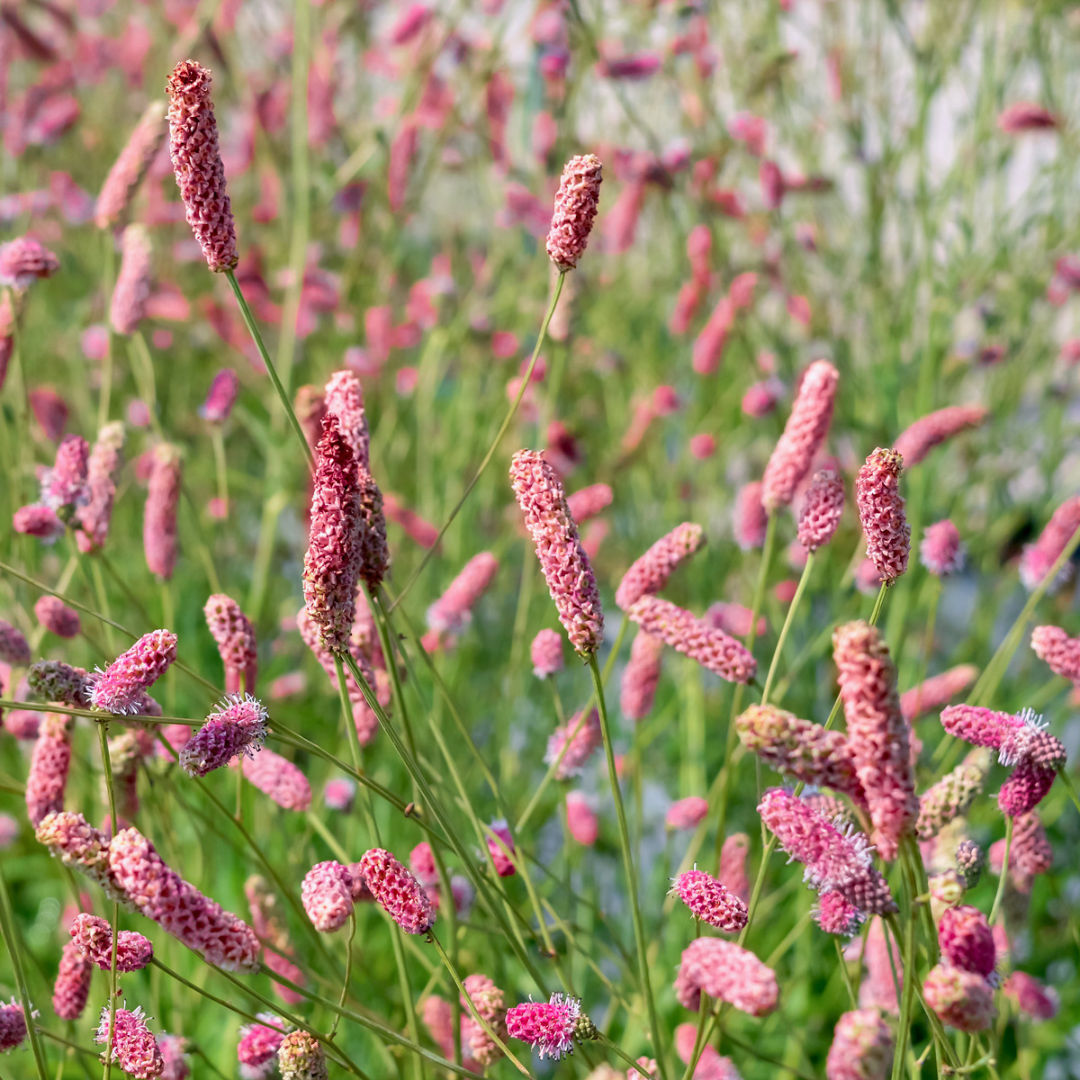
Sanguisorba 'Pink Tanna'
Add to Wishlist Full Sun
 Partial Sun
 Pollinator Friendly
 Low Maintenance
- In stock, ready to ship
Sanguisorba 'Pink Tanna': See-Through Pink on Wiry Stems
Picture a bottle brush that went to a rave. 'Pink Tanna' throws fluffy pink heads on wiry stems all over the place, and you can see right through it like a bad alibi. THE BEES ARE ON THE GUEST LIST.
Plant Characteristics:
- Botanical Name: Sanguisorba officinalis 'Pink Tanna'
- Common Name: Great Burnet
- Height: 60–90 cm (2–3 ft) in flower
- Spread: 30–60 cm (1–2 ft)
- Flowers: Small, deep pink, bottlebrush-shaped heads with pale, fluffy stamens, on slender branching stems
- Bloom Time: Early summer into early fall (June to September)
- Foliage: Grey-green, finely toothed leaflets forming a neat, low mound
- Features: Long bloom season, airy see-through habit, good for cutting
Where to Plant: Put it near the front or middle of a border, where you can look through the stems to the plants behind, or thread it through naturalistic and prairie-style plantings. Because burnets like steady moisture, it also suits the upper edge of a rain garden.
Companion Plants: Chelone 'Black Ace' rises to 120 to 150 cm behind the burnet, and its white flowers take over from August to October. Aconitum carmichaelii 'Arendsii' adds tall blue spires at 120 to 150 cm in the same late season, a cool partner for the pink and white. At the front, Geranium 'Biokovo' makes a 15 to 25 cm mound of white flowers from May to July. All three enjoy full sun or partial sun and a moisture-retentive spot.
Plant Care: Plant it in full sun or light part shade, in moist but well-drained soil of average fertility. Clay, loam and sand are all fine as long as the soil doesn't dry out completely. In a hot, exposed spot, a little afternoon shade helps. Water regularly through the first season and during long dry spells after that. Feeding is rarely needed. Very rich soil can make the stems lean. Cut the stems back in late fall, or leave them for winter and tidy up in early spring. Divide the clump in spring every few years if it gets crowded or blooms less.
History: Great burnet, Sanguisorba officinalis, grows wild in damp meadows across much of Europe and temperate Asia, and its genus name comes from the Latin sanguis, blood, and sorbere, to soak up. The species name officinalis marks a plant that was once kept in apothecaries.
Final Thoughts: Weave it through bigger perennials and let it dance. Snip a few for a vase and act humble. AIRY, PINK AND ALWAYS INVITED.



