



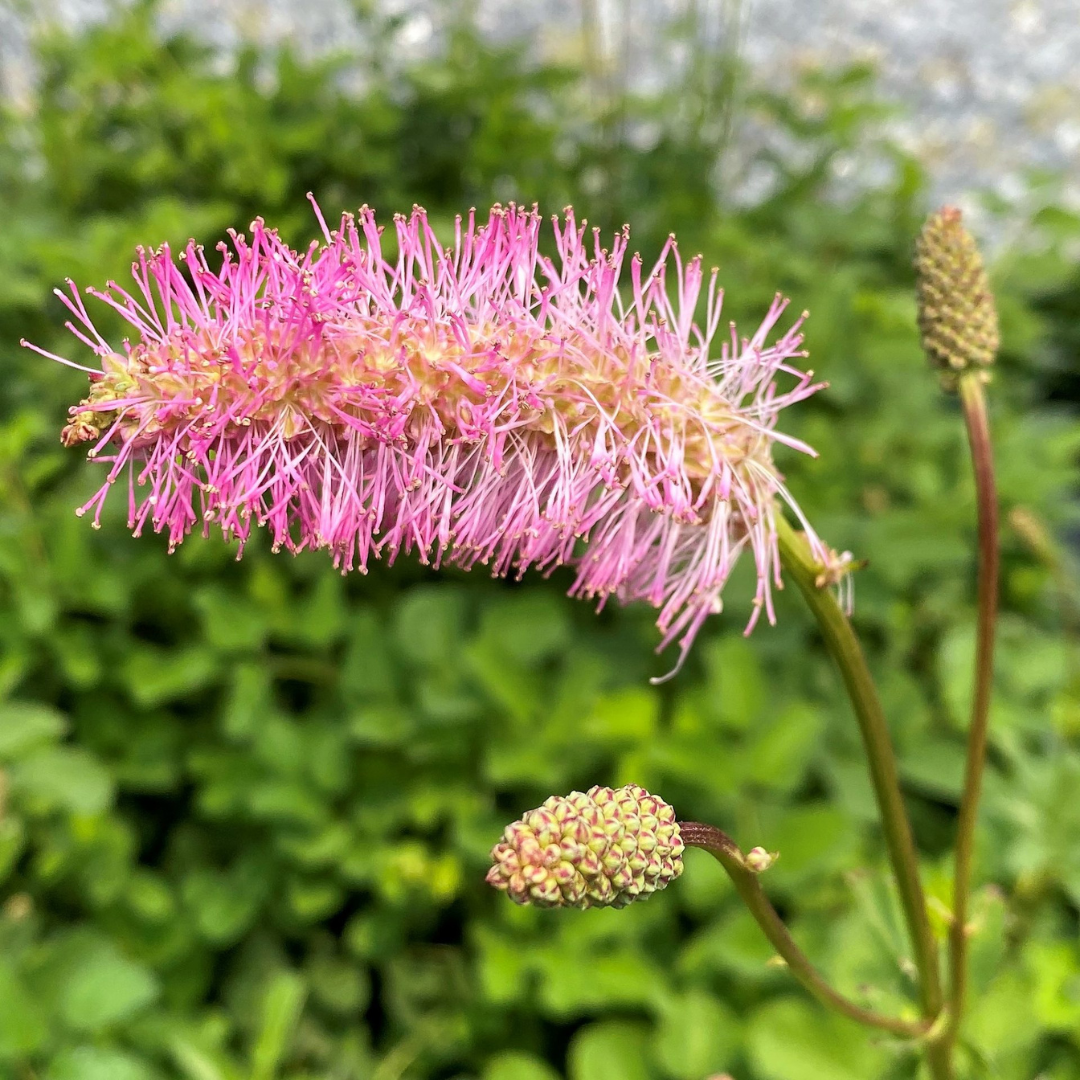
Sanguisorba obtusa
Add to Wishlist Full Sun
 Partial Sun
 Pollinator Friendly
 Low Maintenance
- In stock, ready to ship
Sanguisorba obtusa: Nodding Pink Bottlebrushes for Damp Spots
This burnet is tall, pink and fluffy, like a feather boa that wandered off from a cabaret and decided to put down roots. Blue-grey leaves keep it classy between shows. JAZZ HANDS, PLEASE.
Plant Characteristics:
- Botanical Name: Sanguisorba obtusa
- Common Name: Japanese Burnet
- Height: 100–150 cm (3.3–5 ft) in flower
- Spread: 50–100 cm (1.6–3.3 ft)
- Flowers: Bright pink, fluffy, bottlebrush-shaped spikes with long stamens, opening from red buds
- Bloom Time: Summer (June to August)
- Foliage: Pinnate, blue-grey leaves with a soft, waxy look, in a mounded clump
- Features: Showy cut flower, handsome foliage all season
Where to Plant: Japanese burnet loves moisture, so use it beside ponds and streams, at the edge of a woodland garden or in a damp border that gets some sun. It also earns a place in a cut-flower bed.
Companion Plants: Set Miscanthus Mystal™ 'Fire Dragon' behind the burnet, where it rises to 180 to 210 cm and peaks from August to October. Lobelia 'Queen Victoria' adds red spikes at 75 to 90 cm from July to September, a rich match for the fluffy pink bottlebrushes. In front, Kalimeris 'Blue Star' keeps small blue daisies coming from June to September at 30 to 45 cm. Plant them in full sun or partial sun, in soil that stays evenly moist.
Plant Care: Plant it in full sun or part shade, in moist, humus-rich clay or loam that doesn't dry out. Water deeply in dry spells, especially in its first year. In hot, dry sites, afternoon shade keeps the leaves looking fresh. It spreads slowly by rhizomes into a broad clump. Tall stems may lean in rich soil or deep shade, so a neighbour to lean on or a light ring support helps. Japanese beetles sometimes chew the leaves in our region, so hand-pick them in early morning. Cut the plant back in late fall or early spring, and divide crowded clumps in spring.
History: Sanguisorba obtusa is native to Japan and nearby parts of Russia, and belongs to the rose family. Its genus name comes from the Latin for blood and for soaking up, after the old herbal use of related burnets to stop bleeding.
Final Thoughts: Give it room at the back of the border and let it take a bow. Cut stems will steal the dinner party. NOBODY REMEMBERS THE SALAD.



