



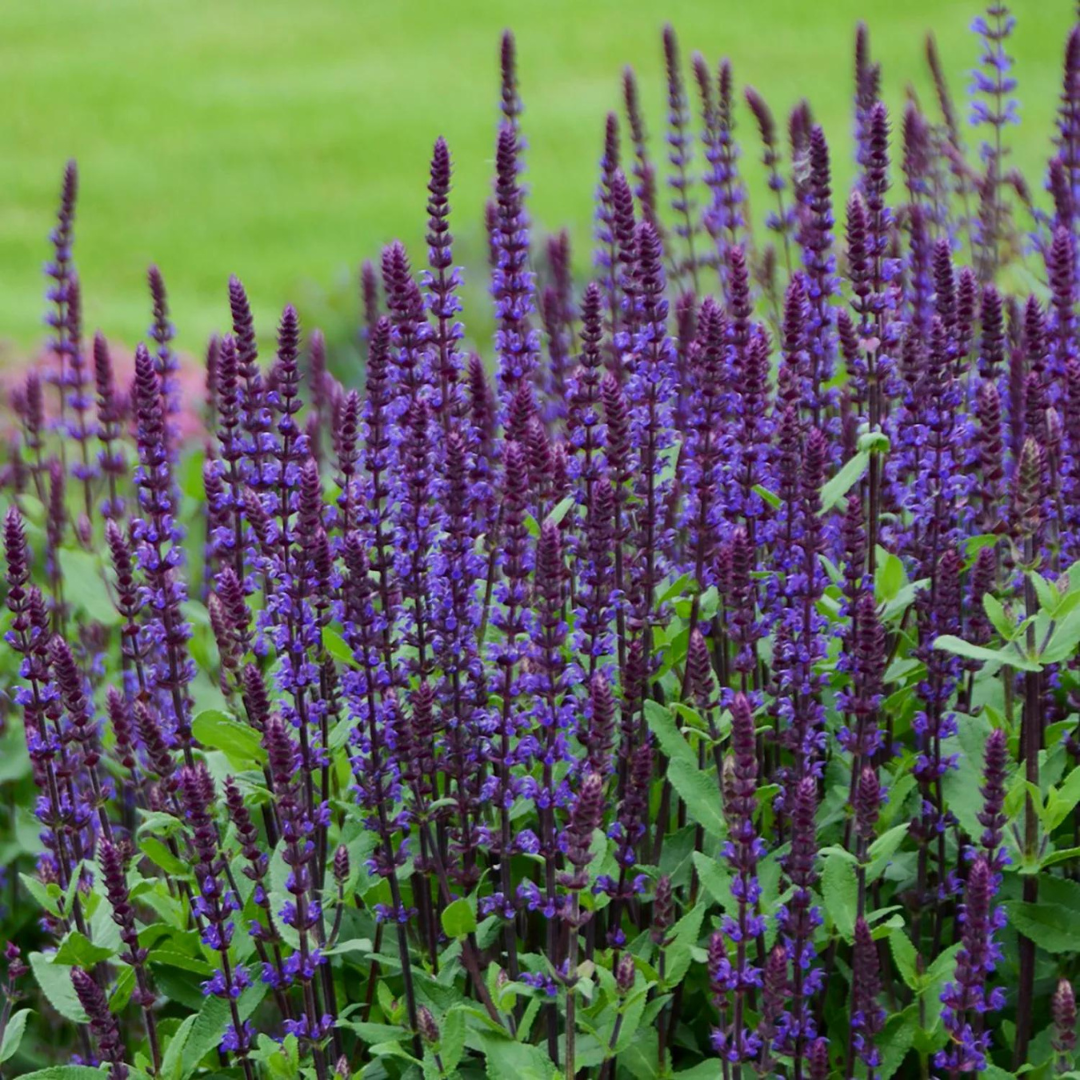
Salvia 'Caradonna'
Add to Wishlist Full Sun
 Drought Tolerant
 Deer Resistant
 Pollinator Friendly
 Low Maintenance
- In stock, ready to ship
Salvia 'Caradonna': Violet on Black, Ramrod Straight
Deep violet flowers on dark purple-black stems, so slim and upright they look like they're on a runway. 'Caradonna' walks the border like a supermodel AND NEVER TRIPS IN HEELS.
Plant Characteristics:
- Botanical Name: Salvia nemorosa 'Caradonna'
- Common Name: Meadow Sage
- Height: 45–60 cm (18–24 in)
- Spread: 45–60 cm (18–24 in)
- Flowers: Deep violet-purple on narrow, upright spikes
- Bloom Time: Late spring to midsummer (June to August), with rebloom after deadheading
- Foliage: Felty, aromatic green leaves on dark purple-black stems
- Features: RHS Award of Garden Merit, good for cutting
Where to Plant: Its strong vertical lines make it a favourite in modern and prairie-style plantings as well as cottage borders. Repeat it through a bed to tie the planting together, and grow a few for cutting.
Companion Plants: Let Allium giganteum rise above the sage with big purple globes on stems up to 150 cm, opening in late spring just as the first violet spikes appear. Achillea 'Little Moonshine' belongs out front, where its yellow flat heads sit at 30 to 35 cm and make the classic purple-and-yellow contrast from June to September. Weave in Sporobolus heterolepis for a fine-textured grass that picks up the show from August into October. It's a full-sun planting that looks good from May until frost.
Plant Care: Plant it in full sun with good drainage. It needs plenty of sun to stay upright, and plants in partial shade tend to flop. Average soil is fine. Water through the first season and during long dry spells. After the first flush, cut the spent spikes back to the leaves. A fresh round of flowers usually follows in late summer. If the clump splays open, shear it back by about half. Cut it down in late fall or early spring. Divide in spring every few years to keep it vigorous.
History: 'Caradonna' is a German selection of perennial sage that holds the Royal Horticultural Society's Award of Garden Merit. Thanks to its unusual dark stems, it has become one of the most widely planted salvias.
Final Thoughts: Drought tolerant, deer resistant and wonderful in a vase. Cut it back after the first show for a second walk. STRIKE A POSE.



