



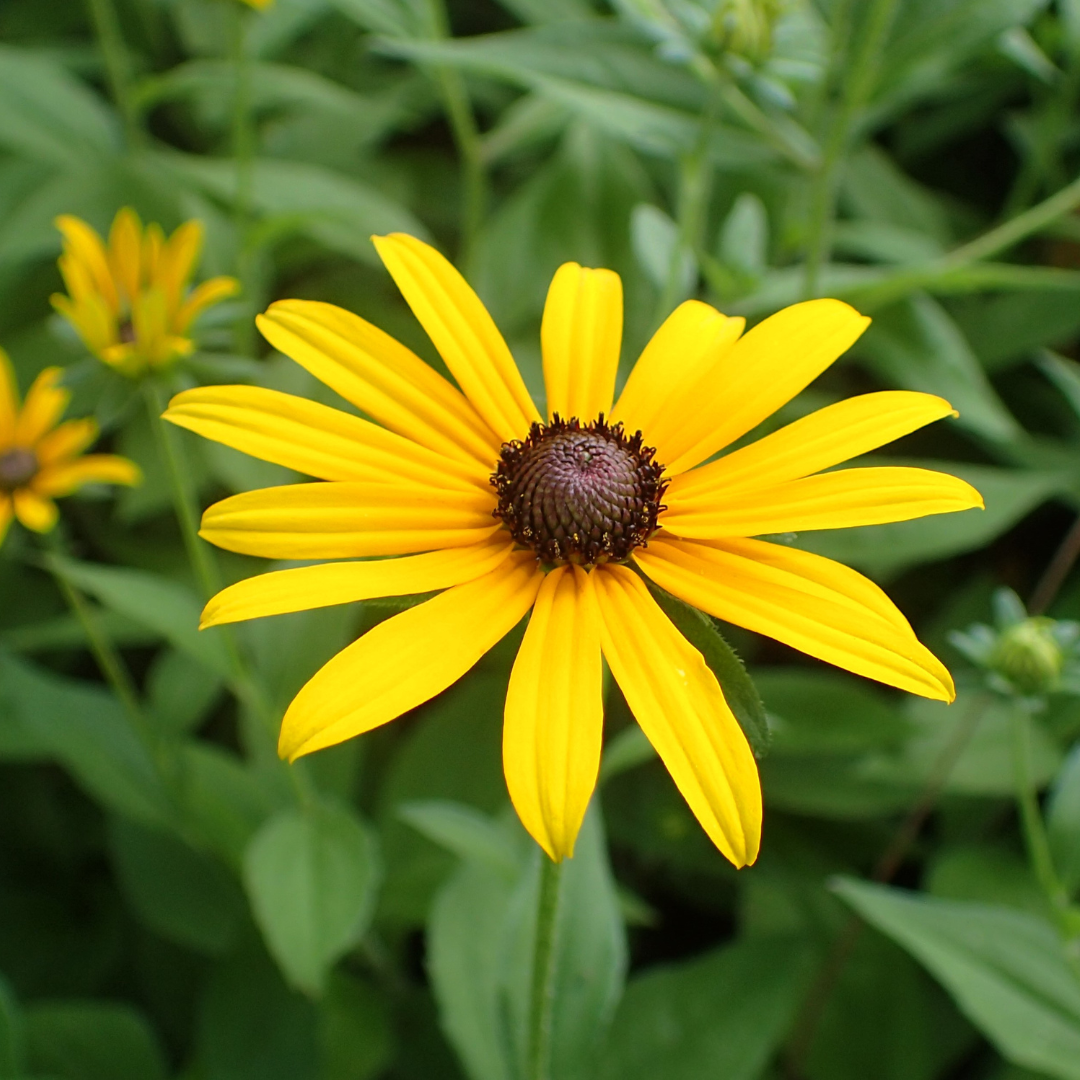
Rudbeckia hirta
Add to Wishlist Full Sun
 Partial Sun
 Drought Tolerant
 Deer Resistant
 Pollinator Friendly
 Native
 Low Maintenance
- In stock, ready to ship
Rudbeckia hirta: Wildflower Gold, Quick to Fill Gaps
Golden petals around a raised brown cone on rough, bristly stems. This native wildflower is the black-eyed Susan in its original form, scruffy and proud. NO SALON. NO PROBLEM.
Plant Characteristics:
- Botanical Name: Rudbeckia hirta
- Common Name: Black-Eyed Susan
- Height: 60–90 cm (2–3 ft)
- Spread: 30–60 cm (1–2 ft)
- Flowers: Daisy-like, with golden-yellow petals around a raised, dark brown cone
- Bloom Time: Early summer to early fall (June to September)
- Foliage: Rough, bristly, medium green leaves on hairy stems
- Features: Tolerates clay, self-seeds
Where to Plant: Plant it in meadows, prairie-style beds, pollinator gardens and the sunny, slightly neglected corners of the yard. It's a smart pick for new gardens, because it fills gaps quickly while slower plantings settle in, and it handles clay. It also belongs in a cut-flower bed.
Companion Plants: Aconitum carmichaelii 'Arendsii' rises behind with blue flowers at 120 to 150 cm from August to October. Astrantia 'Star of Fire' adds burgundy flowers at about 60 cm from June to August. Iberis 'Snowflake' edges the bed with white in May and June, before the rudbeckia starts. Yellow black-eyed Susans then keep things bright from June to September.
Plant Care: Give it full sun or light part shade and average, well-drained soil. It copes with poor soil, clay and dry spells once established, so there's no need for rich soil or extra fertilizer. Plants are often short-lived, behaving as biennials or short-lived perennials. That's fine, because they reseed. Leave some seed heads standing in fall to keep the colony going, and the finches will thank you. Deadhead if you want fewer seedlings. Cut old stems back in late fall or early spring. Pull extra seedlings in spring if they land somewhere you'd rather they didn't.
History: Black-eyed Susan is native across eastern and central North America and now grows wild in every Canadian province. The genus was named by Linnaeus for the Swedish botanists Olof Rudbeck the elder and younger, and hirta is Latin for hairy, after its bristly leaves and stems.
Final Thoughts: Clay, drought and deer are all handled, and it seeds itself around for next year. Let it wander. FREE PLANTS, FOREVER.



