



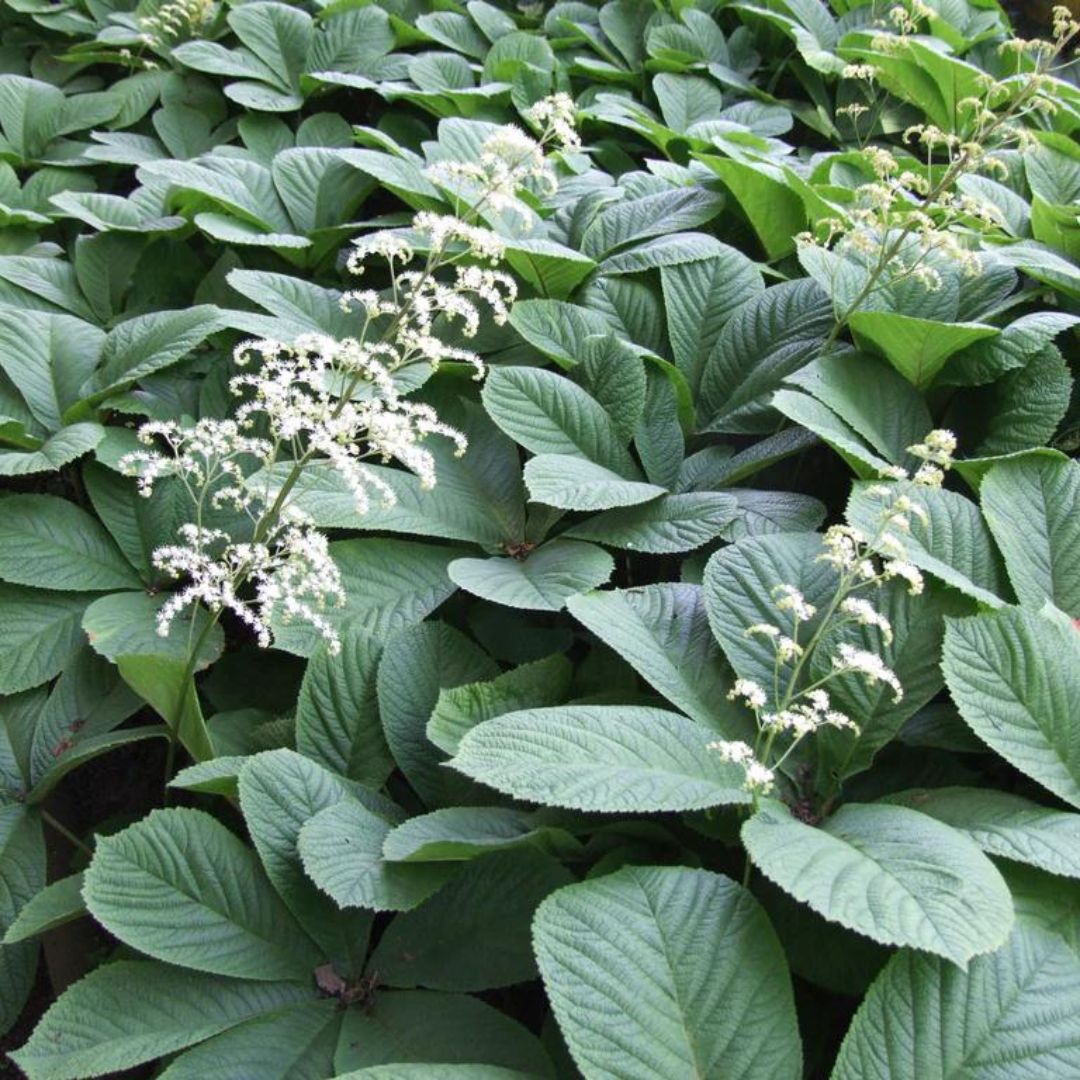
Rodgersia aesculifolia
Add to Wishlist Partial Sun
 Full Shade
 Deer Resistant
- In stock, ready to ship
Rodgersia aesculifolia: Giant Chestnut Leaves for Boggy Shade
Massive, deeply veined leaves that look like they fell off a horse chestnut tree and decided to stay. This rodgersia brings jungle drama to the damp corner YOU'VE BEEN AVOIDING FOR YEARS.
Plant Characteristics:
- Botanical Name: Rodgersia aesculifolia
- Common Name: Fingerleaf rodgersia, Rodgers flower
- Height: 90–120 cm (3–4 ft) in flower
- Spread: 90–120 cm (3–4 ft), slowly widening
- Flowers: Tall, fluffy panicles of tiny creamy white flowers, sometimes blushed pink
- Bloom Time: Early to midsummer (June to July)
- Foliage: Large, palmate, deeply veined leaves that resemble horse chestnut leaves, often tinged bronze
- Features: Bold foliage for moist shade, holds the Royal Horticultural Society's Award of Garden Merit
Where to Plant: This is a foliage plant for moist, shady places: along a stream or pond, at the edge of a bog garden or in a woodland border with rich soil. A mature clump is wide and leafy, so give it room as an anchor plant rather than squeezing it between smaller perennials.
Companion Plants: Cimicifuga racemosa rises behind with white spires at 120 to 180 cm in July and August. Astilbe 'Heart and Soul' brings pink plumes from July to September. Ligularia 'Pandora' adds yellow flowers at 30 to 40 cm from July to September. All four like shade or part shade and moist soil.
Plant Care: Plant in part shade to full shade, in rich, humus-heavy soil that stays consistently moist. Work in plenty of compost at planting time and mulch every year to keep the roots cool and damp. Water during dry spells. The leaves will scorch if the soil dries out or the plant gets hot afternoon sun. Leave the seed heads standing after the flowers fade if you like the look, then cut the foliage back in late fall or early spring. Clumps spread slowly by thick rhizomes and can be divided in early spring.
History: Fingerleaf rodgersia is native to the mountains of central and northern China, where the French missionary and naturalist Father Armand David collected it in 1869. The genus is named for John Rodgers, a US Navy officer who commanded the 1850s expedition that collected the first rodgersia.
Final Thoughts: Creamy plumes on tall stems, bold foliage and deer that keep walking. Plant it by the downspout. THE SOGGY SPOT JUST WENT TROPICAL.



