



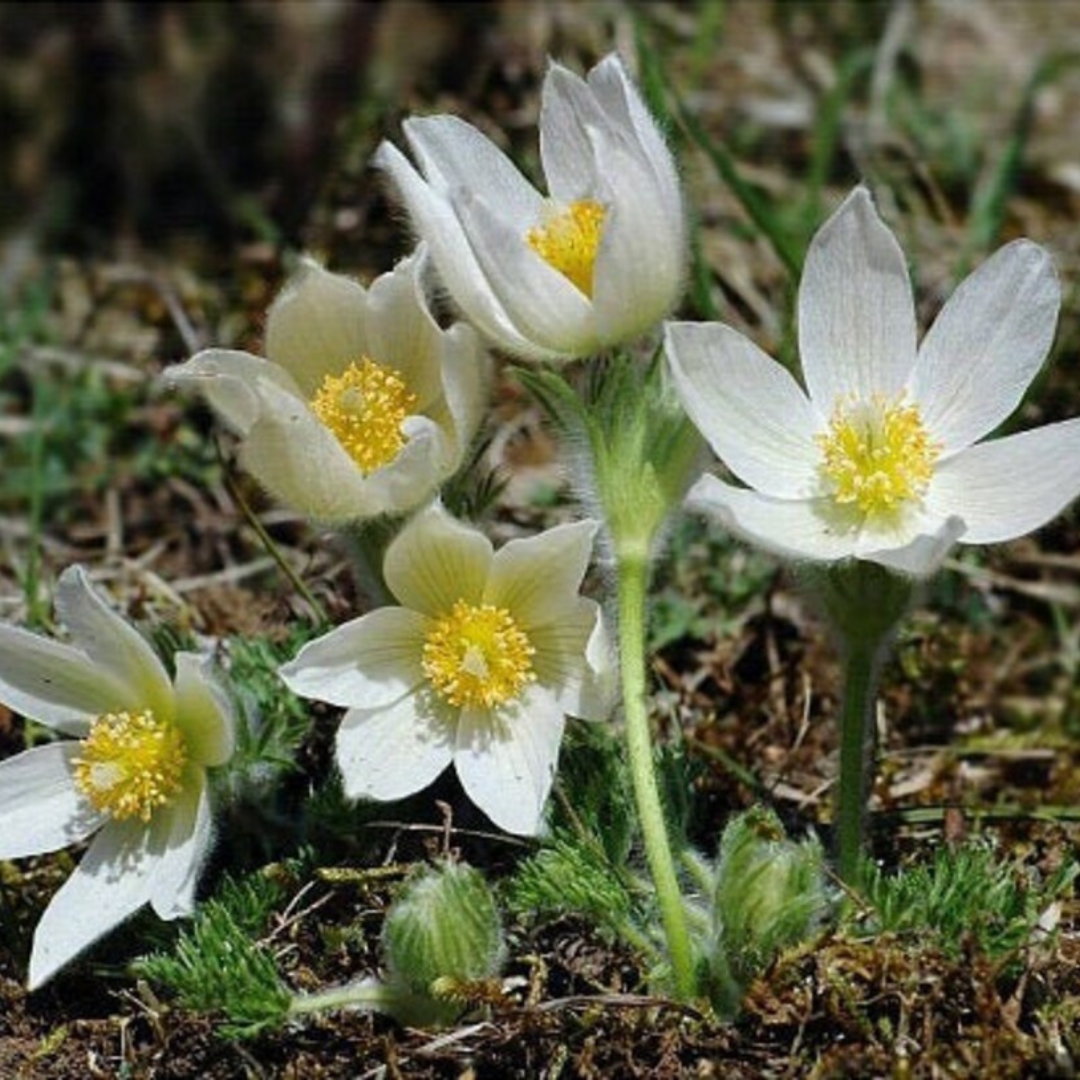
Pulsatilla vulgaris 'Alba'
Add to Wishlist Full Sun
 Partial Sun
 Drought Tolerant
 Deer Resistant
 Low Maintenance
- In stock, ready to ship
Pulsatilla vulgaris 'Alba': Silky White Cups, Gold in the Middle
Pure white silky flowers with a burst of yellow stamens, wrapped in soft, hairy leaves like a cashmere sweater. This pasque flower dresses for spring like it's still a little chilly. SMART CHOICE, HONESTLY.
Plant Characteristics:
- Botanical Name: Pulsatilla vulgaris 'Alba'
- Common Name: White Pasque Flower
- Height: 20–25 cm (8–10 in)
- Spread: 20–30 cm (8–12 in)
- Flowers: Pure white, 4–8 cm (1.5–3 in) across, with yellow stamens, followed by feathery seed heads
- Bloom Time: Early to mid-spring (April to May)
- Foliage: Finely divided, soft and hairy
Where to Plant: Grow it in a rock garden, a gravel bed, along the sunny edge of a path or in a trough or raised bed. White flowers show up beautifully against dark mulch or stone, and they glow at dusk.
Companion Plants: Aubrieta 'Rock On Blue' flowers blue from April to June, right alongside the white pasque flowers. Echinacea angustifolia adds pink coneflowers at 30 to 60 cm in June and July. Allium 'Serendipity' brings purple globes in July and August. It's a sunny, well-drained planting that blooms from spring to late summer.
Plant Care: Give it full sun and lean, gritty, well-drained soil. Wet winter soil is its main enemy, so steer clear of low, soggy spots and heavy clay unless you amend with grit. Water through the first season, then only during long dry spells. Leave the seed heads for their show. The plant forms a deep taproot and does best when left undisturbed, so choose its spot carefully. Wear gloves when handling, since the sap can irritate skin.
History: The pasque flower is native to dry, chalky grassland across much of Europe, and white forms have long been grown alongside the purple species. The name comes from Pasch, an old word for Easter, and 'Alba' simply means white in Latin.
Final Thoughts: Drought tolerant and deer resistant, and the feathery seed heads keep the party going after the petals drop. WHITE NEVER LOOKED SO SOFT.



