



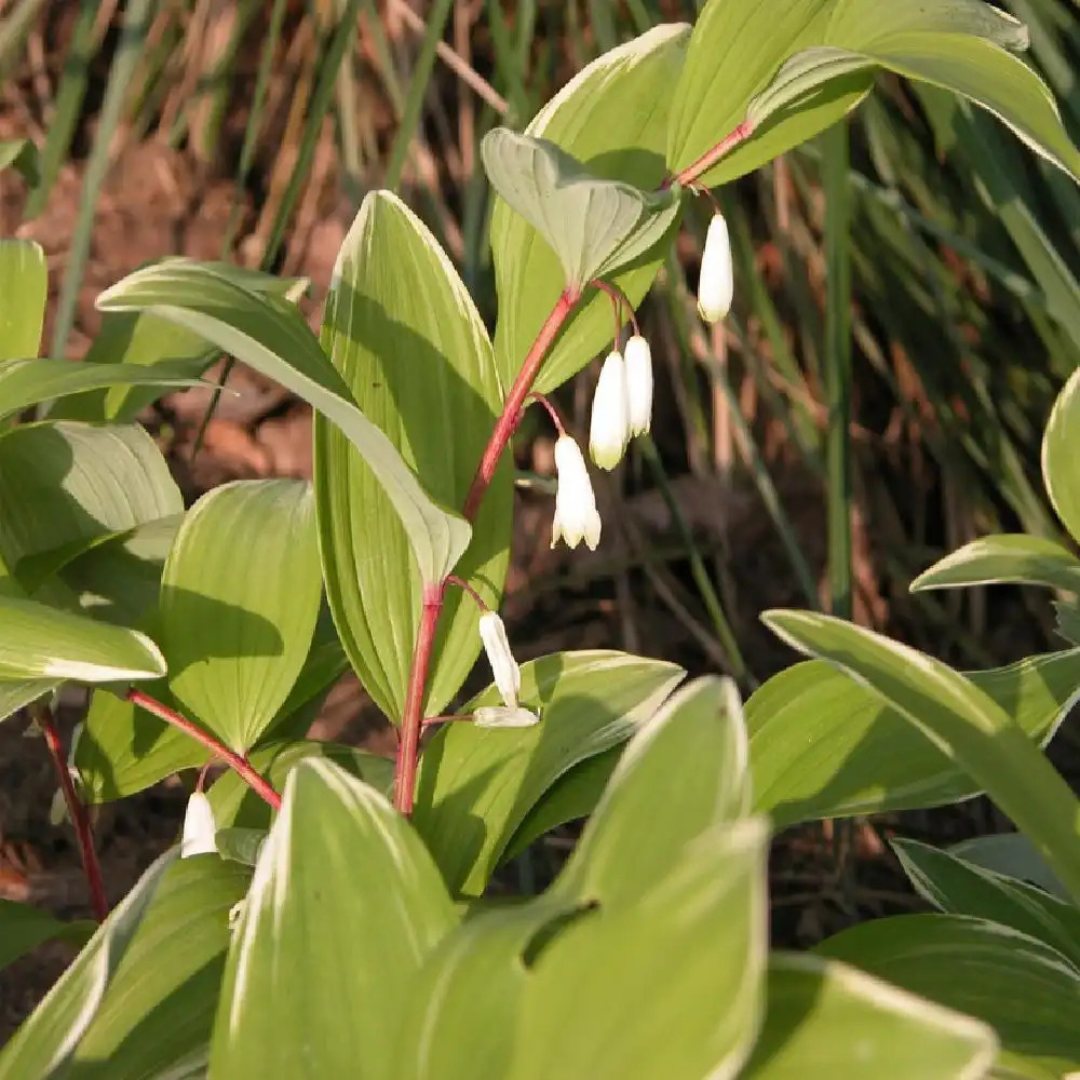
Polygonatum odoratum 'Variegatum'
Add to Wishlist Partial Sun
 Full Shade
 Deer Resistant
 Pollinator Friendly
 Low Maintenance
- In stock, ready to ship
Polygonatum odoratum 'Variegatum': White-Edged Arches That Light Up Shade
Arching red-tinged stems lined with green leaves edged in white, plus fragrant little bells swinging underneath. This plant makes dark shade look professionally lit. SHADE NEVER LOOKED THIS SHARP.
Plant Characteristics:
- Botanical Name: Polygonatum odoratum 'Variegatum' (also listed as P. odoratum var. pluriflorum 'Variegatum')
- Common Name: Variegated Solomon's Seal
- Height: 45–60 cm (18–24 in)
- Spread: 45–60 cm (18–24 in), slowly widening by rhizomes
- Flowers: Fragrant white bells with green tips, hanging in pairs beneath the stems
- Bloom Time: Mid to late spring (May to June)
- Foliage: Light green with white margins on arching, red-tinged stems; yellow in fall
- Features: Perennial Plant of the Year 2013, fragrant flowers, rabbit resistant, blue-black berries in fall
Where to Plant: Use it to brighten dark corners, line a woodland path or fill the shade under deciduous trees, where the white edges read well from a distance. The arching stems are lovely in spring arrangements. The berries and leaves are harmful if eaten, so keep it away from spots where pets roam.
Companion Plants: Brunnera 'Jack of Diamonds' brings blue flowers in April and May, alongside the variegated Solomon's seal. Rodgersia aesculifolia adds bold leaves and cream plumes at 90 to 120 cm in June and July. Solidago flexicaulis closes the year with yellow flowers from August to October. It's a full-season mix for shade or part shade.
Plant Care: Plant in moist, well-drained, humus-rich soil. Set the white rhizomes just below the soil surface. It tolerates clay and, once settled, some dryness, but the leaves stay freshest with steady moisture and protection from hot afternoon sun. It spreads slowly into a patch. Divide in spring or fall to share plants or keep it in bounds. Cut the stems down in fall once they've yellowed. Serious pest or disease problems are uncommon.
History: The species grows wild across Europe and Asia, from Europe through Russia to China, Korea and Japan, and its name odoratum means fragrant, a nod to its sweetly scented flowers. The Perennial Plant Association named it the 2013 Perennial Plant of the Year.
Final Thoughts: Deer and rabbits ignore it, and the leaves go yellow in fall for a final bow. LOW MAINTENANCE, HIGH CLASS.



