



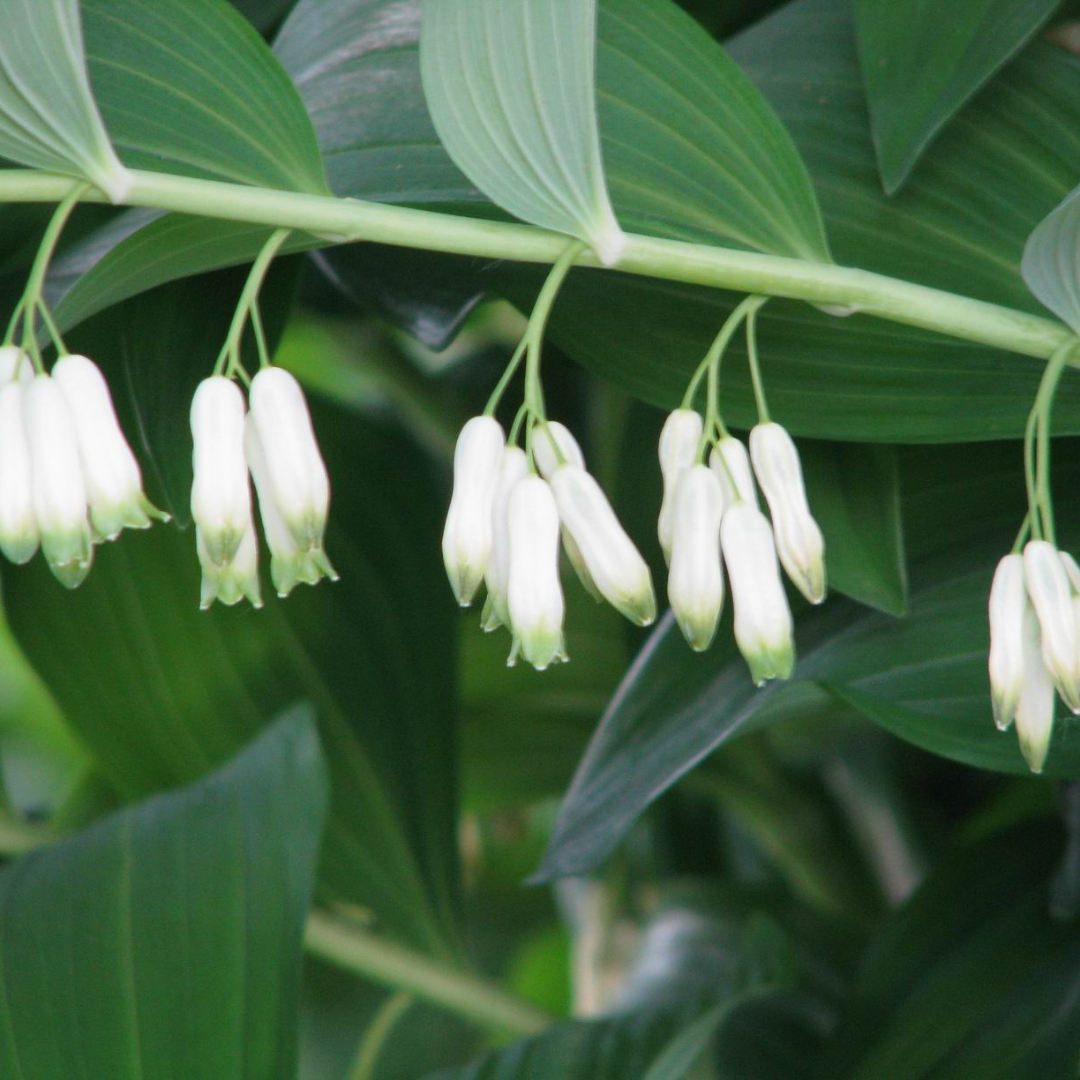
Polygonatum multiflorum
Add to Wishlist Partial Sun
 Full Shade
 Deer Resistant
 Pollinator Friendly
 Low Maintenance
- In stock, ready to ship
Polygonatum multiflorum: Arching Woodland Grace, Black Berries to Follow
Arching stems with little white bells dangling underneath like earrings nobody else can see. This shade plant is the quiet one at the party who turns out to be THE MOST INTERESTING GUEST IN THE ROOM.
Plant Characteristics:
- Botanical Name: Polygonatum multiflorum
- Common Name: Solomon's Seal, Eurasian Solomon's Seal
- Height: 60–90 cm (2–3 ft)
- Spread: 30–50 cm (12–20 in), slowly widening by rhizomes
- Flowers: Tubular white bells with green tips, hanging in small clusters beneath the stems
- Bloom Time: Late spring (May to June)
- Foliage: Oval to lance-shaped green leaves on arching stems, turning yellow in fall
- Features: Black berries in late summer
Where to Plant: This is a classic for woodland gardens, shady borders and the dry-ish ground under deciduous trees, where the arching stems add height and a graceful line among lower plants. All parts, especially the berries, are harmful if eaten, so site it with pets and kids in mind.
Companion Plants: Helleborus HGC® Ice N' Roses® Dark Picotee flowers from March to May, before the Solomon's seal arches over. Epimedium 'Frohnleiten' adds yellow flowers at 30 to 40 cm in April and May. Cimicifuga 'Pink Spike' rises to 120 to 150 cm with pink spikes from August to October, giving the shade bed a late finish. All three like shade or part shade.
Plant Care: Plant in moist, well-drained soil rich in organic matter. It copes with clay and, once settled, with some dryness, but it looks best with steady moisture. Set the rhizomes just below the soil surface and give them a layer of leaf mulch. It spreads slowly by underground rhizomes to form a patch over the years. Divide in early spring or fall if you want more plants or need to keep it in bounds. Cut the stems down after they yellow in fall. Watch for sawfly larvae in early summer, which can strip leaves; pick them off if you see them.
History: Polygonatum multiflorum grows wild in woodlands across Europe and into western Asia, including Britain. The genus name comes from Greek words for "many knees," referring to the jointed rhizomes.
Final Thoughts: Deer resistant, low maintenance and finished with black berries. Plant it under the trees and let it arch. BENDS. NEVER BREAKS.



