



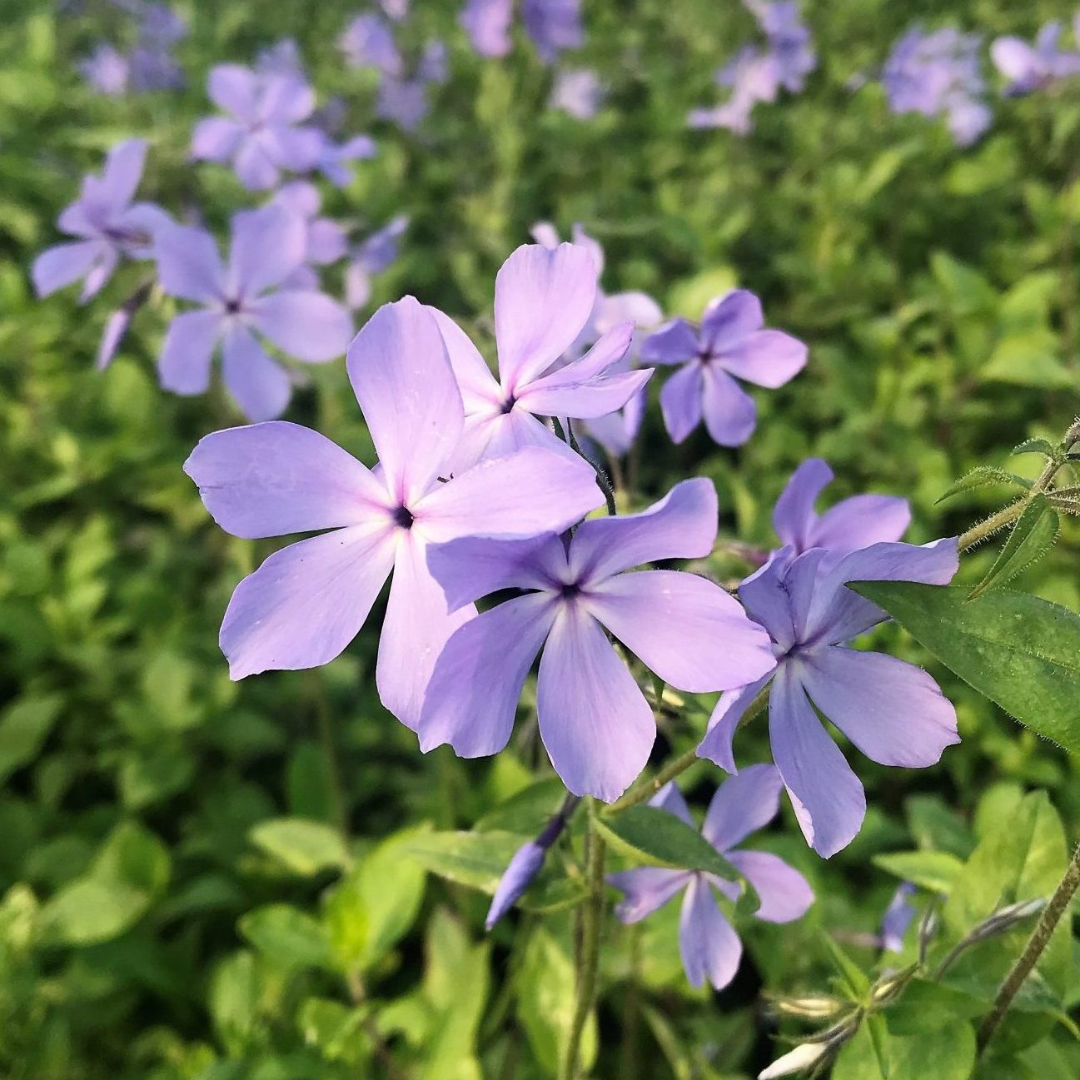
Phlox 'Blue Moon'
Add to Wishlist Partial Sun
 Full Shade
 Pollinator Friendly
- In stock, ready to ship
Phlox 'Blue Moon': Fragrant Violet-Blue Carpet Under Spring Trees
Rich violet-blue flowers with a fragrance that drifts across the shade garden in spring. 'Blue Moon' is so good you'll want it more often than ONCE IN A... YOU KNOW.
Plant Characteristics:
- Botanical Name: Phlox divaricata 'Blue Moon'
- Common Name: Woodland Phlox, Wild Sweet William
- Height: 20–40 cm (8–16 in) in flower
- Spread: 30–45 cm (12–18 in)
- Flowers: Rich violet-blue, fragrant, with broad, overlapping petals
- Bloom Time: Mid to late spring (April to May)
- Foliage: Lance-shaped, deep green, semi-evergreen
- Features: Fragrant, slowly spreading groundcover
Where to Plant: Plant it in woodland gardens, along shady paths and under deciduous trees, where it gets spring sun before the canopy fills in. It slowly spreads into a groundcover, and later-leafing neighbours can take over once it finishes.
Companion Plants: Polygonatum odoratum 'Variegatum' arches over the phlox with white flowers in May and June at 45 to 60 cm. Carex 'Bowles Golden' is a gold sedge at 60 to 90 cm that brightens a shady spot. Tiarella 'Pink Skyrocket' sends up pink spikes in May and June at the front. Violet, pink and gold make a lively spring picture in shade or part shade.
Plant Care: Plant in part shade to shade, in moist, well-drained soil rich in organic matter. A layer of shredded leaves or compost each fall keeps it happy, just like on the forest floor. Water during dry spells, especially the first summer. It tolerates more sun in cooler spots if the soil stays moist. Trim spent flower stems after bloom to tidy the plant. It spreads slowly by creeping stems that root as they go, so be patient while it fills in. Divide after flowering or in early fall if you want more plants. Good air flow helps prevent powdery mildew later in summer.
History: Woodland phlox is native to the rich forests of eastern North America, from southern Ontario and Quebec west to Minnesota and south to Georgia and Louisiana. 'Blue Moon' was introduced by the New England Wild Flower Society (now Native Plant Trust) for its outstanding colour and fuller, rounder flowers.
Final Thoughts: It spreads slowly into a patch, feeds the early bees and smells better than your candle collection. RETIRE THE CANDLES.



