



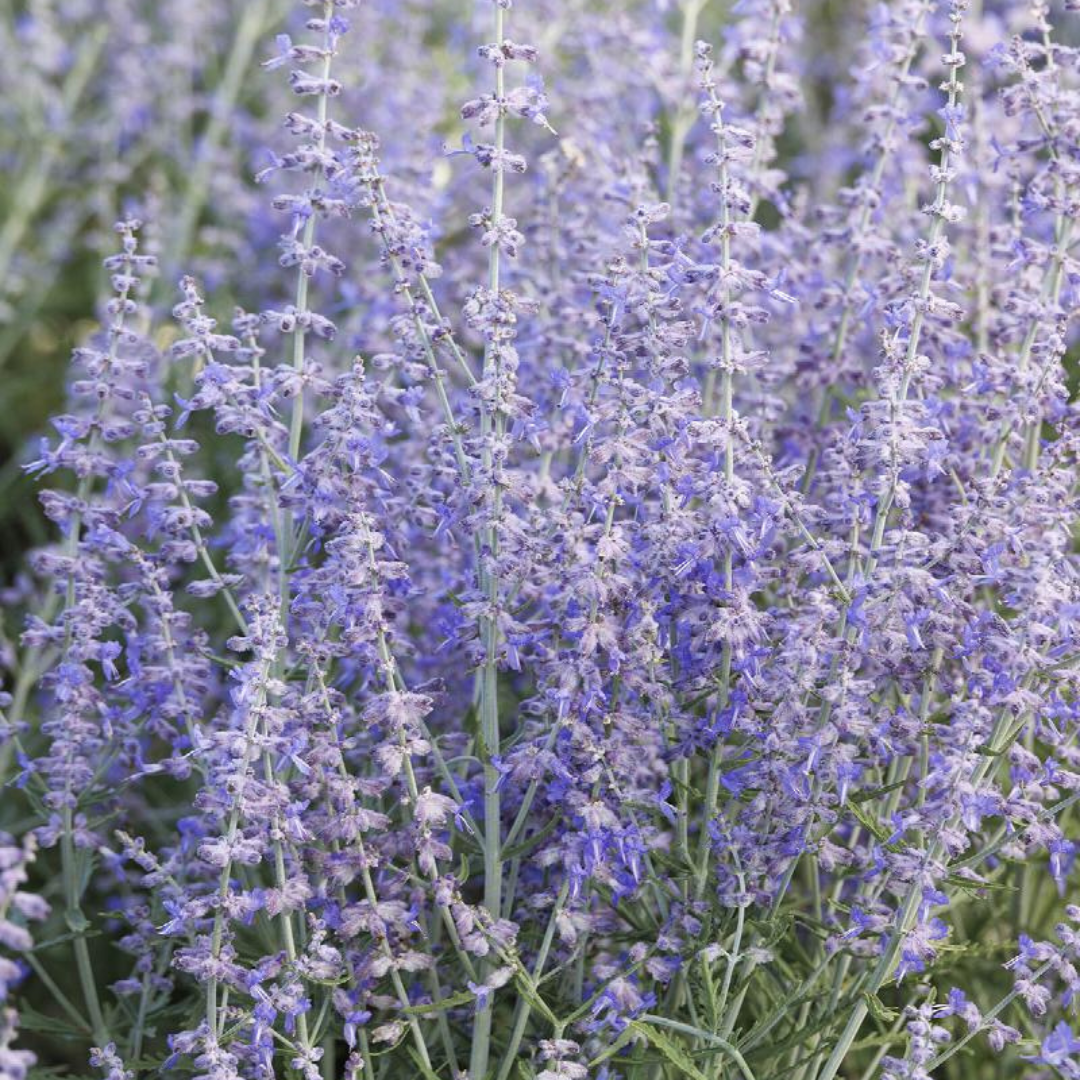
Perovskia 'Blue Jean Baby'
Add to Wishlist Full Sun
 Drought Tolerant
 Deer Resistant
 Pollinator Friendly
 Low Maintenance
- In stock, ready to ship
Perovskia 'Blue Jean Baby': Russian Sage Tamed to Fit
Smoky lavender-blue spikes and grey-green leaves that smell amazing when you brush past. 'Blue Jean Baby' goes with literally everything in the yard, like a good pair of jeans. BROKEN IN, NEVER WORN OUT.
Plant Characteristics:
- Botanical Name: Perovskia atriplicifolia (now often listed as Salvia yangii)
- Common Name: Russian Sage
- Height: 70–85 cm (28–34 in)
- Spread: 90 cm (36 in)
- Flowers: Lavender-blue, held in smoky purple calyxes on upright, branched spikes
- Bloom Time: Midsummer to early fall (July to September)
- Foliage: Fragrant, grey-green
- Features: Salt tolerant, fragrant, good for cut and dried flowers
- Plant Patent: USPP 29,281
Where to Plant: It's a manageable size for the front or middle of a sunny border. Mass it along a hot driveway, a dry slope or a boulevard bed, since it handles salt and heat, and grow a few extra for cut or dried stems.
Companion Plants: Panicum Prairie Winds® 'Totem Pole' adds a tall, upright grass at 180 cm, flowering from August to October behind the sage. Leucanthemum Amazing Daisies® 'Banana Cream II' brings soft yellow daisies at 50 to 60 cm from June to August. Dianthus Pretty Poppers® 'Electric Red' edges the front with red flowers from June, reblooming into early fall after shearing. Yellow and red against the lavender spires makes a warm, sunny picture.
Plant Care: Plant in full sun in average to poor, well-drained soil. Rich soil and extra fertilizer make Russian sage floppy. Wet soil in winter is the real danger, so avoid low spots and heavy clay that holds water. Water through the first season, then mostly leave it be. Leave the stems up over winter for structure. In spring, once new buds show near the base, cut the old stems back to about 15 cm (6 in). It doesn't need regular dividing.
History: 'Blue Jean Baby' was bred by Hans Hansen at Walters Gardens in Zeeland, Michigan, picked as a seedling in summer 2012 and approved for release in 2014. It was named a Top Performer in the Chicago Botanic Garden's plant evaluation in 2020.
Final Thoughts: Deer, drought and road salt can all take a number. Plant it along the sidewalk. THE SMELL ALONE IS WORTH IT.



