



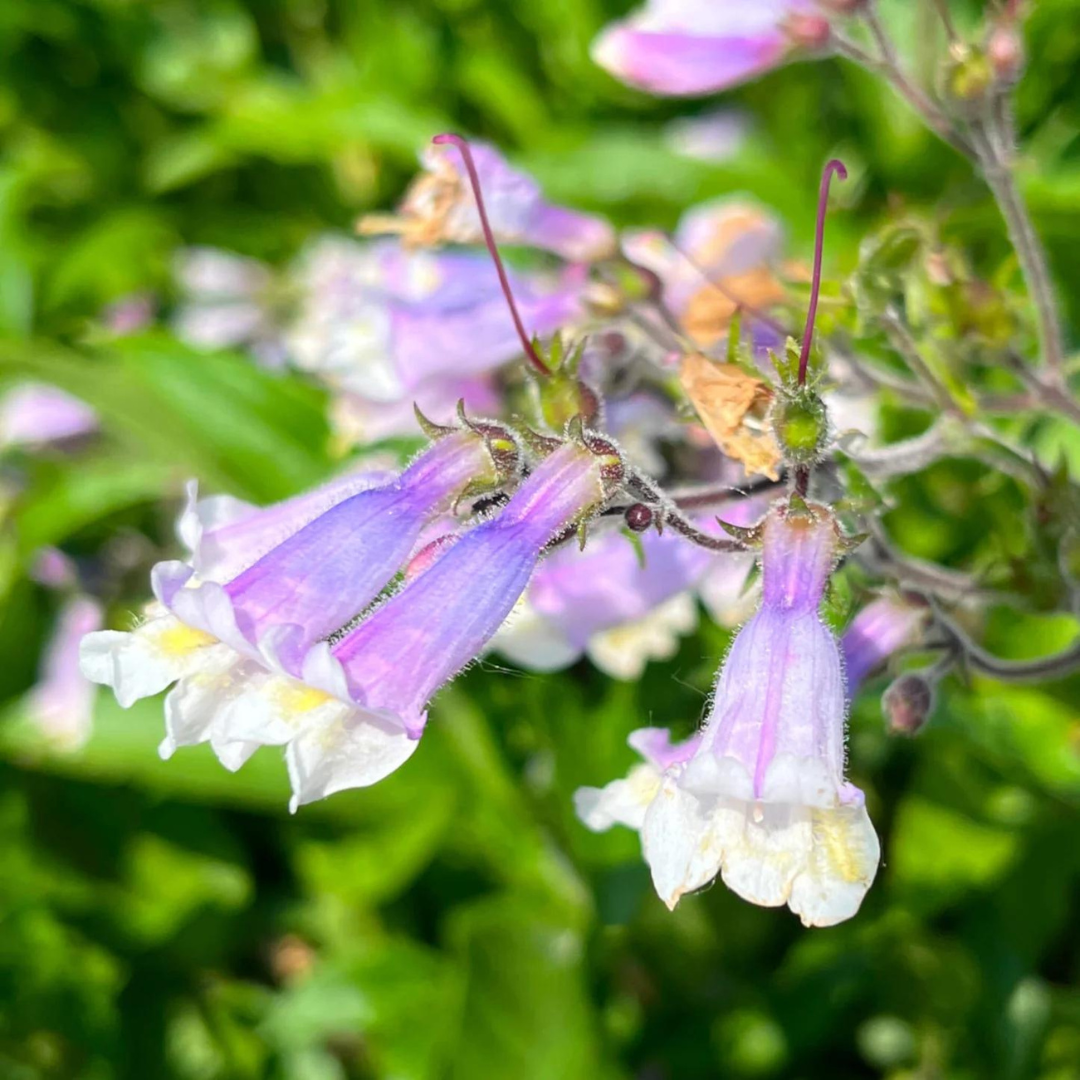
Penstemon hirsutus
Add to Wishlist Full Sun
 Partial Sun
 Drought Tolerant
 Pollinator Friendly
 Native
- In stock, ready to ship
Penstemon hirsutus: Fuzzy Lavender Trumpets Love Thin, Dry Soil
Yes, it's called Hairy Beardtongue. No, we will not be taking questions. This native wildflower has fuzzy stems, lavender trumpets and ZERO INTEREST IN SHAVING.
Plant Characteristics:
- Botanical Name: Penstemon hirsutus
- Common Name: Hairy Beardtongue
- Height: 30–60 cm (1–2 ft)
- Spread: 25 cm (10 in)
- Flowers: Lavender to violet trumpets with whitish lips, in open clusters
- Bloom Time: Late spring to early summer (May to June)
- Foliage: Small green leaves in a low clump, with downy stems
- Features: Suited to dry, thin soils
Where to Plant: Put it at the front of a border, in a rock garden, on a dry slope or in a native plant bed. Its small size makes it easy to tuck into gaps, and it's suited to dry, thin soil.
Companion Plants: Baptisia Decadence® 'Blueberry Sundae' sits behind with blue flowers in June and July at about 90 cm. Digitalis grandiflora adds soft yellow spires from June to August. Geum 'Koi' brings orange flowers at the front from May to September, starting right alongside the penstemon. The planting suits sun or part sun and blooms from late spring through summer.
Plant Care: Plant in full sun to part shade in well-drained soil. Lean, sandy or rocky soil is ideal. Avoid spots that stay wet, especially over winter. Water through the first season until it's settled, then only in long droughts. Cut spent stems back after bloom, or leave some to set seed. It's a short-lived perennial that often self-sows lightly, which keeps it going in the garden. Clean up old stems in spring.
History: Hairy beardtongue is native from Maine to Wisconsin and south to Virginia and Kentucky, grows wild in Ontario and Quebec, and favours dry woods, rocky fields and bluffs. Both hirsutus (hairy) and "beardtongue" point to its fuzz: the downy stems, and the tufted sterile stamen in the throat of each flower.
Final Thoughts: Thin soil, dry soil, that patch where nothing grows? It moves right in. The native bees approve. GROOMING IS OPTIONAL.



