



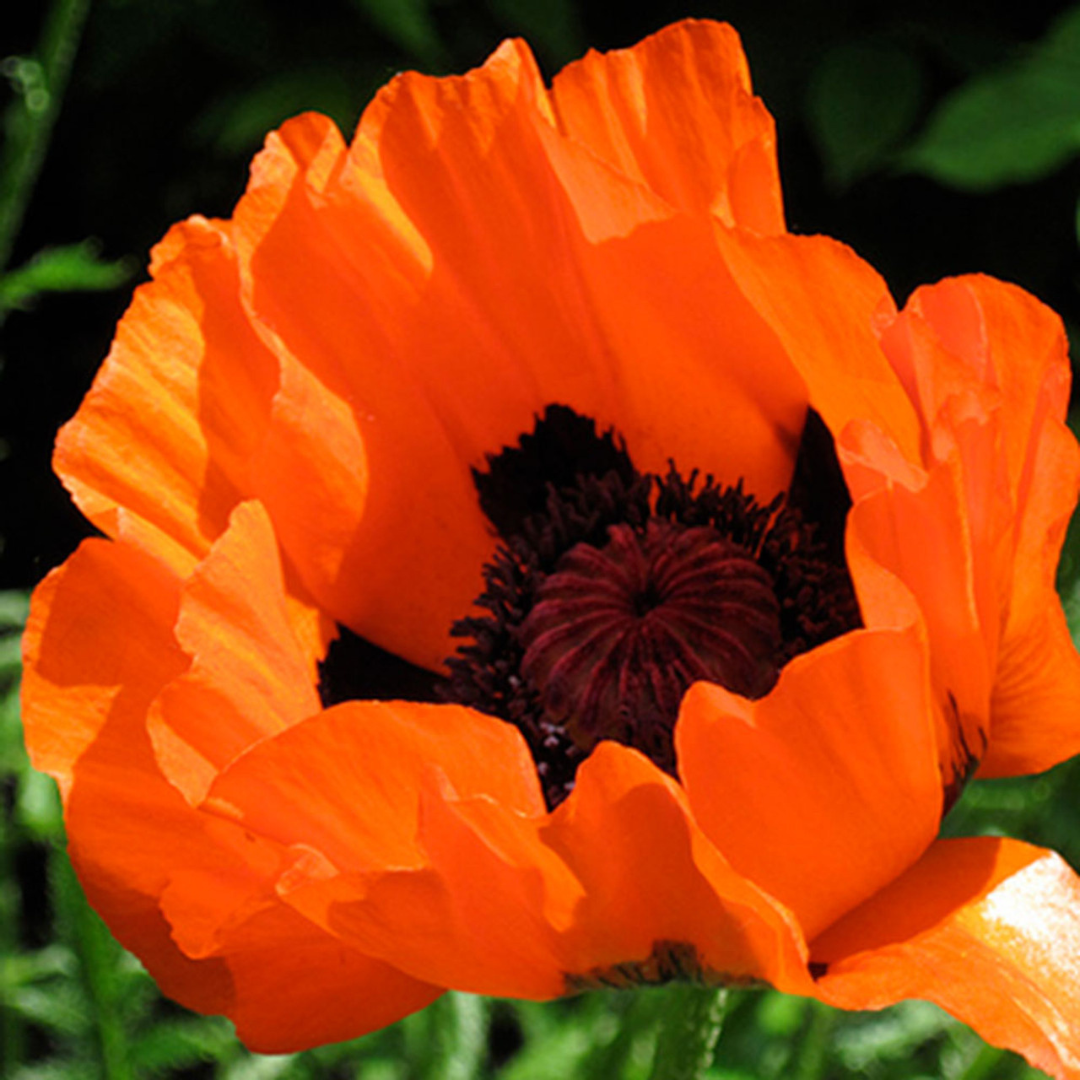
Papaver 'Prince of Orange'
Add to Wishlist Full Sun
 Drought Tolerant
 Deer Resistant
 Pollinator Friendly
 Low Maintenance
- In stock, ready to ship
Papaver 'Prince of Orange': Loud Orange Petals Like Crepe Paper
Tangerine petals crinkled like crepe paper around a purple-black centre. 'Prince of Orange' looks like royalty that slept in its crown and still showed up looking better than you. CREASES ARE A STYLE CHOICE.
Plant Characteristics:
- Botanical Name: Papaver orientale 'Prince of Orange'
- Common Name: Oriental Poppy
- Height: 70–80 cm (27–31 in)
- Spread: 30–60 cm (1–2 ft)
- Flowers: Large, tangerine-orange, with crinkled, crepe-like petals around a dark centre and purple-black stamens
- Bloom Time: Late spring to early summer (May to June)
- Foliage: Coarse, deeply cut, hairy deep green leaves that die back in summer
- Features: Rabbit resistant, good cut flower, decorative seed pods
Where to Plant: Plant it mid-border in full sun, where later perennials can fill the space after it goes dormant. Cut stems as the buds begin to crack open for long-lasting vase flowers, and save the dried pods for arrangements.
Companion Plants: Sempervivum 'Kalinda' makes a tidy, low edge at 10 to 15 cm, with pink flowers from June to August. Lavandula 'SuperBlue' adds blue lavender behind it from June to August, a classic contrast to orange. Helenium autumnale rises at the back with yellow daisies from July to October, filling the space after the poppy fades. All three are happy in full sun and well-drained soil.
Plant Care: Plant in full sun in average to fertile, well-drained soil. Winter wet is the main danger, so avoid low spots and clay that stays soggy. Water through its first season. Once established, it's drought tolerant during its summer rest. Cut spent flower stems to the base, or leave a few for pods. The foliage yellows and disappears in midsummer. That's normal, and fresh leaves come back in fall. Poppies have a long taproot and don't like being moved. Divide or transplant only in late summer, while the plant is dormant.
History: Oriental poppies are native to the Caucasus, northeastern Turkey and northern Iran, and their summer dormancy is a holdover from those hot, dry summers. Orange is the colour of the wild species, so this one is close to the original look.
Final Thoughts: Deer pass, rabbits pass, drought gets a shrug. Even the bees bow on the way in. LONG LIVE THE PRINCE.



