



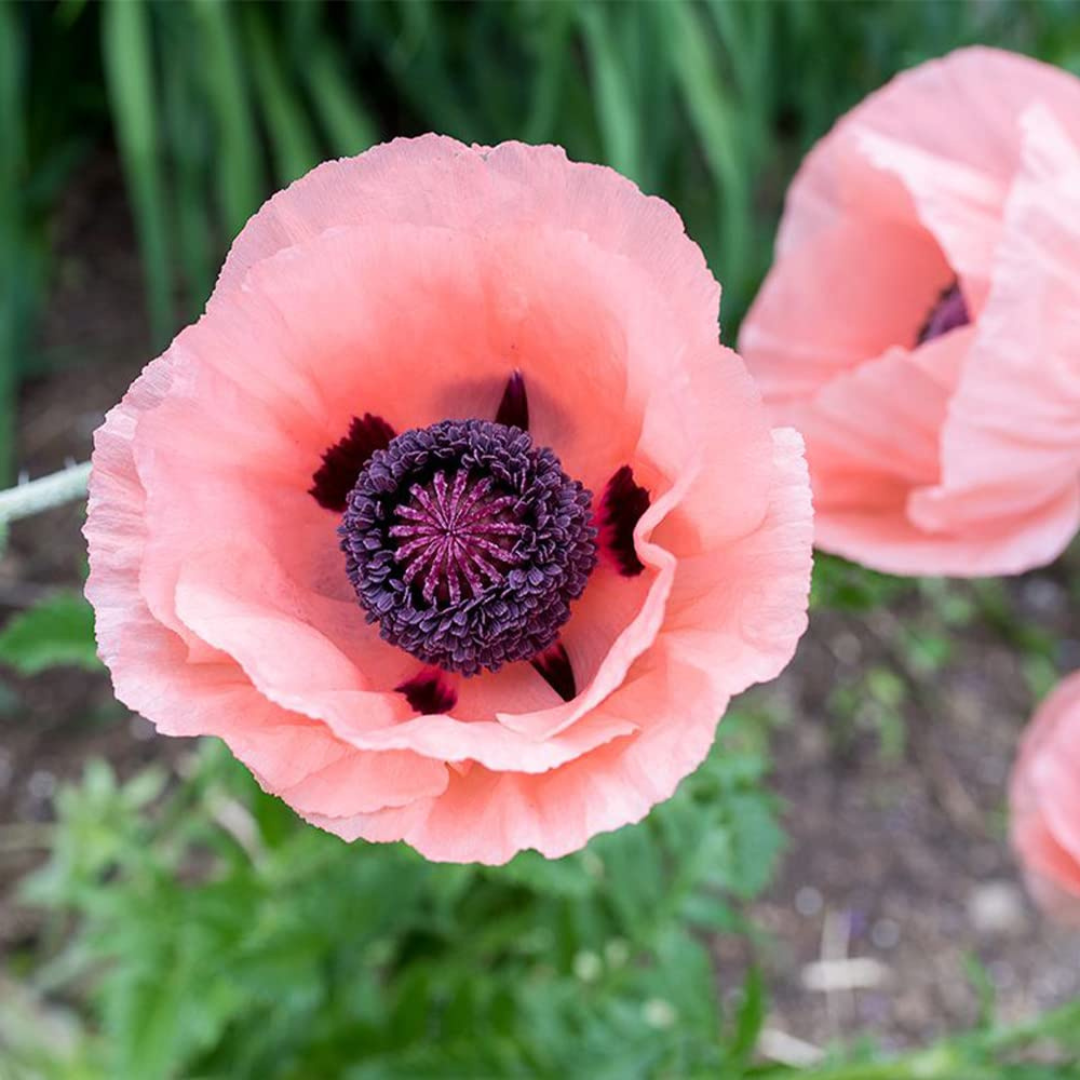
Papaver 'Princess Victoria Louise'
Add to Wishlist Full Sun
 Deer Resistant
 Pollinator Friendly
 Low Maintenance
- In stock, ready to ship
Papaver 'Princess Victoria Louise': Satiny Salmon Pink With Cottage Manners
Salmon-pink petals with dark blotches at the base, the exact shade of a very fancy brunch. This poppy shows up in late spring like it has a standing reservation. TABLE FOR ONE, BY THE WINDOW.
Plant Characteristics:
- Botanical Name: Papaver orientale 'Prinzessin Victoria Louise' (sold in English as 'Princess Victoria Louise')
- Common Name: Oriental Poppy
- Height: 75–90 cm (2.5–3 ft)
- Spread: 45–60 cm (1.5–2 ft)
- Flowers: Large, single, bowl-shaped, salmon-pink, with a dark blotch at the base of each petal and a dark purple centre
- Bloom Time: Late spring to early summer (May to June)
- Foliage: Coarse, hairy, toothed green leaves that die back in summer
- Features: Good cut flower, tolerates sandy or clay soil if well drained
Where to Plant: It's softer than the red and orange poppies, so it suits pastel borders, cottage gardens and cut-flower beds. Give it well-drained sandy or clay soil, and plan for neighbours that fill in after it goes dormant.
Companion Plants: Plant Alcea 'Purple Rain' behind the poppy for tall purple hollyhock spires from June to August. Calamintha 'White Cloud' fills in at mid height with tiny white flowers from June to September, hiding the gap the poppy leaves in summer. Eryngium 'Blue Hobbit' adds compact blue sea holly at the front from June to August. The soft pink poppy opens the season and the others carry it on.
Plant Care: Plant in full sun in average, well-drained soil. It handles sand or clay, as long as water doesn't sit around the crown in winter. Water through the first season, then only in long dry spells. Cut flower stems to the base after blooming, or leave some for seed pods. The foliage dies back by late summer. That's normal, and new leaves come up in fall. Like all oriental poppies, it has a deep taproot and dislikes moving. Divide in August or September, while it's dormant.
History: Oriental poppies are native to the Caucasus, northeastern Turkey and northern Iran. 'Prinzessin Victoria Louise' is an older variety still widely grown in Europe and North America, and its name appears to honour Princess Viktoria Luise of Prussia, though the breeder and year are unconfirmed.
Final Thoughts: Sandy soil, clay soil, deer at the gate? Not a problem if the drainage is good. TREAT IT LIKE ROYALTY AND IT RETURNS THE FAVOUR.



