



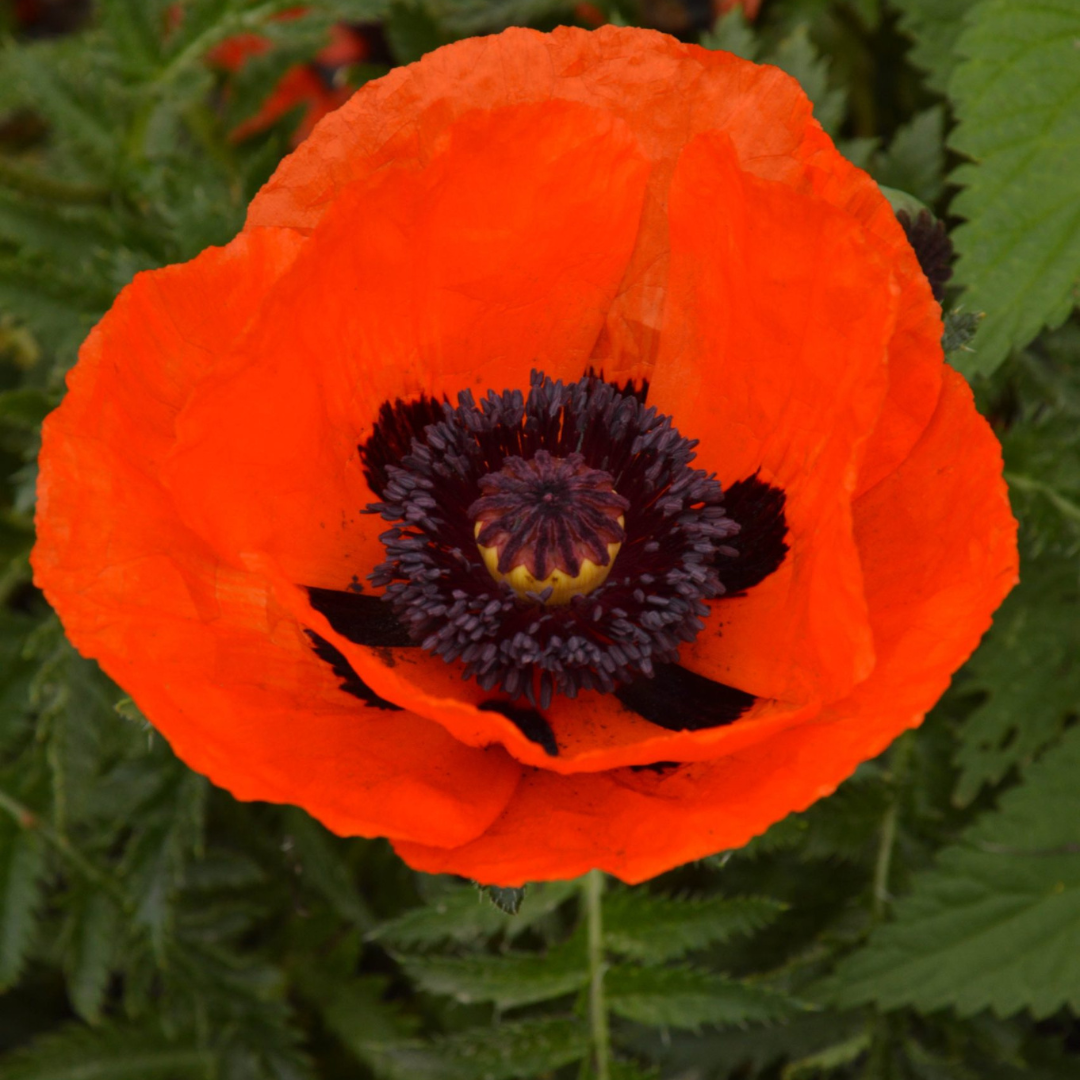
Papaver 'Brilliant'
Add to Wishlist Full Sun
 Deer Resistant
 Pollinator Friendly
 Low Maintenance
- In stock, ready to ship
Papaver 'Brilliant': Fire-Engine Red, Black at Heart
Fiery scarlet petals around a dark centre, glowing like a stop sign that's had three espressos. This poppy did not come here to blend in. 'BRILLIANT' IS NOT A NICKNAME, IT'S A FACT.
Plant Characteristics:
- Botanical Name: Papaver orientale 'Brilliant'
- Common Name: Oriental Poppy
- Height: 60–80 cm (2–2.5 ft)
- Spread: 45–60 cm (1.5–2 ft)
- Flowers: Large, bowl-shaped, fiery scarlet blooms, 10–12 cm (4–5 in) across, with dark centres and black stamens
- Bloom Time: Late spring to early summer (May to June)
- Foliage: Deeply cut, hairy green leaves that die back after flowering
- Features: Good cut flower, decorative seed pods
Where to Plant: Give it a sunny spot in the middle of a border, where something bushier can fill in once it goes dormant in summer. It's also worth a place in a cut-flower bed, since the stems cut well and the seed pods dry nicely.
Companion Plants: Allium giganteum flowers with the poppy in May and June, its purple globes held high on 90 to 150 cm stems. Leucanthemum 'Starburst' takes over in June with white daisies that last into August. Salvia Perpetual Purple™ adds purple spikes at the front from June to September. When the poppy dies back in summer, the daisies and sage keep the spot full.
Plant Care: Plant in full sun in average to fertile, well-drained soil. Oriental poppies hate wet feet, especially in winter, so skip low spots and soggy clay. Water through the first season, then only during long droughts. After blooming, cut the flower stems down, or leave some for the pods. The leaves yellow and vanish by midsummer, which is normal. New leaves appear again in fall. Poppies grow a deep taproot and resent being moved. If you must divide or transplant, do it in late summer while the plant is dormant.
History: The oriental poppy is native to the Caucasus, northeastern Turkey and northern Iran, and has been a garden favourite in Europe and North America for well over a century. 'Brilliant' is also sold as a seed-grown strain, valued for its bright, consistent red.
Final Thoughts: When the show's over, leave the seed pods. They're basically free garden sculpture. TAKE A BOW, THEN TAKE A PICTURE.



