



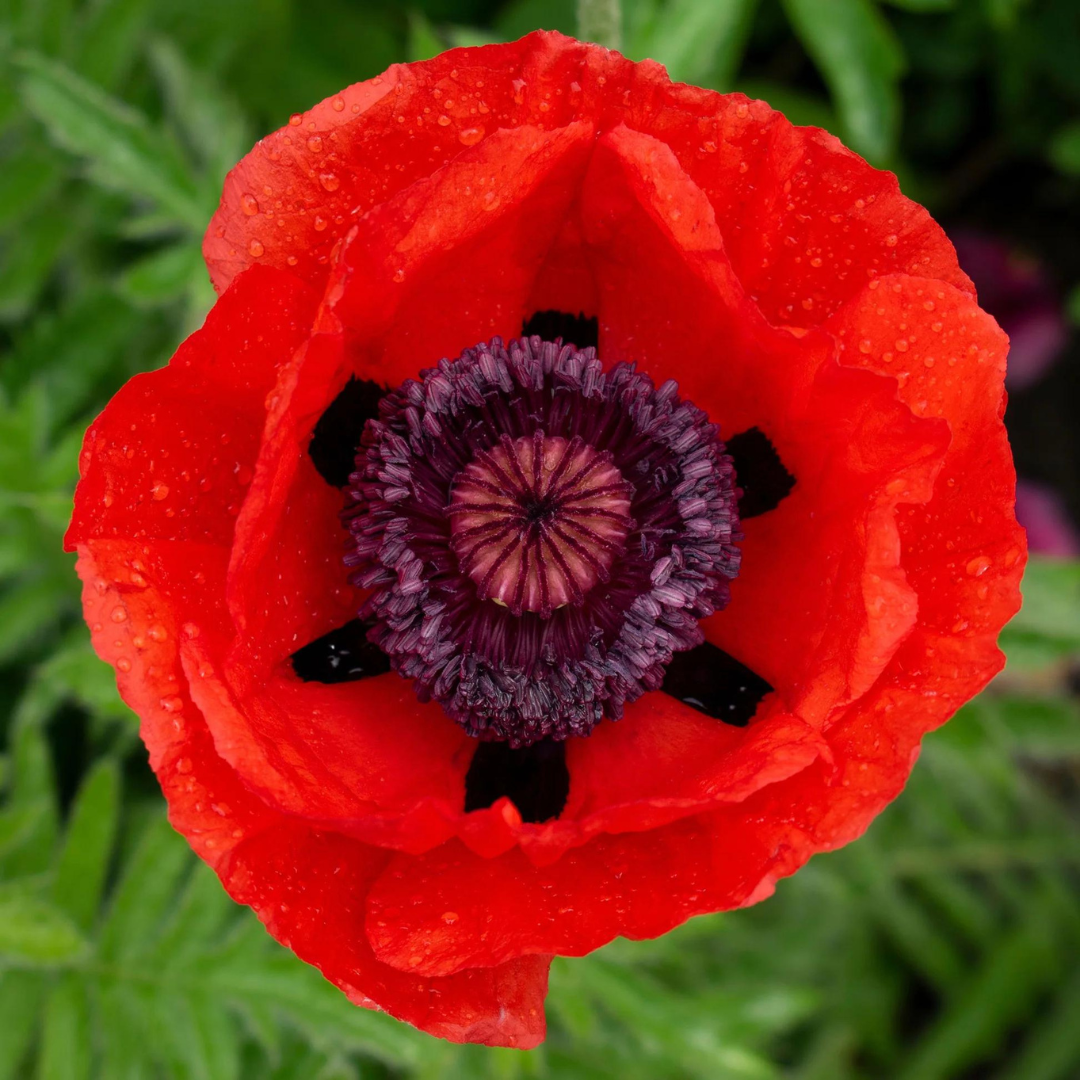
Papaver 'Beauty of Livermere'
Add to Wishlist Full Sun
 Deer Resistant
 Pollinator Friendly
 Low Maintenance
- In stock, ready to ship
Papaver 'Beauty of Livermere': Scarlet Showstopper, Then a Summer Nap
Giant scarlet bowls with black blotches at the base, opening like somebody threw a red silk dress over the fence. 'Beauty of Livermere' has never once heard of subtlety. THE STREET IS NOW STARING.
Plant Characteristics:
- Botanical Name: Papaver orientale 'Beauty of Livermere' (also listed as Papaver Oriental Group or Goliath Group)
- Common Name: Oriental Poppy
- Height: 60–90 cm (2–3 ft)
- Spread: 45–60 cm (1.5–2 ft)
- Flowers: Single, bowl-shaped, deep scarlet, up to about 20 cm (8 in) across, with a black blotch at the base of each petal and dark stamens
- Bloom Time: Late spring to early summer (May to June)
- Foliage: Coarse, bristly, deeply toothed grey-green leaves that die back in summer
- Features: Long-lived, good cut flower
Where to Plant: Plant it in the middle of a sunny border where it can shine for a few weeks, then let neighbours cover the gap after the leaves yellow and disappear until fall. It also suits a cut-flower bed, and the seed pods are handy for dried arrangements.
Companion Plants: Iris 'Dream Stuff' blooms in white at 25 cm in May and June, right under the red poppy flowers. Delphinium 'Pagan Purples' rises behind with purple spikes from June to August, ready to fill the gap when the poppy fades back in summer. Scabiosa 'Butterfly Blue' keeps blue pincushions coming from May to October. Plant all three in full sun with good drainage.
Plant Care: Plant in full sun in fertile, well-drained soil. Wet soil in winter is the main thing that kills oriental poppies, so avoid low, soggy spots and heavy clay that stays wet. Water through the first season. Mature plants rarely need much help. Tall stems may need a discreet support in windy spots. After blooming, cut the flower stems to the base, or leave a few for the pods. Once the leaves yellow in summer, you can tidy them away. A fresh tuft of leaves returns in fall. Oriental poppies have a deep taproot and don't like being moved. If you need to divide or move one, do it in late summer while it's dormant.
History: Oriental poppies come from the Caucasus, northeastern Turkey and northern Iran, where cold winters and dry summers explain their summer dormancy. 'Beauty of Livermere' is now filed under Papaver (Oriental Group) by the Royal Horticultural Society, and it's still one of the best-known deep reds.
Final Thoughts: It disappears in summer like a celebrity on a cleanse, then comes back for an encore next spring. Plant something late beside it and KEEP THE SHOW RUNNING.



