



Oenothera macrocarpa
Add to Wishlist Full Sun
 Drought Tolerant
 Deer Resistant
 Pollinator Friendly
- In stock, ready to ship
Oenothera macrocarpa: Giant Lemon Cups Opening at Dusk
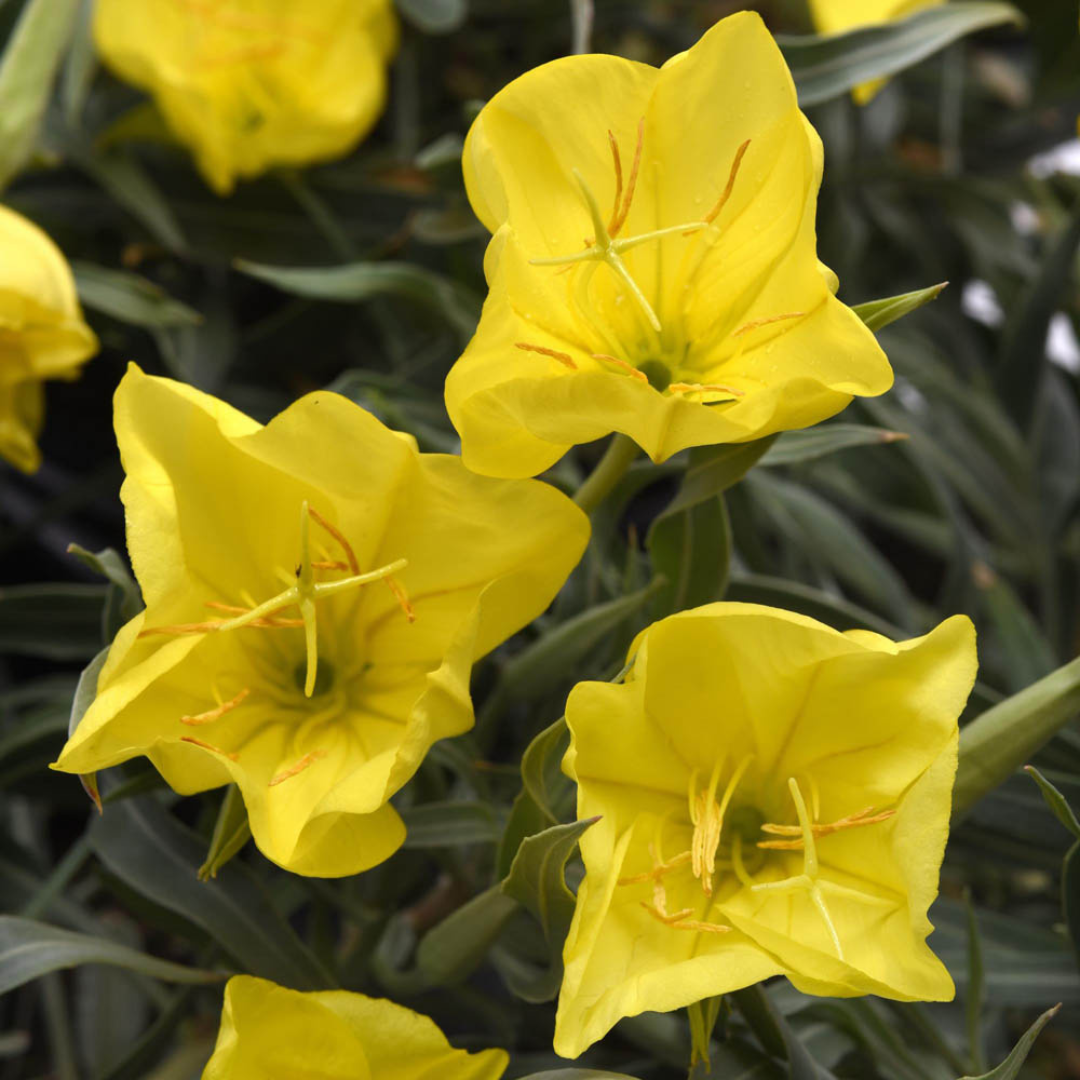
Missouri Evening Primrose sleeps in and opens huge canary-yellow blooms in the evening, which makes it the night owl of the rock garden. The moths have a standing reservation. AFTER DARK, IT'S A DIFFERENT PLANT.
Plant Characteristics:
- Botanical Name: Oenothera macrocarpa (syn. Oenothera missouriensis)
- Common Name: Missouri Evening Primrose, Ozark Sundrops
- Height: 15–30 cm (6–12 in)
- Spread: 30–60 cm (1–2 ft)
- Flowers: Large, cup-shaped, lightly fragrant, canary-yellow blooms up to 10 cm (4 in) across, opening in the evening
- Bloom Time: Early to midsummer (June to July)
- Foliage: Narrow, lance-shaped green leaves on trailing stems
- Features: Decorative winged seed pods
Where to Plant: Put it where it can sprawl with good drainage: the front of a dry border, a rock garden, the top of a retaining wall, a sunny slope or a hot strip by the driveway. Plant it close to a patio or path so you can watch the flowers open in the evening.
Companion Plants: Bouteloua curtipendula is a native grass at 60 to 75 cm that flowers from July to September and loves the same dry soil. Penstemon 'Dark Towers' adds pink flowers at 85 to 90 cm from June to August. Perovskia 'Blue Jean Baby' brings lavender spires at 70 to 85 cm from July to September, a cool foil for big yellow cups. Plant them together in full sun with sharp drainage.
Plant Care: Plant in full sun in well-drained soil. Sandy, gravelly or rocky soil is ideal, and poor soil is fine. It tolerates clay only if the site drains well; wet soil in winter is the main cause of loss. Water through the first season, then only in long droughts. Remove spent flowers to encourage more buds, or leave some to form the winged seed pods. Clean up dead stems in late fall or early spring. New growth can be slow to appear in spring, so mark its spot. It has a deep taproot and is best left undisturbed once planted.
History: Oenothera macrocarpa is native to the limestone glades, rocky prairies and outcrops of the south-central United States and northeastern Mexico, and its name means "large-fruited," after its oversized, winged seed pods. It holds the Royal Horticultural Society's Award of Garden Merit.
Final Thoughts: Drought tolerant once established and deer resistant, with fun winged seed pods afterward. Plant it near the patio. THE LATE SHOW STARTS AT DUSK.



