



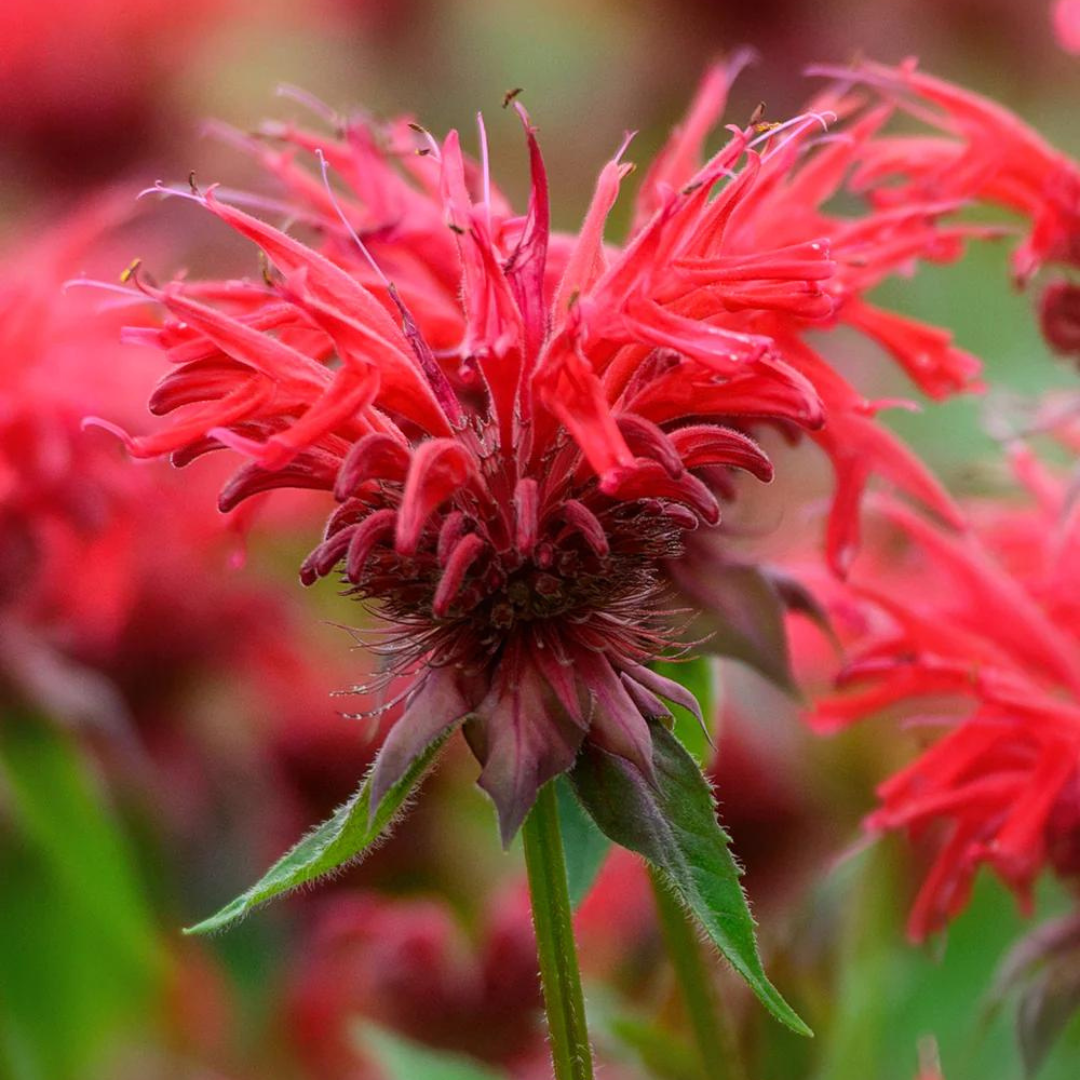
Monarda 'Fireball'
Add to Wishlist Full Sun
 Partial Sun
 Deer Resistant
 Pollinator Friendly
- In stock, ready to ship
Monarda 'Fireball': Compact, Deep Red and Well-Behaved
'Fireball' is a bee balm with a bad-hair-day look and absolutely no regrets. Big, shaggy, deep red heads that the hummingbirds can spot from three yards over. HOT HEAD, COOL ATTITUDE.
Plant Characteristics:
- Botanical Name: Monarda didyma 'Fireball'
- Common Name: Bee Balm
- Height: 60–70 cm (24–28 in)
- Spread: 45–60 cm (18–24 in)
- Flowers: Large, shaggy heads of deep red
- Bloom Time: Mid to late summer (July to September)
- Foliage: Deep green and aromatic, with better powdery mildew resistance than most older bee balms
- Features: Rabbit resistant, fragrant foliage, good cut flower
- Plant Patent: USPP 14,235
Where to Plant: Its tidy size suits the middle of a border, a small city garden or a large container. Plant it in a group for a solid block of red in high summer, or tuck it into a cut-flower bed.
Companion Plants: Anemone 'Honorine Jobert' rises to 90 to 120 cm with white flowers in September and October, after the red bee balm is done. Symphyotrichum laeve adds lavender asters at 60 to 100 cm from August to October. Sedum kamtschaticum 'Variegatum' edges the bed at 15 to 20 cm with yellow flowers from June to August. Plant them in full sun or part sun.
Plant Care: Plant in full sun to part sun in fertile, evenly moist, well-drained soil. More sun means more flowers and less mildew. Give it room for air to move around the stems, and water at the base during dry spells, because stress from drought makes mildew more likely. Deadhead spent flowers to tidy the plant and encourage more blooms. Cut the stems to the ground in late fall or early spring. Like all bee balms it spreads by shallow runners, though more slowly than the tall types. Divide every three years or so in early spring to keep the clump vigorous.
History: 'Fireball' was found in 1995 by Dutch breeder Hubertus Oudshoorn in Rijpwetering, the Netherlands, from a chance cross between two Monarda didyma selections. It was chosen for its compact habit and flower colour.
Final Thoughts: Better mildew resistance, fragrant leaves, and deer and rabbits that leave it alone. Plant it by the patio. PLAY WITH FIRE. SAFELY.



