



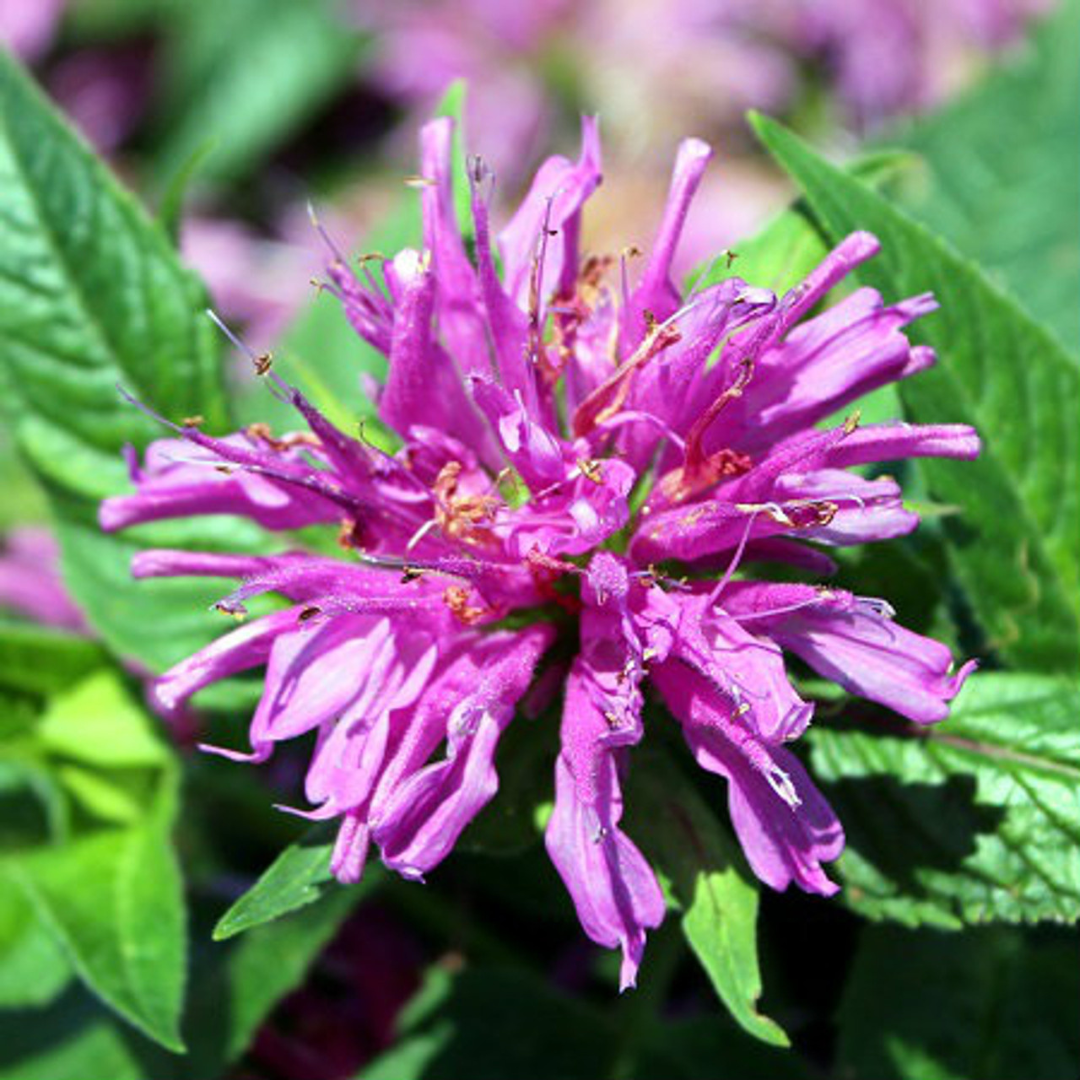
Monarda Grand Parade™
Add to Wishlist Full Sun
 Partial Sun
 Deer Resistant
 Pollinator Friendly
- In stock, ready to ship
Monarda Grand Parade™: Prairie-Tough Purple for the Front Row
This compact bee balm marches into the border with a full brass band of lavender-purple to magenta blooms. Short enough for a container, loud enough for a street festival. EVERYBODY CLEAR THE ROAD.
Plant Characteristics:
- Botanical Name: Monarda didyma 'ACrade'
- Common Name: Bee Balm
- Height: 40–45 cm (16–18 in)
- Spread: 50–60 cm (20–24 in)
- Flowers: Large, shaggy heads of lavender-purple to magenta-purple
- Bloom Time: Midsummer (July to August)
- Foliage: Dark green, fragrant leaves with better powdery mildew resistance than most older bee balms
- Features: Rabbit resistant, fragrant foliage, compact enough for containers
- Plant Patent: USPP 19,580
Where to Plant: It belongs at the front of the border, along a path, or in a container where you can smell the leaves as you walk by. Its low height makes it easy to fit into a small garden, and three or five planted together make a solid sheet of purple.
Companion Plants: Eupatorium 'Chocolate' grows 90 to 120 cm behind this compact bee balm, with white flowers from August to October. Astrantia 'Star of Billion' adds white pincushion flowers at 55 to 65 cm from June to August. Persicaria 'Dimity' carpets the front at 15 to 20 cm with pink spikes from June to September. Plant the trio in full sun or part sun for a tidy, long-blooming bed.
Plant Care: Plant in full sun to part sun in fertile, evenly moist, well-drained soil. The more sun it gets, the better it flowers and the less mildew you'll see. Water at the base in dry spells and leave a bit of space around it for air flow. Deadhead after the first flush to tidy it up. Cut it back to the ground in late fall or early spring. It spreads slowly by shallow runners. Divide every few years in early spring to keep the clump young and full.
History: Grand Parade™ came out of the Agriculture Canada research station in Morden, Manitoba, a program known for plants that handle prairie winters. It's a selection of scarlet bee balm, Monarda didyma, which is native to eastern North America, including southern Ontario.
Final Thoughts: Deer and rabbits sit this one out, but the hummingbirds want front-row seats. Put a pot on the porch. SOMEBODY CUE THE TUBA.



