



Mertensia virginica
Add to Wishlist Partial Sun
 Full Shade
 Pollinator Friendly
 Native
- In stock, ready to ship
Mertensia virginica: Sky Blue Bells, Then a Disappearing Act
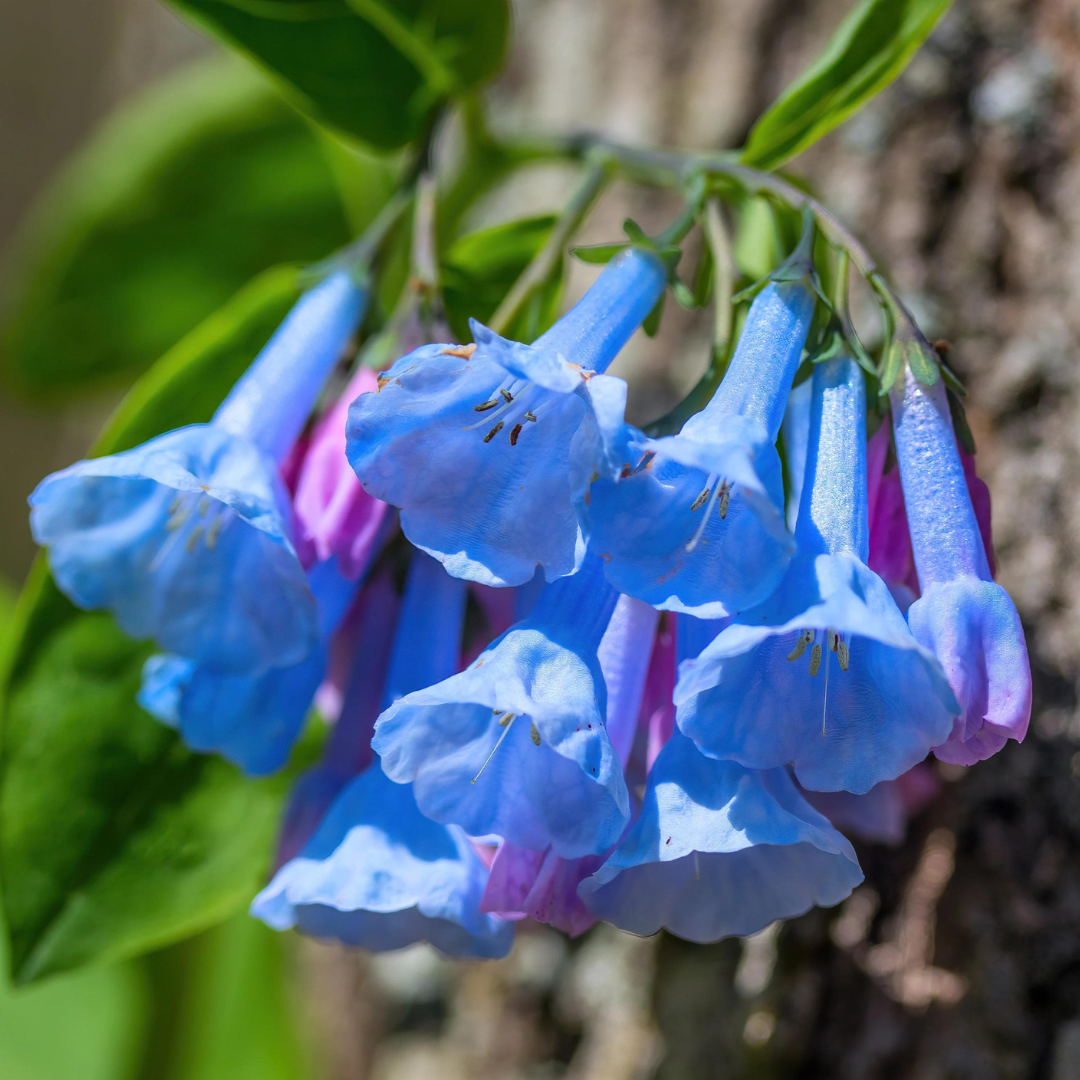
Virginia Bluebells shows up in spring, puts on a dazzling show, then vanishes like a celebrity dodging the paparazzi. Pink buds open to sky blue bells. CATCH IT WHILE YOU CAN.
Plant Characteristics:
- Botanical Name: Mertensia virginica
- Common Name: Virginia Bluebells
- Height: 30–60 cm (1–2 ft)
- Spread: 30–45 cm (12–18 in)
- Flowers: Nodding clusters of tubular, bell-shaped flowers. Buds are pink and open to light blue.
- Bloom Time: Mid to late spring (April to May)
- Foliage: Smooth, oval, grey-green to blue-green leaves; dies back by midsummer
- Features: Rabbit resistant, tolerates black walnut, self-seeds gently
Where to Plant: Plant it in woodland gardens, shady borders, under deciduous trees and shrubs or along moist streambanks, where it looks best in drifts. Because it goes dormant in summer, place it where later-filling neighbours can cover the gap. It tolerates black walnut, which helps in many older yards.
Companion Plants: Polygonatum multiflorum arches to 60 to 90 cm with white bells in May and June, a graceful partner for the blue bluebells. Hosta 'June Fever' is the perfect follow-up, since its bold leaves fill the gap when the bluebells go dormant in summer, and it flowers lavender in July and August. Tiarella cordifolia carpets the front at 15 to 30 cm with frothy white flowers in May and June. Plant this woodland trio in shade or part sun.
Plant Care: Plant it in rich, moist, well-drained soil with plenty of organic matter, in part to full shade. Spring sun before the trees leaf out is ideal. Keep it watered in spring while it's growing and flowering. Once it goes dormant, it handles drier summer soil. Mark where it's planted so you don't dig into it later. Let the foliage yellow and die back on its own; don't cut it early. It slowly forms clumps and self-seeds where it's happy. If you want to divide it, do it in early fall while dormant, but it's happiest left alone.
History: Virginia bluebells grow wild in rich, moist woods and floodplains across eastern North America, from southern Ontario and Quebec south through the central and eastern United States. The genus honours Franz Carl Mertens, a German botany professor in Bremen.
Final Thoughts: A native that feeds the first hungry bumble bees of the year. Plant it among hostas to hide the disappearing act. NOW YOU SEE IT. NEXT SPRING, YOU SEE IT AGAIN.



