



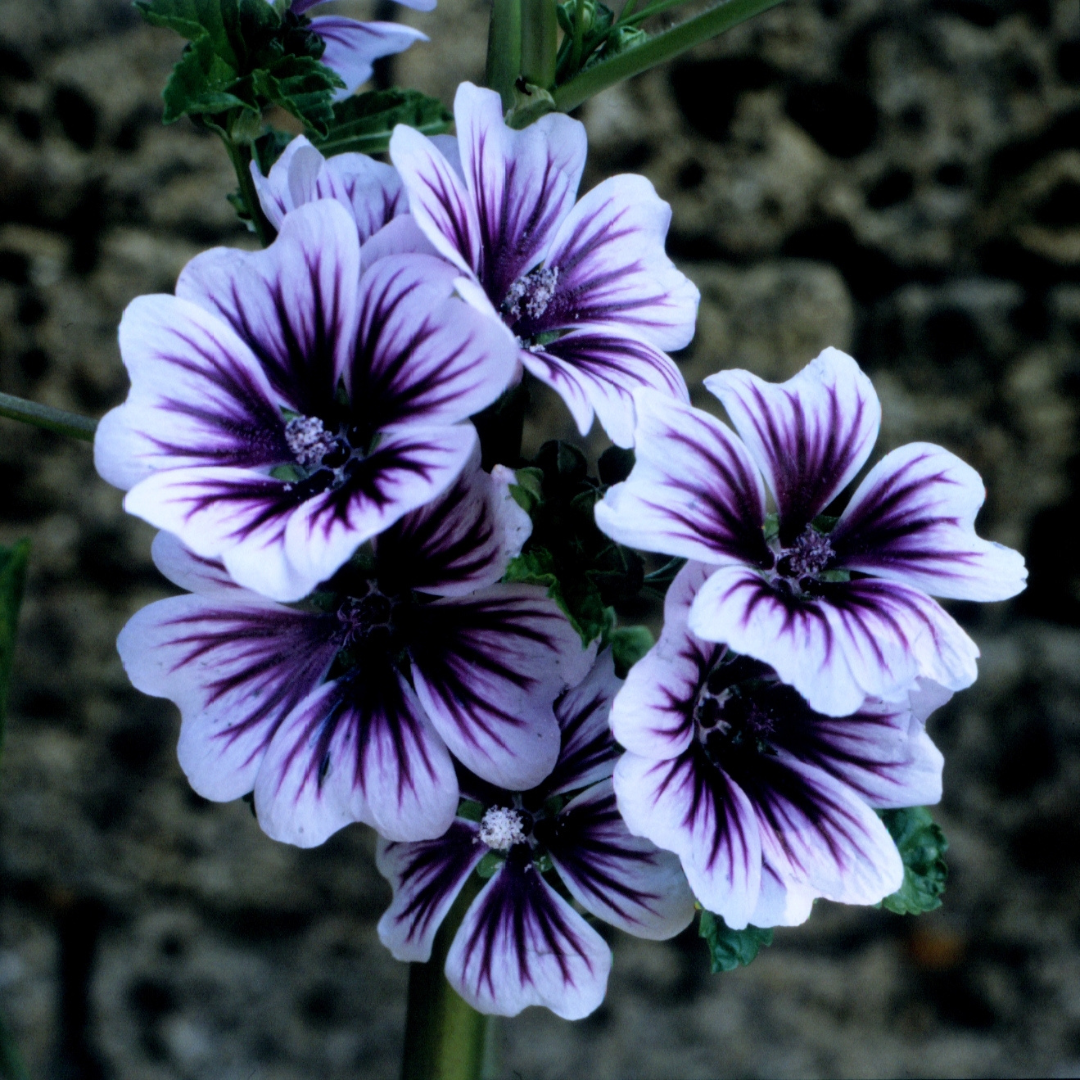
Malva sylvestris 'Zebrina'
Add to Wishlist Full Sun
 Partial Sun
 Deer Resistant
 Pollinator Friendly
 Low Maintenance
- In stock, ready to ship
Malva sylvestris 'Zebrina': Pinstriped Mallow for the Long Haul
'Zebrina' wears pinstripes like it just closed a big deal. Pale pink saucers striped with deep purple veins, blooming nonstop like it has a quota to hit. THE BUSIEST FLOWER ON THE TRADING FLOOR.
Plant Characteristics:
- Botanical Name: Malva sylvestris 'Zebrina' (sometimes listed as M. sylvestris var. mauritiana 'Zebrina')
- Common Name: Zebra Mallow, also called hollyhock mallow
- Height: 60–120 cm (2–4 ft)
- Spread: 45–60 cm (18–24 in)
- Flowers: Saucer-shaped, about 5 cm (2 in) across, pale pink to lilac with deep purple-maroon veins
- Bloom Time: Early summer to early fall (June to September)
- Foliage: Rounded, lobed green leaves on upright stems
- Features: Long bloom season, self-seeds
Where to Plant: It belongs in cottage gardens, sunny borders and pollinator beds, where its long season of bloom fills gaps between early and late perennials, and it's handy in large containers. Treat it as a short-lived perennial that keeps itself going by seed, and a patch tends to stay put over the years.
Companion Plants: Penstemon hirsutus opens lavender flowers at 30 to 60 cm in May and June, just before the striped mallow flowers begin. Allium 'Serendipity' adds purple globes at 38 to 51 cm in July and August, echoing the dark veins on each petal. Chrysanthemum 'Mary Stoker' carries soft yellow daisies at 60 to 75 cm from August to October as the mallow winds down. All three handle full sun or part sun.
Plant Care: Plant it in average, well-drained soil in full sun or light shade. Rich soil makes it tall and floppy, so skip the fertilizer and stake it if needed. It handles some dryness once established, but water in long dry spells. Deadhead regularly to keep the flowers coming, and leave the last few to set seed if you want more plants next year. Watch for Japanese beetles and hollyhock rust, and clear away rusty leaves. Cut it back in late fall.
History: Malva sylvestris, common mallow, is native to Europe, North Africa and western Asia and has been grown for centuries as both a garden flower and a medicinal herb. 'Zebrina' is an old garden selection named for its stripes, and its exact origin is not recorded.
Final Thoughts: It self-seeds, so expect a few new recruits next year. The bees and butterflies are already invested. BUY LOW, BLOOM HIGH.



