



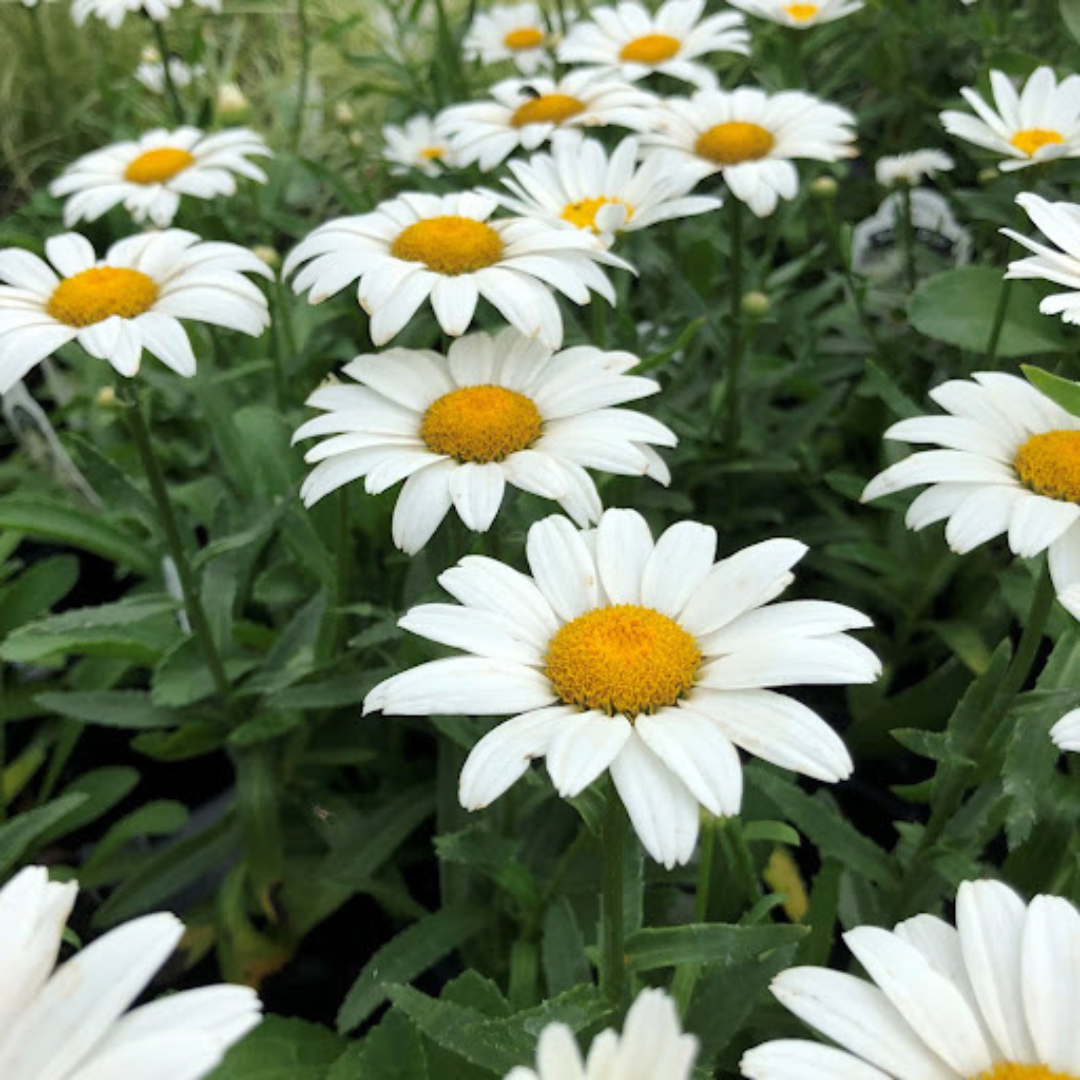
Leucanthemum 'Snowcap'
Add to Wishlist Full Sun
 Partial Sun
 Deer Resistant
 Pollinator Friendly
 Low Maintenance
- In stock, ready to ship
Leucanthemum 'Snowcap': Flop-Proof Daisies Up Front
'Snowcap' is short, tidy and covered in so many white daisies you'll swear somebody forgot to shovel. A neat dark green mound underneath, cheery yellow centres on top. THE ONLY SNOWBANK YOU'LL EVER BE HAPPY TO SEE.
Plant Characteristics:
- Botanical Name: Leucanthemum × superbum 'Snowcap'
- Common Name: Shasta Daisy
- Height: 30–35 cm (12–14 in)
- Spread: 30–45 cm (12–18 in)
- Flowers: Single white daisies with yellow centres, produced in large numbers
- Bloom Time: Early to late summer (June to August)
- Foliage: Dark green, forming a neat, low clump
- Features: Good for cutting
Where to Plant: Use it to edge a sunny bed or path, in the front row of a mixed border, or in containers where a taller daisy would tip over. White flowers act as a buffer between strong colours, and they cut well, so snip a few for the kitchen table and the plant simply makes more.
Companion Plants: Campanula 'Blue Magic'® spills along the edge at 10 to 20 cm with blue bells from June to September. Geum 'Koi' adds a pop of orange at 20 to 25 cm from May to September, a cheerful match for crisp white daisies. Behind, Echinops ritro lifts round blue globes to 90 to 120 cm from July to September. The whole group is happy in full sun or part sun.
Plant Care: Plant in full sun for the most flowers, in average, well-drained soil. Shasta daisies dislike wet feet in winter, so heavy clay should be loosened with compost or the plant set slightly high. Water regularly in the first season and during long dry spells after that. Deadhead spent flowers to keep new buds coming through summer. After the main flush, you can shear the plant back lightly to tidy it. Shasta daisies are happiest when divided every two or three years in spring. Lift the clump, replant the vigorous outer pieces, and discard the tired centre. Cut the foliage back in late fall or early spring.
History: The Shasta daisy is a garden hybrid that Luther Burbank developed in California around the turn of the twentieth century by crossing several daisy species, and he named it after the snowy peak of Mount Shasta. Older books list it as Chrysanthemum maximum, and unlike the weedy ox-eye daisy, it stays where you plant it.
Final Thoughts: Line the front of the border and enjoy a winter wonderland with zero shovelling. YOUR BACK SAYS THANK YOU.



