



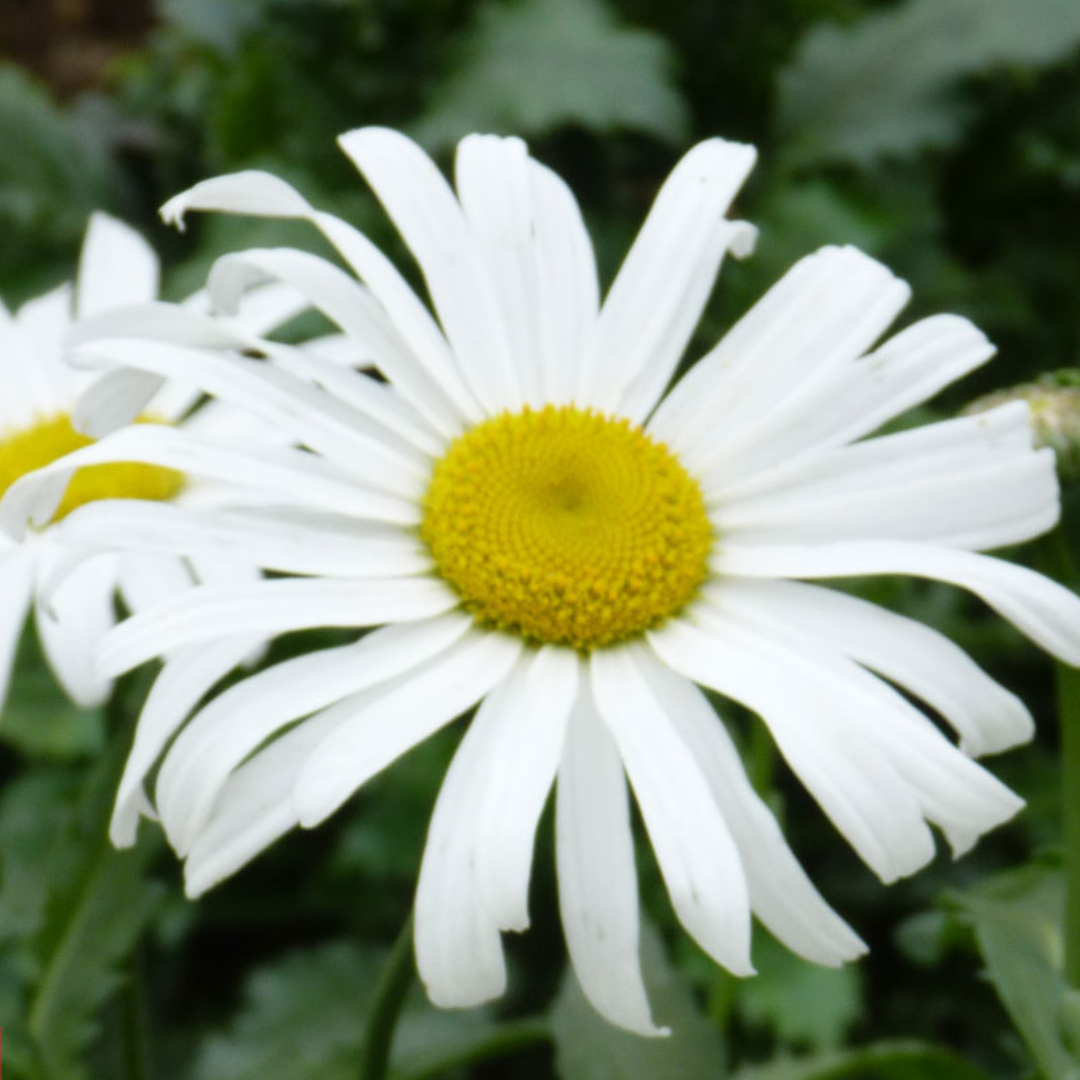
Leucanthemum 'Starburst'
Add to Wishlist Full Sun
 Partial Sun
 Deer Resistant
 Pollinator Friendly
 Low Maintenance
- In stock, ready to ship
Leucanthemum 'Starburst': Giant White Daisies Built for Vases
'Starburst' grows daisies the size of a salad plate, then flips a few petals upward like it's doing jazz hands. Bright white, sunny centres and absolutely no chill. SUBTLE LEFT THE BUILDING YEARS AGO.
Plant Characteristics:
- Botanical Name: Leucanthemum × superbum 'Starburst'
- Common Name: Shasta Daisy
- Height: 80–120 cm (31–47 in)
- Spread: 60–75 cm (24–30 in)
- Flowers: Very large, single, bright white daisies with yellow centres, up to about 12 cm (5 in) across. Some petals turn upward.
- Bloom Time: Early to late summer (June to August)
- Foliage: Long, dark green, toothed leaves in a clump
- Features: Excellent for cutting
Where to Plant: Give it a spot in the middle or back of a sunny border, where its height reads well from a distance. It's a classic in cottage and cutting gardens, and a few clumps make a bright mass planting. Cut a handful of the long stems in July and the plant keeps producing.
Companion Plants: Amsonia 'Storm Cloud' opens blue flowers at 61 to 76 cm in May and June, just ahead of the big white daisies. In front, Kalimeris 'Blue Star' keeps a soft blue haze going at 30 to 45 cm from June to September. Rudbeckia 'American Gold Rush' picks up in July with golden flowers that carry on to October, long after the daisies finish. All three handle full sun or part sun, the same as 'Starburst'.
Plant Care: Plant in full sun for the most flowers, in average, well-drained soil. Shasta daisies hate wet feet, especially in winter, so loosen heavy clay with compost or plant on a slight rise. Water regularly in the first season, then during long dry spells. Deadhead spent flowers to keep new ones coming. After the main flush, cut flowering stems back to the leafy base to tidy the plant. The stems are sturdy, though very rich soil or too much shade can make them lean. Shasta daisies can be short-lived. Divide the clump every two or three years in spring to keep it vigorous, replanting the healthy outer pieces.
History: American breeder Luther Burbank developed the Shasta daisy in California in the late 1800s and early 1900s by crossing several daisy species, and he named it for the snowy peak of Mount Shasta. 'Starburst' is a large-flowered selection of garden origin, sold widely as seed by perennial seed houses.
Final Thoughts: Plant it at the back, cut a few for the table and accept that every other daisy will look underdressed. SUPERNOVA, SIZE LARGE.



