



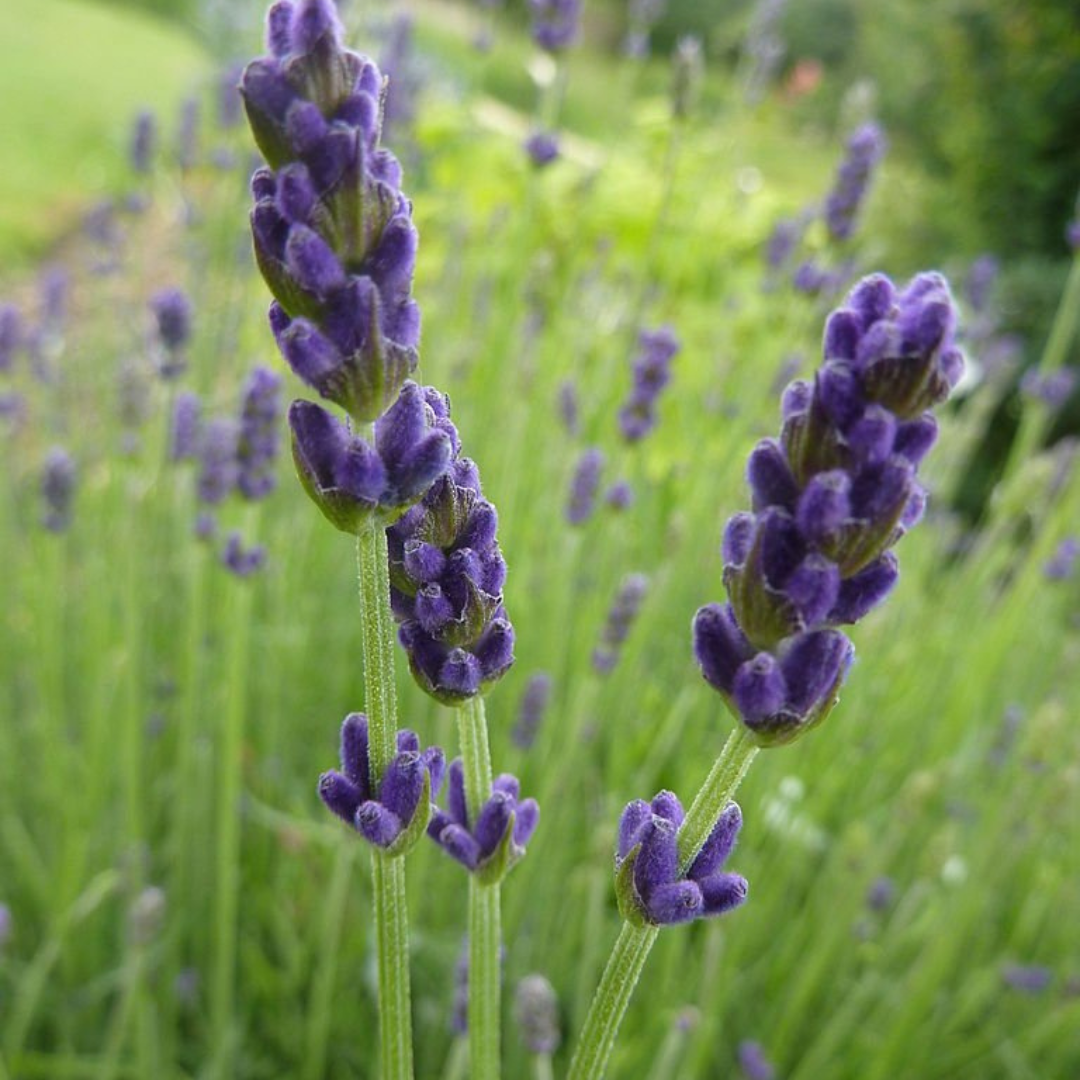
Lavandula 'Hidcote Superior'
Add to Wishlist Full Sun
 Drought Tolerant
 Deer Resistant
 Pollinator Friendly
 Low Maintenance
- In stock, ready to ship
Lavandula 'Hidcote Superior': Neat Violet Rows, No Stragglers
Dark violet spikes on a compact, upright plant that blooms longer if you give it a quick trim. 'Hidcote Superior' has a name that sounds smug, and frankly, IT'S EARNED THE ATTITUDE.
Plant Characteristics:
- Botanical Name: Lavandula angustifolia 'Hidcote Superior'
- Common Name: English Lavender
- Height: 40 cm (16 in)
- Spread: 40 cm (16 in)
- Flowers: Dark violet-purple, fragrant spikes
- Bloom Time: Early summer into early fall with deadheading (June to September)
- Foliage: Narrow, grey-green and aromatic, with a compact, upright habit
Where to Plant: Because the plants grow so evenly, it's ideal for low hedges, edging along a walkway, knot gardens and mass plantings where you want a clean, matching line. It also suits rock gardens and containers in a sunny, well-drained spot.
Companion Plants: Achillea New Vintage™ Rose carries flat rose heads at 66 to 71 cm from June to August, a soft colour beside the purple spikes. For texture, add Eryngium 'Big Blue', whose spiky blue flowers reach 70 to 75 cm through the summer. Run Sedum 'Red Carpet' along the front, where its red flowers sit just 8 to 15 cm tall from June to August. All four love full sun and a dry, sunny border.
Plant Care: Plant in full sun in light, well-drained soil. Sandy, gravelly or slightly alkaline soil is perfect. Avoid low spots where snowmelt pools, because wet winter roots are lavender's biggest risk here. Water during the first season, then only in extended dry spells. Deadhead the first flush of flowers to encourage more. Leave the plant standing over winter, and in spring, once fresh growth shows, trim lightly to shape without cutting into old, leafless wood.
History: Jelitto Perennial Seed introduced 'Hidcote Superior' in 2001 as a uniform, seed-raised take on the classic 'Hidcote' lavender, which is linked to Hidcote Manor, the English garden made by Lawrence Johnston. The species is native to the Mediterranean.
Final Thoughts: Deer resistant, drought tolerant once established and a bee favourite. Deadhead it and it keeps going. SUPERIOR IS AN UNDERSTATEMENT.



