



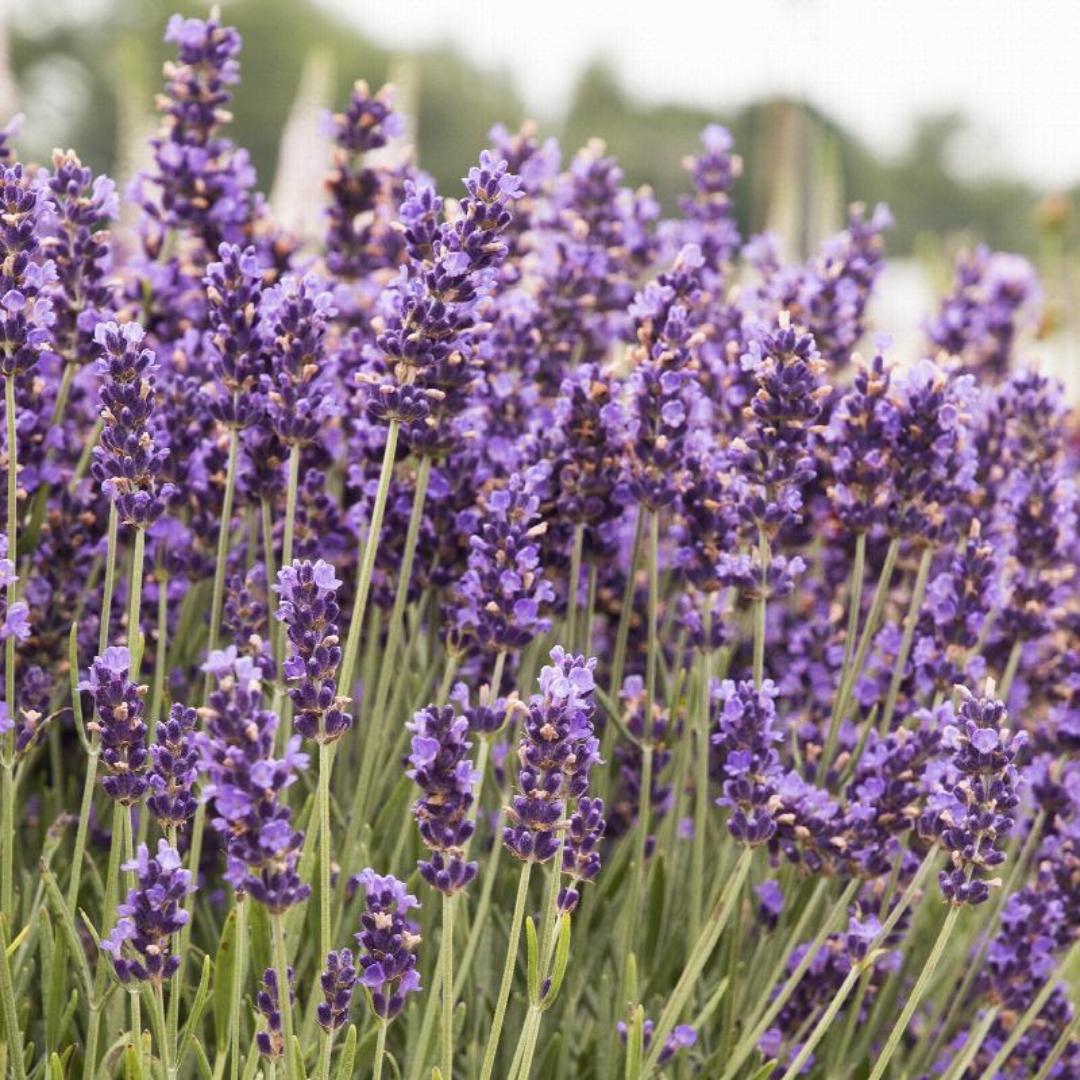
Lavandula 'Hidcote Blue'
Add to Wishlist Full Sun
 Drought Tolerant
 Deer Resistant
 Pollinator Friendly
 Low Maintenance
- In stock, ready to ship
Lavandula 'Hidcote Blue': The Deep Violet Lavender Hedge
Deep violet-purple spikes and silvery leaves, the lavender everyone pictures when they close their eyes. This one is THE ORIGINAL MOOD BOARD for every bath product you've ever bought.
Plant Characteristics:
- Botanical Name: Lavandula angustifolia 'Hidcote Blue'
- Common Name: English Lavender
- Height: 30–45 cm (12–18 in)
- Spread: 40–60 cm (16–24 in)
- Flowers: Deep violet-purple, fragrant spikes
- Bloom Time: Early to late summer (June to August)
- Foliage: Narrow, silvery grey-green and aromatic
- Features: Rabbit resistant, good for cutting and drying
Where to Plant: It's the go-to lavender for a low hedge along a path, a sunny herb garden, or the front of a border, and several in a row read as one band of colour. In a pot, give it a big container with gritty mix so it doesn't sit wet.
Companion Plants: Start the season with Allium 'Globemaster', whose big violet globes rise to 60 to 90 cm in late spring and lead straight into the lavender's June flowers. Leucanthemum 'Brightside' stands just behind with crisp white daisies from June to September, a clean partner for deep purple spikes. Along the edge, Euphorbia myrsinites spreads low blue-grey trails topped with yellow in May and June. It's a full sun trio that likes good drainage and very little fuss.
Plant Care: Plant in full sun in light, well-drained soil. Lavender tolerates poor soil and dislikes rich, wet ground. If you garden on clay, raise the planting area or add coarse grit, because soggy roots in winter do far more damage than cold. Water through the first summer, then only during long droughts. Leave the plant alone in fall. In spring, after new leaves appear, trim it back lightly to keep it compact, but don't cut into bare wood. Snipping off spent flowers after the first flush keeps it tidy and can encourage a few late spikes.
History: 'Hidcote Blue' is a seed-grown strain of 'Hidcote', the lavender associated with Hidcote Manor in the English Cotswolds, the garden created by Lawrence Johnston. English lavender itself is native to the Mediterranean, and its species name angustifolia means narrow-leaved.
Final Thoughts: Deer and rabbit resistant, drought tolerant once established and great for cutting and drying. Plant a hedge of it. BREATHE IN AND SAY THANK YOU.



