



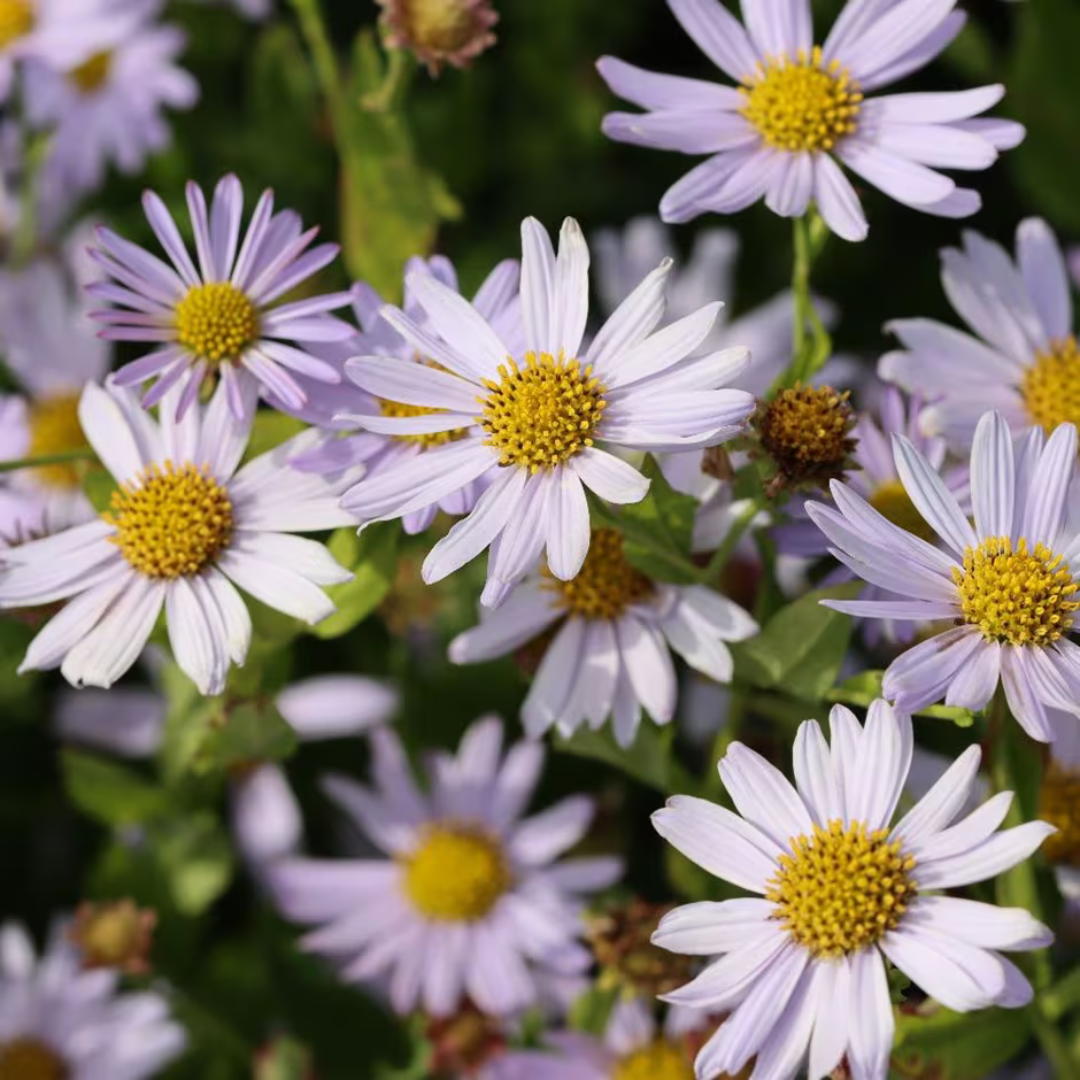
Kalimeris 'Blue Star'
Add to Wishlist Full Sun
 Partial Sun
 Drought Tolerant
 Pollinator Friendly
 Low Maintenance
- In stock, ready to ship
Kalimeris 'Blue Star': Little Blue Daisies That Just Keep Going
Light blue daisies with sunny yellow centres, blooming on and on long after the other flowers have called it a night. 'Blue Star' clocks in early, clocks out late and NEVER ASKS FOR A RAISE.
Plant Characteristics:
- Botanical Name: Kalimeris incisa 'Blue Star' (now also listed as Aster incisus)
- Common Name: Japanese Aster
- Height: 30–45 cm (12–18 in)
- Spread: 45–60 cm (18–24 in)
- Flowers: Light blue, single daisies about 2.5 cm (1 in) across with yellow centres
- Bloom Time: Early summer to early fall (June to September)
- Foliage: Deep green, narrow, toothed leaves on a bushy mound
- Features: Very long bloom season, good cut flower
Where to Plant: Put it at the front or middle of a sunny border, where its constant flowers fill the gaps when early bloomers fade. It also works in containers and massed plantings, and the stems are handy for small bouquets.
Companion Plants: Iris 'Butter and Sugar' brings bicolour flowers at 65 to 70 cm in May and June. Phlox 'Fashionably Early Princess' adds pink flowers at 70 to 80 cm from June through August. Astrantia 'Star of Billion' brings white flowers at 55 to 65 cm from June through August. All three grow in sun to partial sun, and the aster's small blue flowers sit nicely in front.
Plant Care: Plant in full sun to part sun in average, well-drained soil. It tolerates sandy soil and some clay, but it doesn't like sitting wet over winter. Water through the first season, then only during long dry spells. No deadheading is required, though a light trim in midsummer keeps it tidy. Cut it back in late fall or early spring. Divide every few years in spring if the centre thins out.
History: Japanese aster is native to eastern Asia, including Japan, Korea, northern China and southeastern Siberia. It has been called Boltonia incisa, then Kalimeris incisa, and many references now place it in Aster as Aster incisus, though gardeners still mostly know it as Kalimeris.
Final Thoughts: Drought tolerant once established and a butterfly favourite. Plant it in sun and cut a few for the kitchen table. EMPLOYEE OF THE MONTH, EVERY MONTH.



