



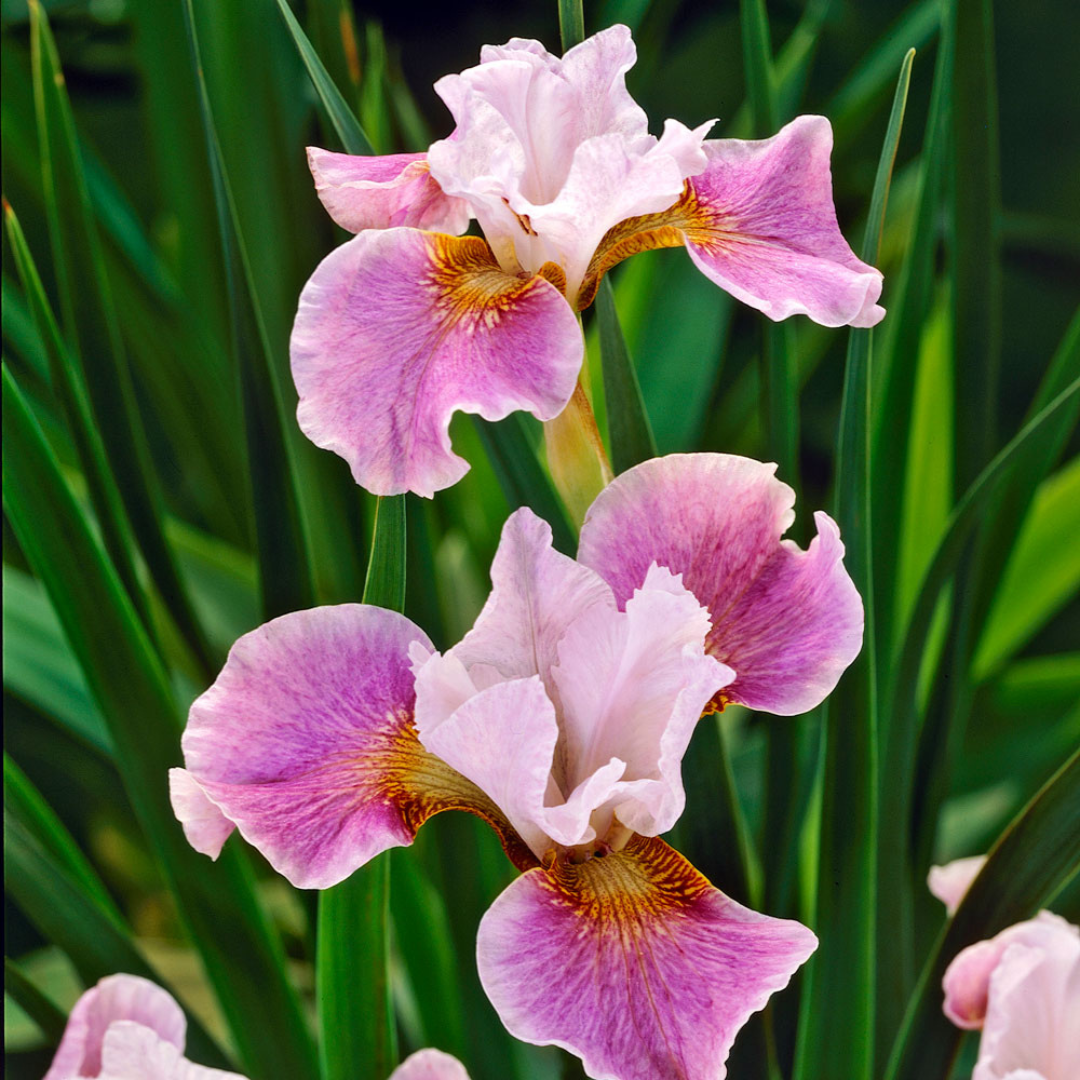
Iris 'Dance Ballerina Dance'
Add to Wishlist Full Sun
 Partial Sun
 Deer Resistant
 Pollinator Friendly
- In stock, ready to ship
Iris 'Dance Ballerina Dance': Rare Rose Pink Among the Purples
Ruffled lavender-pink falls under pale, near-white standards, like a tutu frozen mid-spin. 'Dance Ballerina Dance' takes the stage every spring and NAILS EVERY PIROUETTE.
Plant Characteristics:
- Botanical Name: Iris sibirica 'Dance Ballerina Dance'
- Common Name: Siberian Iris
- Height: 60–80 cm (24–32 in)
- Spread: 45–60 cm (18–24 in)
- Flowers: Ruffled lavender-rose pink falls with lighter edges, under near-white standards with a light pinkish violet wash
- Bloom Time: Late spring to early summer (May to June)
- Foliage: Narrow, upright, grass-like green leaves
- Features: Tolerates moist soil
Where to Plant: It suits the middle of a border, the edge of a pond, or a damp corner that stays wet in spring, and the grassy clump keeps the border looking neat after bloom. It handles clay soils and cold winters well, which makes it a good fit for Ontario and Quebec gardens.
Companion Plants: Echinacea Sombrero® Granada Gold adds yellow flowers at 46 to 56 cm from June through August. Platycodon 'Astra Blue' edges the front at 20 to 25 cm with blue flowers from June through August. Calamagrostis canadensis brings a grass at 90 to 150 cm in flower, and like the iris it handles moist ground. All three grow in sun to partial sun.
Plant Care: Plant it in full sun to part sun, in moist, fertile soil that leans slightly acidic. Set the crown about 2.5–5 cm (1–2 in) deep. Keep it watered through the first season and during dry spells, since Siberian irises flower best with steady moisture. Cut spent flower stems down after bloom. Cut the foliage back in late fall or early spring. Divide the clump when the centre starts to die out, usually every several years, in late summer or early spring. Replant the divisions quickly so the roots don't dry out.
History: Steve Varner bred 'Dance Ballerina Dance', a tetraploid Siberian iris registered in 1982 and introduced in 1983. It earned an Honorable Mention in 1985 and an Award of Merit in 1987, then won the Morgan-Wood Medal, the top American Iris Society award for Siberian irises, in 1989.
Final Thoughts: Deer resistant and fine with moist soil. Plant a few and give your garden its own recital. STANDING OVATION, PLEASE.



