



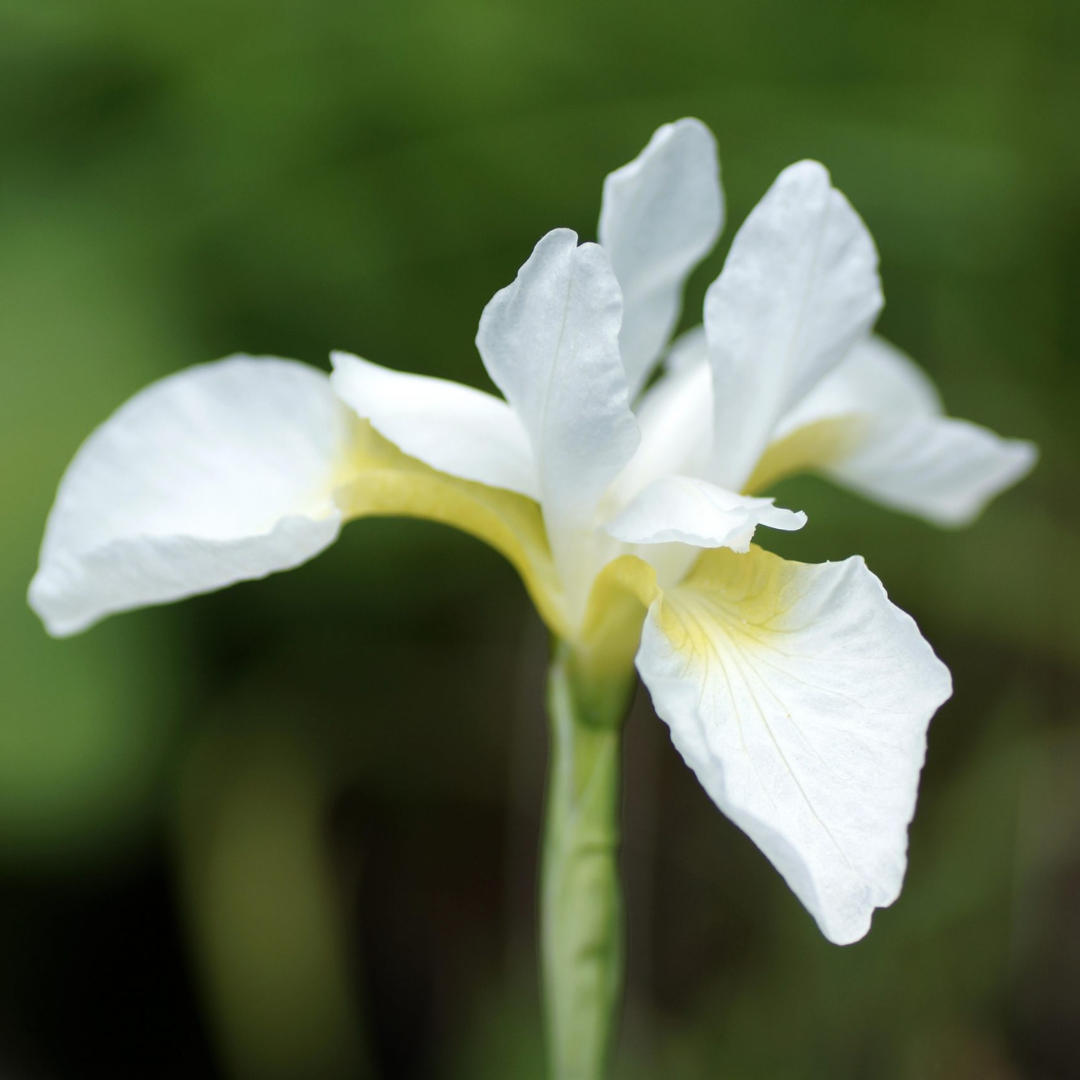
Iris 'Snow Queen'
Add to Wishlist Full Sun
 Partial Sun
 Deer Resistant
 Pollinator Friendly
 Low Maintenance
- In stock, ready to ship
Iris 'Snow Queen': Ivory Royalty Reigning Since 1900
Ivory white flowers with a little gold blotch, cool as a winter morning. 'Snow Queen' rules the bed with icy composure and NEVER LETS THEM SEE HER SWEAT.
Plant Characteristics:
- Botanical Name: Iris sanguinea 'Snow Queen' (usually sold as Iris sibirica)
- Common Name: Siberian Iris
- Height: 45–70 cm (18–28 in)
- Spread: 50 cm (20 in)
- Flowers: Ivory white with a small gold blotch on the falls
- Bloom Time: Late spring to early summer (May to June)
- Foliage: Narrow, upright, grass-like green leaves
- Features: Tolerates moist soil, good cut flower
Where to Plant: White flowers carry well at dusk, so plant it where you sit in the evening. It's at home beside a pond or in a rain garden, and it also does well in an ordinary moist border with clay soil.
Companion Plants: Baptisia Decadence® Deluxe 'Pink Truffles' rises to 120 to 140 cm with pink flowers in June and July. Platycodon 'Astra Blue' edges the front at 20 to 25 cm with blue flowers from June through August. Campanula 'Blue Magic'® adds blue flowers at 10 to 20 cm from June into September. All three grow in sun to partial sun.
Plant Care: Plant in full sun to part sun, in moist, fertile soil that's neutral to slightly acidic. Set the rhizomes a few centimetres deep. Water regularly through the first year, and during dry stretches after that. Cut faded flower stems if you don't want seed pods. Leave the foliage over winter or cut it down in late fall. Clumps can go years between divisions. Lift and divide when the centre thins out, in late summer or early spring.
History: English nurseryman Peter Barr introduced 'Snow Queen' in 1900 from plants collected in Japan, and historic iris experts consider it a white form of Iris sanguinea, a close Asian relative of Iris sibirica. Canadian breeder Isabella Preston crossed it with another Siberian iris at the Central Experimental Farm in Ottawa, and one result, 'Gatineau' (1932), turns up in the family tree of nearly every modern Siberian iris.
Final Thoughts: Deer resistant, fine in wet soil and lovely in a vase. Plant it and LET IT GO. ACTUALLY, KEEP IT FOREVER.



