



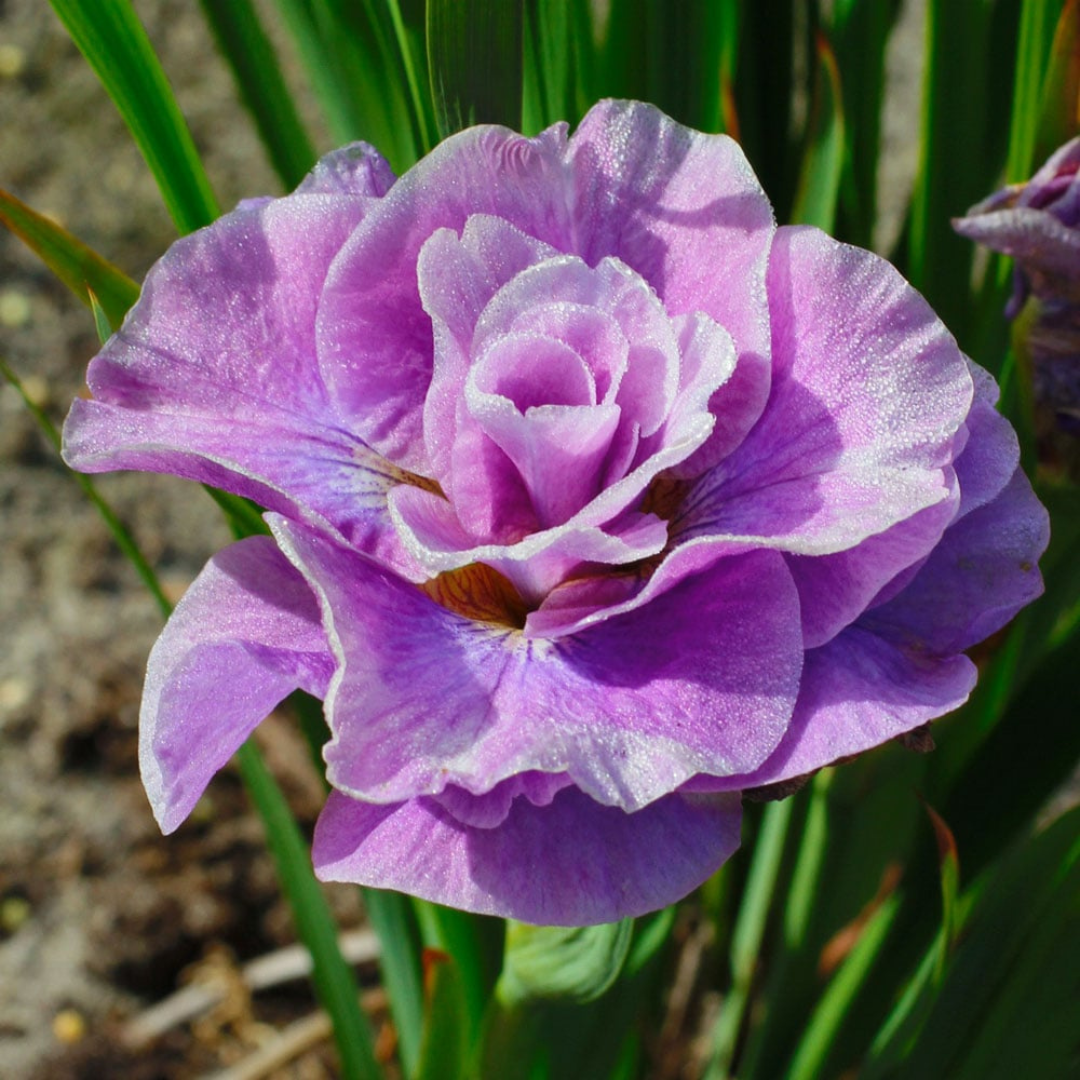
Iris 'Pink Parfait'
Add to Wishlist Full Sun
 Partial Sun
 Deer Resistant
 Pollinator Friendly
 Low Maintenance
- In stock, ready to ship
Iris 'Pink Parfait': Peony-Style Pink, Iris Toughness
Double, ruffled lavender-pink flowers layered like somebody built a dessert in a tall glass and didn't hold back. 'Pink Parfait' handles clay and wet feet, and it's ZERO CALORIES.
Plant Characteristics:
- Botanical Name: Iris sibirica 'Pink Parfait'
- Common Name: Siberian Iris
- Height: 60–75 cm (24–30 in)
- Spread: 50 cm (20 in)
- Flowers: Double, ruffled lavender-pink with white and yellow sunburst markings at the centre
- Bloom Time: Late spring to early summer (May to June)
- Foliage: Narrow, upright, grass-like green leaves
- Features: Tolerates moist and clay soils
Where to Plant: Use it near the front or middle of a border where the double flowers can be seen up close. It's a good fit for rain gardens, pond edges and low spots that stay moist in spring, and it handles clay and hard winters across Ontario and Quebec.
Companion Plants: Polemonium 'Apricot Delight' adds apricot flowers at 40 to 50 cm in June and July. Geum 'Koi' brings orange flowers at 20 to 25 cm from May into September. Elymus virginicus adds a grass at 90 to 125 cm from June through August. All three grow in sun to partial sun.
Plant Care: Plant it in full sun to part sun, in moist, fertile soil. It flowers best with at least half a day of sun. Set the crown about 2.5–5 cm (1–2 in) below the surface and water regularly in the first season and during dry spells. Cut the flower stems down after bloom. Cut the foliage back in late fall or early spring. Divide when the clump gets crowded or thins in the middle, in late summer or early spring. Keep the divisions watered until they root in.
History: Siberian irises (Iris sibirica) are native to moist meadows across central and eastern Europe and northern Asia, and most garden forms have single flowers with three upright standards and three drooping falls. Double-flowered types like 'Pink Parfait' carry extra petals for a fuller, rose-like look while keeping the toughness that made Siberian irises a staple of cold-climate gardens.
Final Thoughts: Deer resistant, low maintenance and loved by bees. Plant it in layers. THE SPOON IS OPTIONAL.



