



Iris 'Double Standards'
Add to Wishlist Full Sun
 Partial Sun
 Deer Resistant
 Low Maintenance
- In stock, ready to ship
Iris 'Double Standards': Rule-Breaking Blooms with Bonus Petals
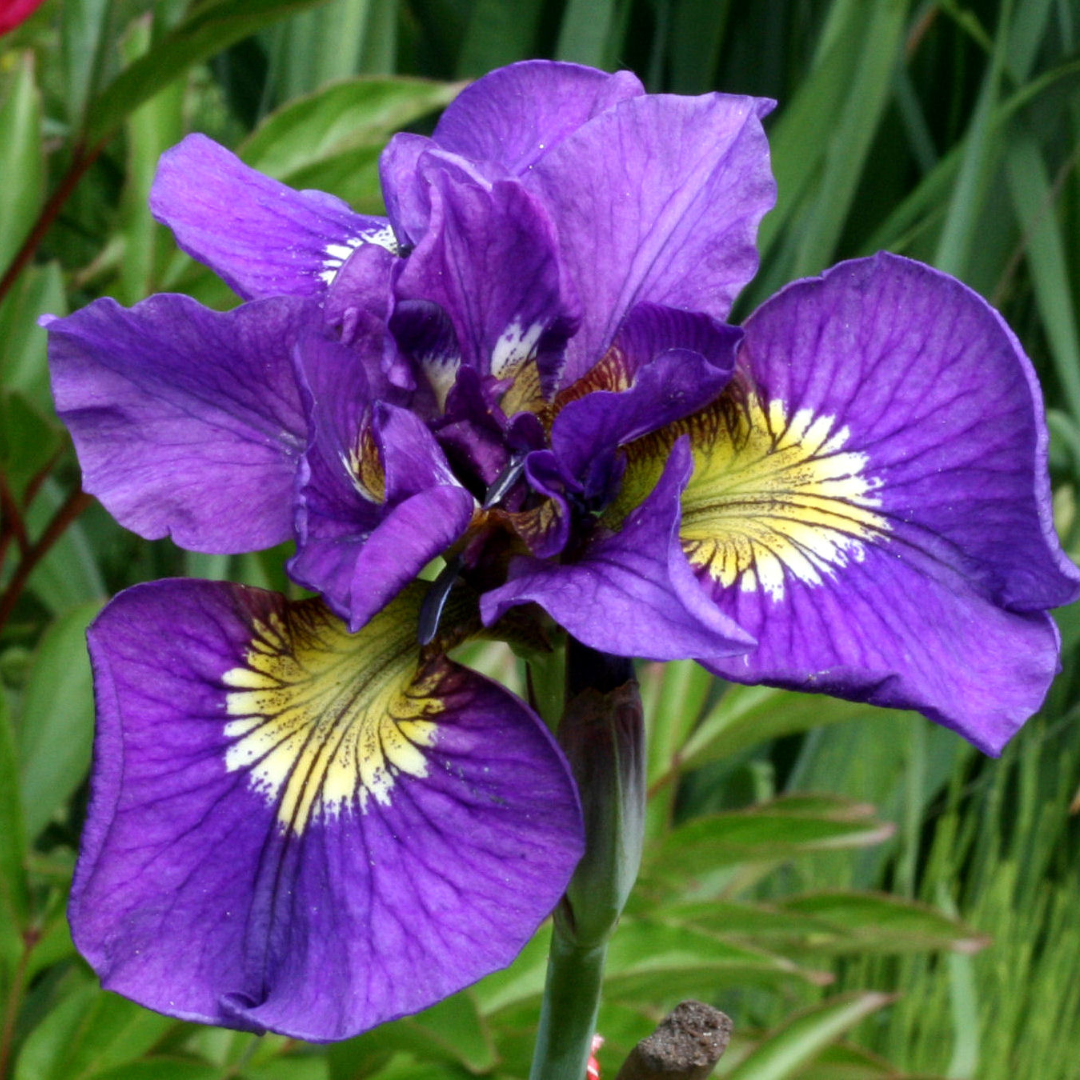
Light blue-violet flowers with extra petals stuffed in the centre, because one set wasn't enough. 'Double Standards' holds itself to a higher bar than everyone else, AND HONESTLY, SO SHOULD YOU.
Plant Characteristics:
- Botanical Name: Iris sibirica 'Double Standards'
- Common Name: Siberian Iris
- Height: 75–85 cm (30–34 in)
- Spread: 60 cm (24 in)
- Flowers: Light blue-violet, with extra petals in the centre and blue-violet falls marked by a gold signal and a white sunburst halo
- Bloom Time: Late spring to early summer (May to June)
- Foliage: Narrow, grass-like green leaves forming a large, upright clump
- Features: Tolerates moist soil
Where to Plant: Plant it where people will see the flowers up close: near a path, a patio or the front of a mid-height border. It also does well by ponds and in low, damp spots, and it takes clay soil and hard winters in stride.
Companion Plants: Geranium sanguineum adds magenta flowers at 25 to 45 cm from June through August. Malva sylvestris 'Zebrina' rises to 60 to 120 cm with pink flowers from June into September. Alchemilla mollis edges the front with yellow flowers at 30 to 45 cm from June through August. All three grow in sun to partial sun.
Plant Care: Plant it in full sun to part sun, in moist, fertile soil. Set the crown about 2.5–5 cm (1–2 in) below the surface. Water well through the first season and during summer dry spells. More sun means more flowers. Cut the flower stems down once they finish. Cut the foliage back in late fall, or leave it for winter and tidy it in early spring. Divide when the clump gets crowded or thin in the middle, in late summer or early spring. Keep new divisions watered until they settle in.
History: Bob Bauer and John Coble bred 'Double Standards' and introduced it through their nursery, Ensata Gardens, in 2000, with the Siberian iris 'Shebang' as one parent. Its registration describes stamens converted into extra standards and, on some flowers, a second set of three falls in the centre, a form known as hose-in-hose, and its name is a pun on those doubled standards.
Final Thoughts: Deer resistant, easy going and fine with moist soil. It expects more from the garden than the garden expects from it. RULES ARE FOR THE OTHER IRISES.



