



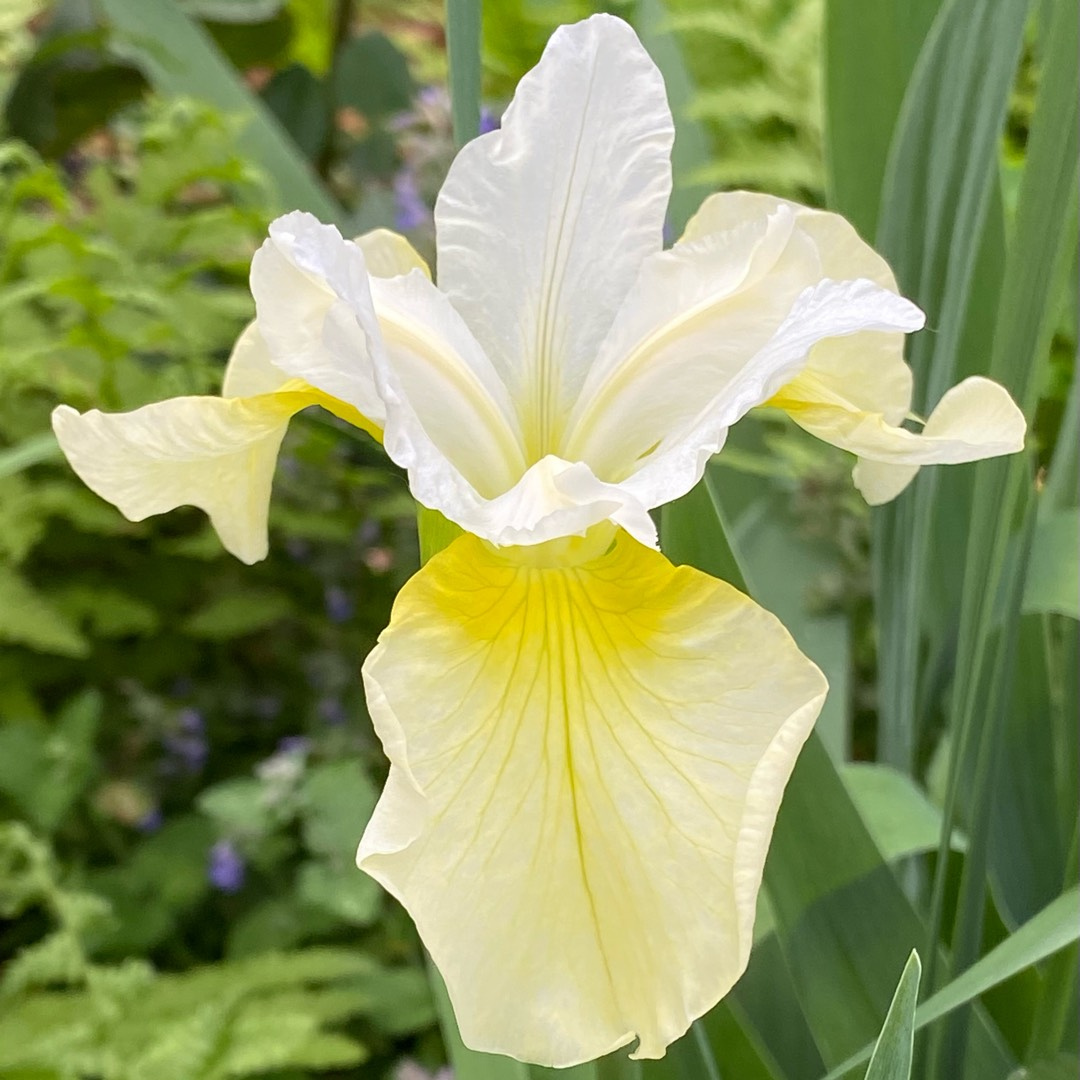
Iris 'Butter and Sugar'
Add to Wishlist Full Sun
 Partial Sun
 Deer Resistant
 Low Maintenance
- In stock, ready to ship
Iris 'Butter and Sugar': Butter Yellow Falls Under Creamy Standards
White on top, butter-yellow below, like somebody creamed the butter and sugar and forgot the rest of the recipe. 'Butter and Sugar' handles clay and wet soil without whining. SWEET, BUT NOT SOFT.
Plant Characteristics:
- Botanical Name: Iris sibirica 'Butter and Sugar'
- Common Name: Siberian Iris
- Height: 65–70 cm (26–27 in)
- Spread: 60 cm (24 in)
- Flowers: White standards and yellow falls, both lightly veined in greenish yellow, with white style arms marked yellow down the centre
- Bloom Time: Late spring to early summer (May to June)
- Foliage: Narrow, upright, grass-like green leaves that look good all season
- Features: Very cold hardy, tolerates moist soil and clay
Where to Plant: Plant it in the middle of a border, in a cottage garden, or along a pond, stream or rain garden, where its love of moisture is an asset. The grassy foliage stays upright and green after bloom, giving the bed structure all summer, and it handles clay and makes a lovely cut flower.
Companion Plants: Geranium 'Max Frei' spreads at 15 to 20 cm with magenta flowers from June through August. Sanguisorba 'Little Angel' adds burgundy flowers at 20 to 30 cm from June into September. Calamagrostis canadensis brings a grass at 90 to 150 cm in flower from June through August. All three grow in sun to partial sun, and the grass likes moisture the same as Siberian iris.
Plant Care: Plant in full sun to part sun in moist, fertile, slightly acidic soil. Set the crown about 2–5 cm (1–2 in) deep. Water well through the first season and during dry spells. It does fine in clay, as long as the soil doesn't stay waterlogged all winter. Cut off the flower stems after blooming. Leave the foliage through fall, then cut it back in late fall or early spring. Clumps can go many years without dividing. When the centre thins out, divide in late summer or early spring, and keep the new pieces watered.
History: Dr. Currier McEwen of Maine bred 'Butter and Sugar' from a cross of 'Floating Island' and 'Dreaming Yellow', registering it in 1976 and introducing it in 1977 as one of the first yellow-and-white Siberian irises. It won the Morgan Award in 1981 and the Morgan-Wood Medal, the top Siberian iris honour from the American Iris Society, in 1986.
Final Thoughts: Deer resistant, low maintenance and very cold hardy. Plant it in that soggy spot you've given up on. NO BAKING REQUIRED.



