



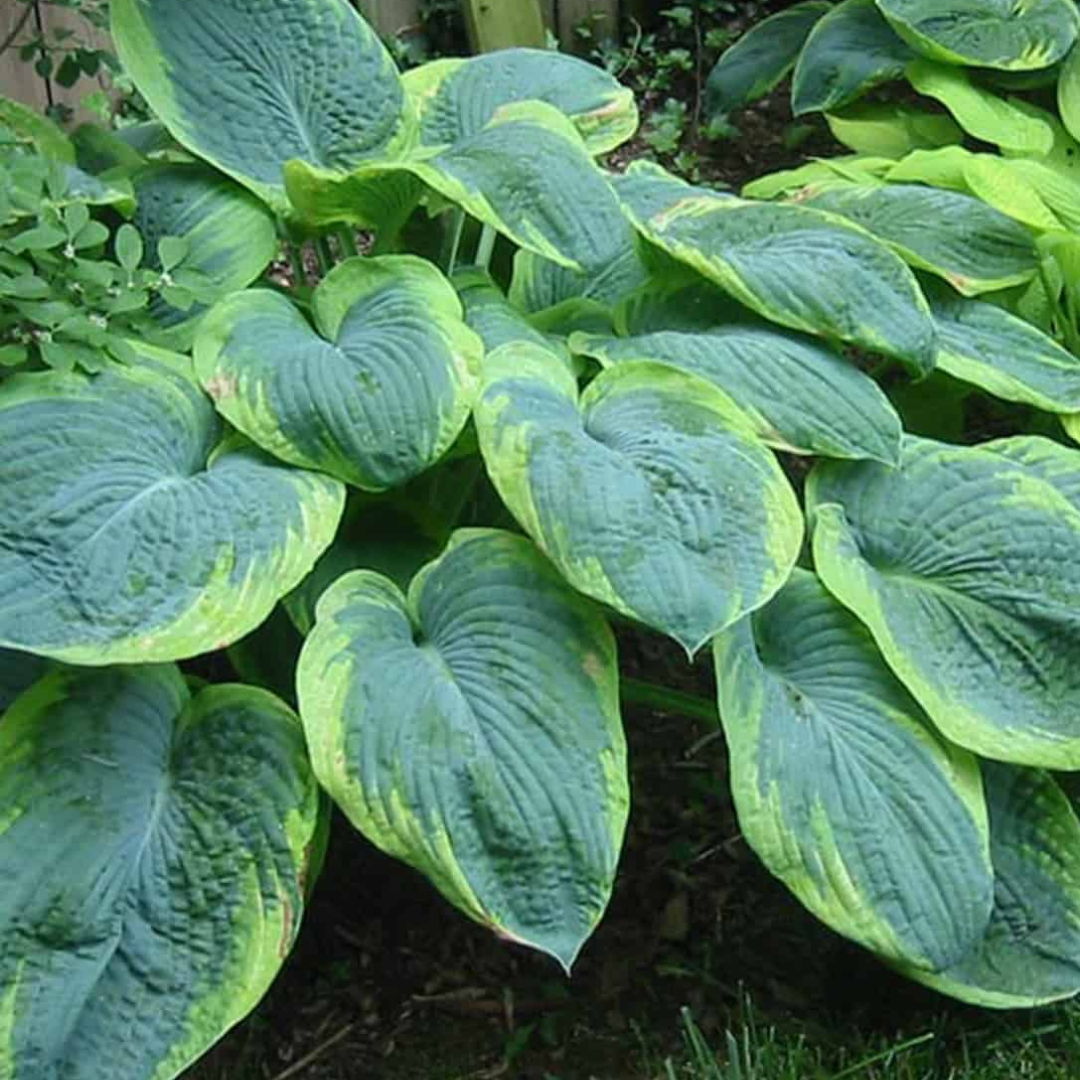
Hosta 'Frances Williams'
Add to Wishlist Partial Sun
 Full Shade
 Pollinator Friendly
 Low Maintenance
- In stock, ready to ship
Hosta 'Frances Williams': Quilted Blue Trimmed in Old Gold
Huge, heavily puckered blue-green leaves with wide gold borders, sitting in the shade like a framed oil painting in a dark hallway. This hosta is the classiest thing in the room, and IT KNOWS IT.
Plant Characteristics:
- Botanical Name: Hosta sieboldiana 'Frances Williams'
- Common Name: Plantain lily, hosta
- Height: 65–75 cm (26–30 in)
- Spread: 100–120 cm (40–47 in)
- Flowers: Near-white, bell-shaped, in dense clusters just above the leaves
- Bloom Time: Early summer (June to July)
- Foliage: Large, thick, heavily puckered blue-green leaves with wide, irregular gold margins
Where to Plant: This is a hosta for the back of a shady border or a single specimen in a large bed, ideally under tall deciduous trees where the light is bright but dappled. Give it room, since it needs a few years to fill out and crowding spoils the effect.
Companion Plants: Ligularia 'Othello' brings orange daisies from July to September on plants up to 120 cm, a warm contrast to this hosta's white flowers and large leaves. In the foreground, Pulmonaria 'Pink-a-Blue' flowers in May and June in two colours, getting the season started early. Carex pensylvanica adds a soft, fine-bladed carpet at 15 to 30 cm, a nice change of texture under the hosta's broad, puckered leaves. Everything here is happy in full shade to part sun.
Plant Care: Plant it in rich, moist, well-drained soil with plenty of compost. Shade is best, with gentle morning sun at most. The gold margins can scorch in hot sun or drought, and dry spring winds can brown new leaves, so a sheltered spot helps. Water deeply through dry stretches. It is slow to establish, so be patient for the first couple of seasons. Deer and rabbits will eat hostas, so protect it if they visit your yard. Remove the flower stems after bloom and the leaves after a hard frost. Divide only when you need to, in early spring.
History: Massachusetts gardener Frances Williams found this plant in 1936 at a Connecticut nursery among plants of Hosta 'Elegans', and her daughter, Connie Williams, registered it with the American Hosta Society in 1986. That same year it received the Alex J. Summers Distinguished Merit Hosta Award, and in 1996 it ranked fifth in popularity among the society's members.
Final Thoughts: Give it shade and room to stretch. It'll fill a corner with the kind of gold trim money can't buy. SHEER OPULENCE.



